
Key Takeaways
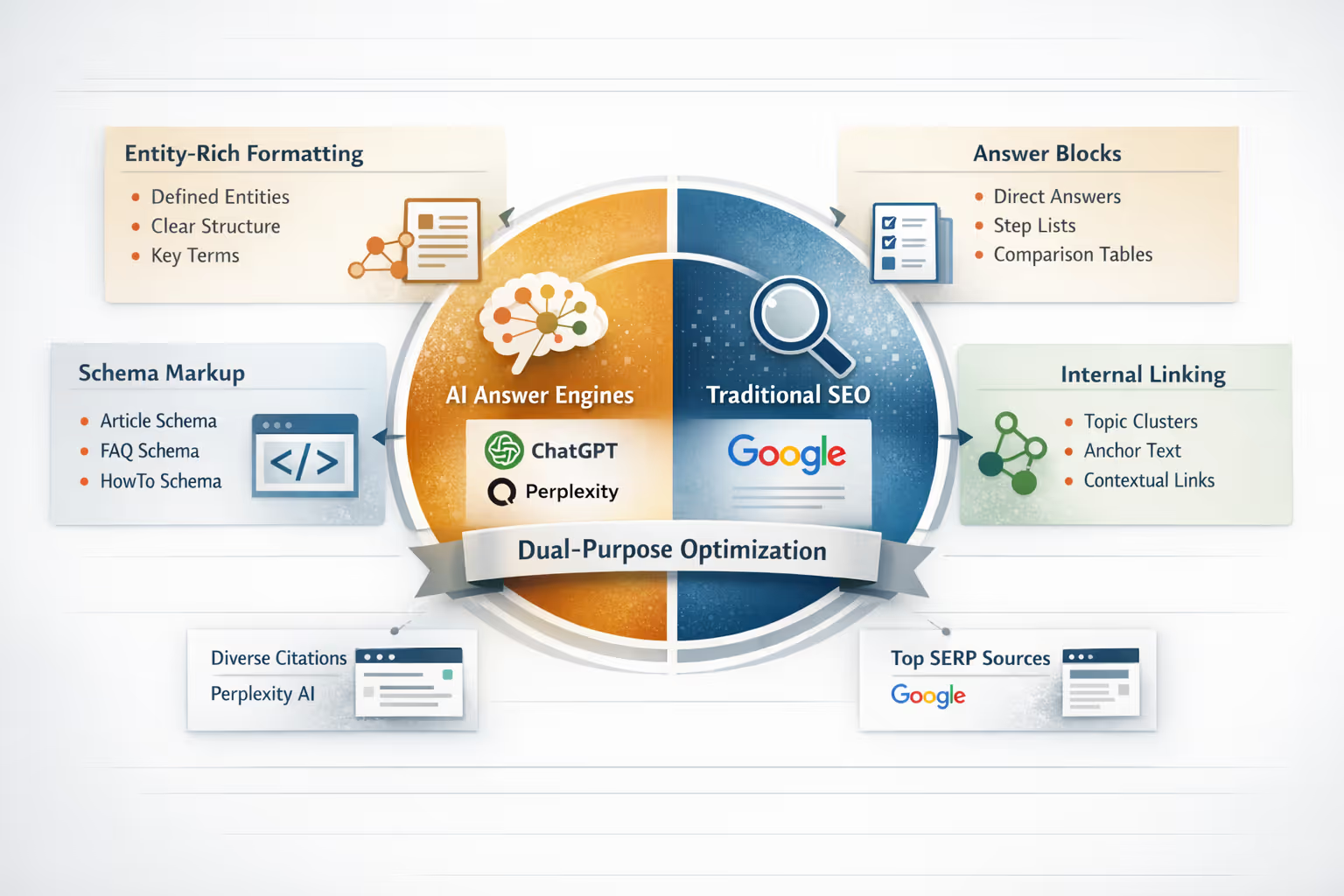
AI answer engines and traditional SEO reward the same core qualities: clear structure, defined entities, and authoritative sourcing
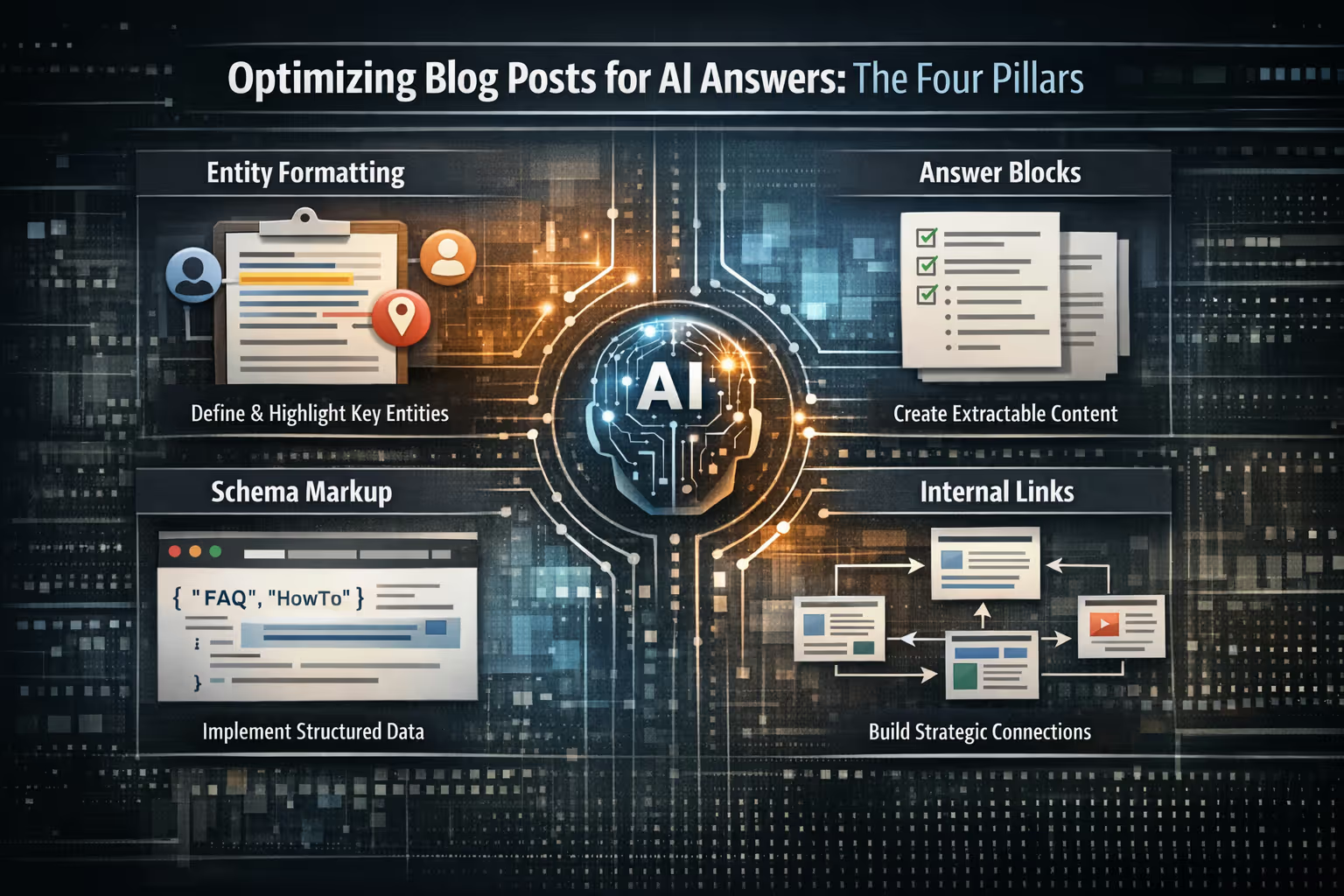
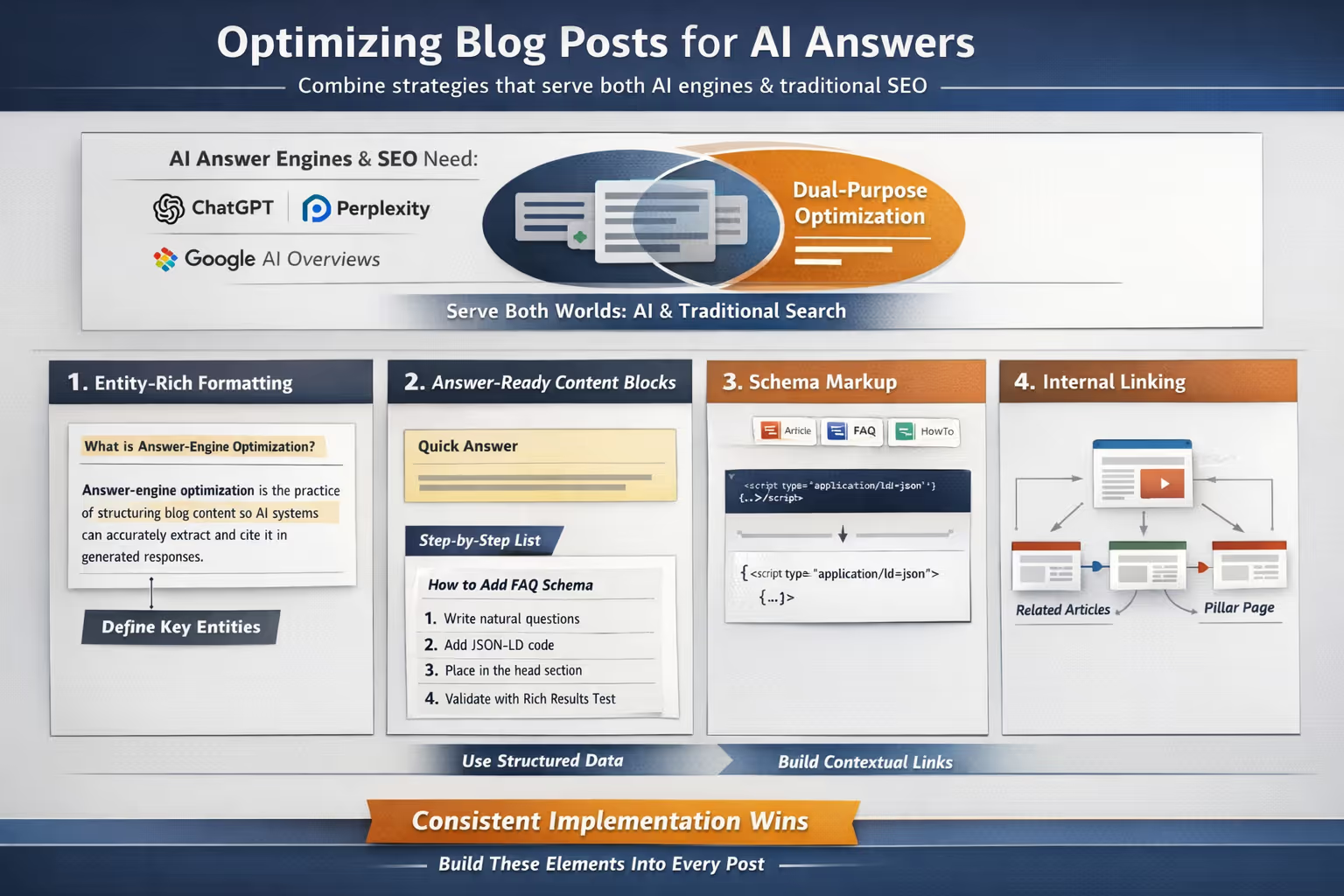
The "answer-engine spec" combines four elements: entity-rich formatting, extractable answer blocks, schema markup, and strategic internal linking
Different AI platforms source information differently—Perplexity prioritizes diverse citations, while Google AI Overviews lean heavily on top-ranking SERP pages
Schema markup (Article, FAQ, HowTo) serves double duty: signaling meaning to crawlers and providing clean data for AI extraction
Consistent implementation matters more than occasional perfection—building these elements into your publishing workflow is the real challenge
Your blog posts now serve two masters. Google's traditional search results still drive traffic—but AI answer engines like ChatGPT, Perplexity, and Google's AI Overviews are reshaping how people find information. After watching dozens of clients struggle with this shift over the past year, I've noticed something: most optimization advice forces you to choose one or the other.
That's a false choice.
The structural elements that help AI systems extract clean answers also signal relevance and authority to traditional search algorithms. You don't need two content strategies. You need one strategy built on what I call an answer-engine spec—a systematic approach to formatting, entity markup, schema, and internal linking that serves both worlds simultaneously.
This guide breaks down exactly how to optimize blog posts for AI answers while preserving (and often improving) your traditional SEO performance. No vague tips. Concrete templates. Actionable examples.
Why AI Answer Engines and Traditional SEO Actually Converge
The concern makes sense on the surface. AI systems generate direct answers, potentially reducing click-through rates. Some marketers assume this means optimizing for AI answers requires sacrificing traditional SEO signals.
But look closer at what each system actually needs, and the overlap becomes obvious.
Research from multiple SEO studies shows that content structured for featured snippets and direct answers tends to rank higher in traditional results too [1]. Both AI systems and search algorithms reward the same core qualities—they just express that preference differently.
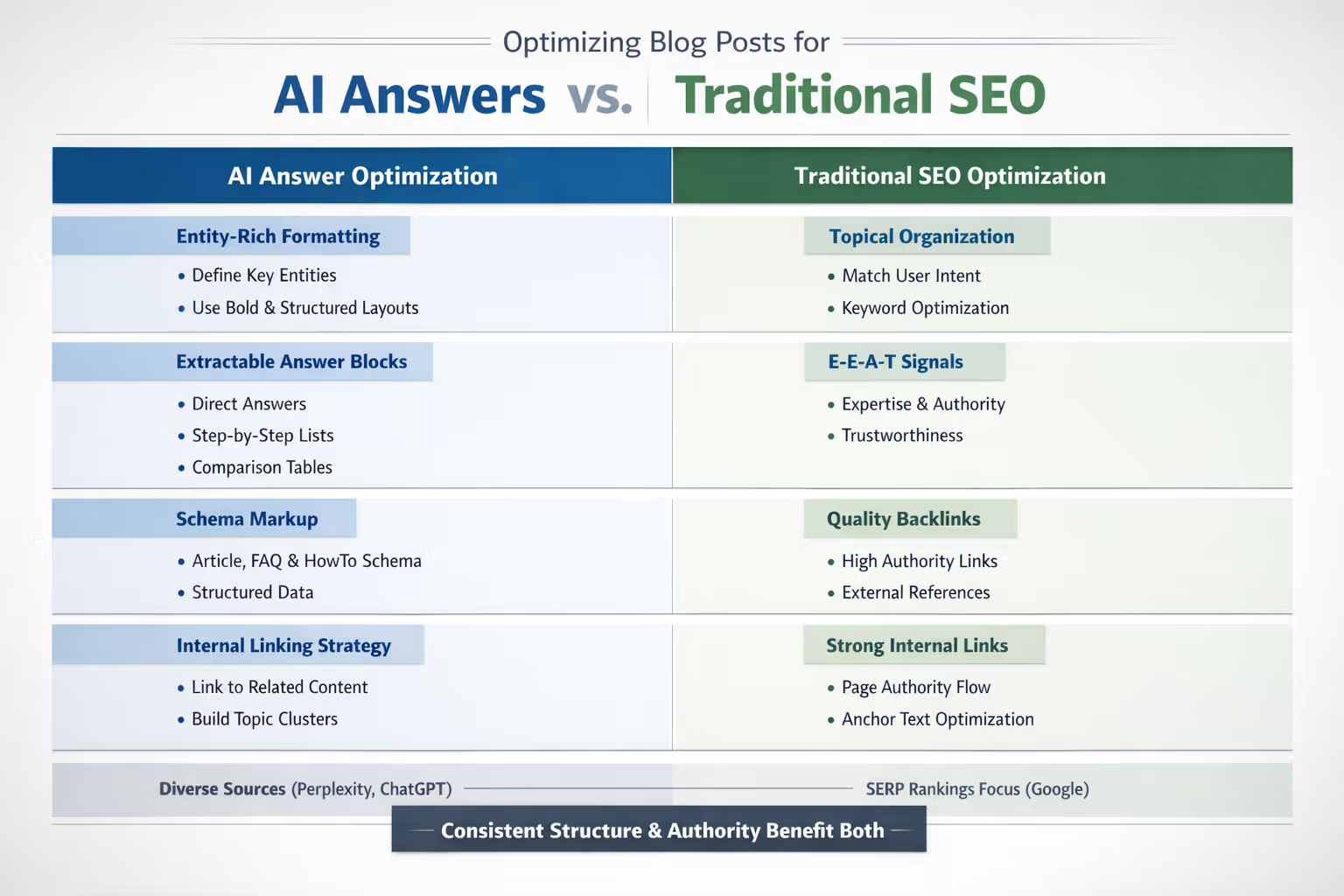
What AI answer engines need:
Clear, extractable statements
Defined entities with explicit relationships
Structured data they can parse
Authoritative sourcing signals
What traditional search algorithms reward:
Content that matches user intent
Clear topical organization
Strong internal linking architecture
E-E-A-T signals (experience, expertise, authoritativeness, trustworthiness)
The methods converge. Structured content that AI can extract is also content that demonstrates topical authority to Google.
One important nuance:
Different AI platforms source information differently. Perplexity tends to prioritize diverse citations from multiple authoritative sources. Google's AI Overviews lean heavily on pages already ranking in traditional top positions. ChatGPT draws from its training data plus real-time search when enabled. This means optimizing for one platform often means optimizing for all of them—but the weight of traditional rankings still matters, especially for Google's AI features.
The Answer-Engine Spec: Four Pillars of Dual-Purpose Optimization
An effective answer-engine spec has four interconnected components. Miss one, and the whole system weakens.
Pillar 1: Entity-Rich Formatting
AI systems don't just read your content—they parse it for entities (people, places, concepts, products) and the relationships between them. Traditional SEO cares about entities too, since Google's Knowledge Graph has used entity recognition for years [2].
How to structure for both:
Use explicit entity definitions early in your content. Don't assume readers (or AI systems) know what terms mean.
| Entity Type | Example | Implementation |
| Concepts | "Answer-engine optimization" | Define in first paragraph, use consistently |
| Products | "Google's AI Overview" | Name precisely, include parent company |
| People | Industry experts | Full name + credential on first mention |
| Processes | "Schema markup" | Brief explanation before technical details |
Formatting that signals entity relationships:
Bold key terms on first use (signals importance to both humans and parsers)
Use headers that include primary entities (H2s and H3s act as entity labels)
Create explicit comparisons with tables (AI systems extract tabular data cleanly)
Link to authoritative definitions (signals entity context)
A paragraph like "Schema markup helps search engines understand content" becomes more parseable as: "Schema markup—structured data code added to your HTML—helps search engines and AI systems understand what your content is about and how entities within it relate to each other."
Same information. Clearer entity definition. Better for both optimization goals.
Pillar 2: Answer-Ready Content Blocks
AI answer engines extract specific content blocks to generate responses. Traditional featured snippets work similarly. Structuring your content with extractable answer blocks serves both purposes.
Three answer-block formats that work:
Format 1: The Direct Answer Paragraph
Place a 40-60 word summary directly after a question-style header. This format matches both featured snippet requirements and AI extraction patterns.
Example:
What is answer-engine optimization?
Answer-engine optimization is the practice of structuring blog content so AI systems can accurately extract and cite it in generated responses. It involves clear entity definitions, explicit formatting, schema markup, and strategic internal linking—techniques that also strengthen traditional SEO performance.
Format 2: The Step List
Numbered steps with brief explanations work exceptionally well for "how-to" queries.
Example:
How to add FAQ schema to a blog post:
Write questions in natural, conversational language
Keep answers between 40-70 words for optimal extraction
Use JSON-LD format for the schema code
Place schema in the page's head section or use a plugin
Validate using Google's Rich Results Test
Format 3: The Comparison Table
Tables are highly extractable. AI systems pull tabular data cleanly, and Google frequently uses tables in featured snippets.
Example:
| Optimization Type | Primary Goal | Key Technique |
| Traditional SEO | Rank in search results | Keyword optimization |
| Answer-Engine Optimization | Get cited in AI responses | Entity clarity |
| Dual-Purpose Optimization | Achieve both | Structured formatting |
Pillar 3: Schema Markup That Feeds Both Systems
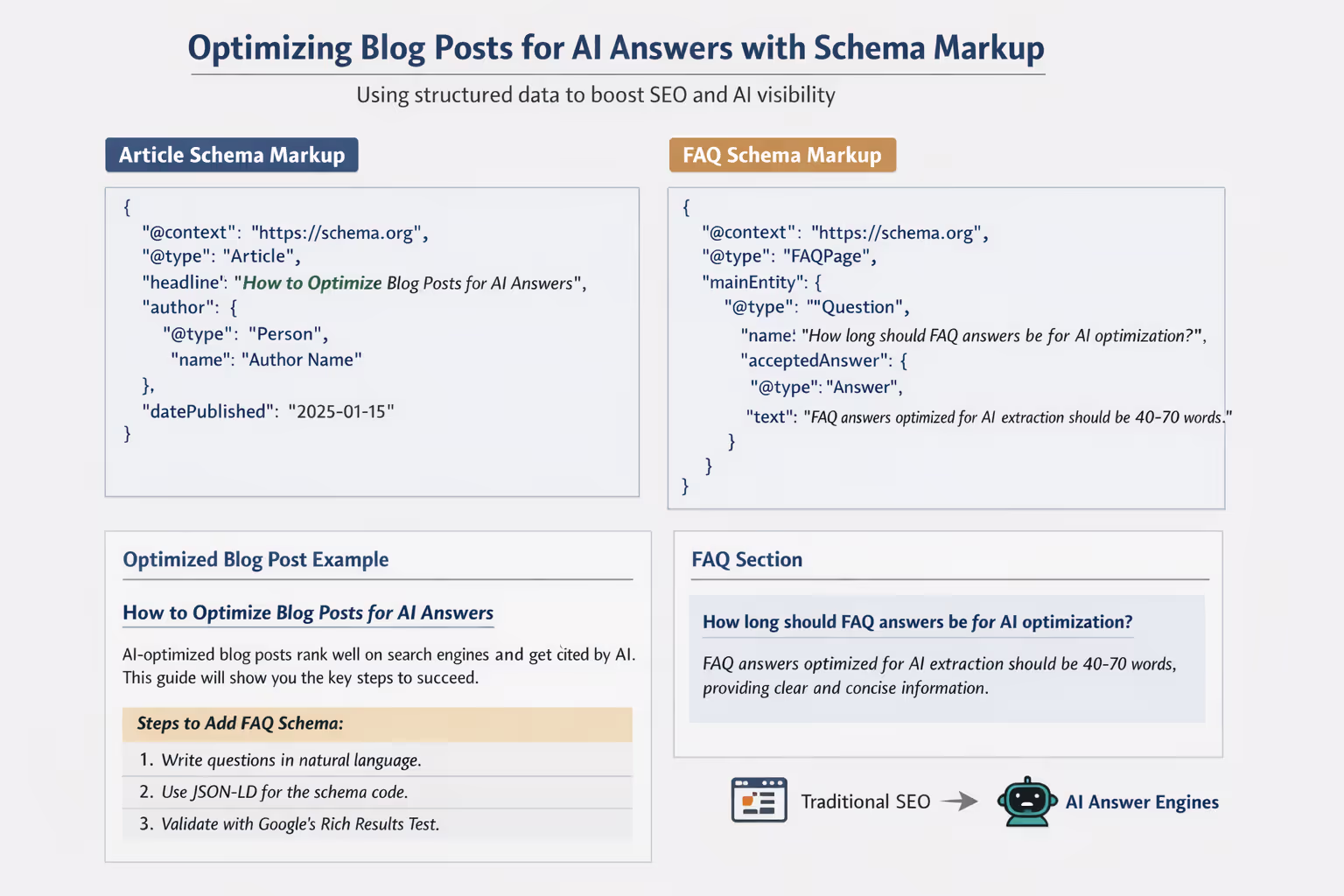
Schema markup (structured data) has always helped search engines understand content. Now it serves a dual role: signaling content meaning to traditional crawlers while providing clean data structures AI systems can parse [3].
Priority schema types for blog content:
Article Schema (baseline for every post):
{ "@context": "https://schema.org", "@type": "Article", "headline": "How to Optimize Blog Posts for AI Answers", "author": { "@type": "Person", "name": "Author Name", "url": "https://yoursite.com/about" }, "publisher": { "@type": "Organization", "name": "Company Name" }, "datePublished": "2025-01-15", "dateModified": "2025-01-15"}
FAQ Schema (high-value for both answer engines and featured snippets):
{ "@context": "https://schema.org", "@type": "FAQPage", "mainEntity": [{ "@type": "Question", "name": "How long should FAQ answers be for AI optimization?", "acceptedAnswer": { "@type": "Answer", "text": "FAQ answers optimized for AI extraction should be 40-70 words. This length provides enough context for accurate citation while remaining concise enough for clean extraction." } }]}
HowTo Schema (for process-oriented content):
{ "@context": "https://schema.org", "@type": "HowTo", "name": "How to Optimize Blog Posts for AI Answers", "step": [{ "@type": "HowToStep", "name": "Define key entities", "text": "Explicitly define main concepts in your opening section" }]}
Implementation approach:
Most CMS platforms (WordPress, Webflow, etc.) support schema through plugins or custom code blocks. The key is consistency—every blog post should have Article schema at minimum, with FAQ or HowTo schema added where content structure warrants it.
Validate your schema using Google's Rich Results Test before publishing [4]. Broken schema provides no benefit and can create crawling issues.
Pillar 4: Internal Linking Architecture
Internal links have always mattered for traditional SEO—they distribute page authority and help crawlers understand site structure. For AI optimization, internal links serve an additional purpose: they establish entity relationships across your content ecosystem.
Strategic internal linking for dual-purpose optimization:
Link to definitional content:
When you mention a concept, link to your most comprehensive explanation of that concept. This signals to both AI systems and search algorithms that the linked page is authoritative on that topic.
Create topic clusters:
Organize content into hub-and-spoke structures. A pillar page on "content marketing" links to supporting articles on specific subtopics. Each supporting article links back to the pillar. This architecture helps AI systems understand topical boundaries while building topical authority for traditional rankings.
Use descriptive anchor text:
"Click here" tells neither AI systems nor search algorithms anything useful. "Learn how schema markup improves AI visibility" is explicit and entity-rich.
Link quantity guidelines:
| Content Length | Recommended Internal Links |
| 500-1,000 words | 2-4 links |
| 1,000-2,000 words | 4-7 links |
| 2,000+ words | 7-12 links |
Internal link placement matters:
Place your most important internal links in the first third of your content. Both traditional crawlers and AI systems weight early-appearing links more heavily.
Putting the Spec into Practice: A Blog Post Template
Here's how the answer-engine spec translates into a practical content structure:
1. Title (H1): Include primary keyword/entity
2. Opening paragraph (50-100 words):
Hook the reader
Define the core entity/concept
State what the article delivers
Include primary keyword naturally
3. Context section (H2):
Explain why this matters now
Establish entity relationships
Include 1-2 internal links to related content
4. Main content sections (H2s with H3 subheads):
Each H2 should contain a primary entity
Include at least one extractable answer block per section
Use tables for comparisons
Add internal links to supporting content
5. FAQ section (H2):
3-5 questions in natural language
40-70 word answers
Implement FAQ schema
6. Conclusion with CTA:
Summarize key takeaways
Include primary keyword
Clear next-step action
7. Technical elements (invisible to readers):
Article schema
FAQ schema (if applicable)
HowTo schema (if applicable)
Proper heading hierarchy (no skipped levels)
Common Mistakes That Hurt Both AI and Traditional Performance
Mistake 1: Keyword stuffing for traditional SEO
Overusing exact-match keywords creates awkward content that AI systems struggle to parse naturally. Modern search algorithms penalize this too. Use semantic variations instead.
Mistake 2: Vague, hedge-heavy writing
Phrases like "it might be helpful to consider possibly..." give AI systems nothing to extract. Clear, direct statements work better for both purposes.
Mistake 3: Skipping schema because it seems technical
Schema implementation has become significantly easier with CMS plugins. The dual benefit for AI and traditional visibility makes the modest effort worthwhile.
Mistake 4: Orphan content with no internal links
A blog post with no internal links is an isolated node. Neither AI systems nor search crawlers can contextualize it within your broader content ecosystem.
Mistake 5: Inconsistent publishing
Both traditional SEO and AI visibility compound over time. Sporadic publishing undermines the topical authority signals both systems look for [5].
Measuring Dual-Purpose Optimization Success
Track these metrics to evaluate whether your answer-engine spec is working:
Traditional SEO indicators:
Organic search traffic (Google Analytics/Search Console)
Keyword ranking positions
Featured snippet appearances
Click-through rates from search results
AI answer indicators:
Brand mentions in AI-generated responses (manual checks)
Referral traffic from AI platforms (where trackable)
Citation patterns in tools like Perplexity (which shows sources)
How to manually check AI visibility:
Run searches on ChatGPT, Perplexity, and Google's AI Overview using the exact queries your content targets. Document whether your brand or content appears in the response. Create a simple prompt framework: ask the AI "What is [your topic]?" and "How do I [your how-to topic]?" Track changes monthly.
For more systematic monitoring, some emerging tools now offer automated brand mention tracking across LLM responses—though this space is still developing rapidly.
Content quality signals:
Time on page
Scroll depth
Internal link click-through rates
The goal isn't to maximize one metric at the expense of others. Well-optimized content should show improvement across both traditional and AI visibility over time.
The Consistency Challenge
Here's where most teams struggle: knowing the answer-engine spec and implementing it consistently are different problems entirely.
Each blog post requires proper formatting, schema implementation, internal link placement, and entity clarity. When you're publishing multiple times per week, these elements often slip—especially under deadline pressure.
This is where systematic content production makes the difference. Whether you build internal processes, create detailed checklists, or work with a content engine service, the key is making these optimization elements non-negotiable parts of your publishing workflow—not optional extras that get deprioritized when time runs short.
The teams that win at dual-purpose optimization aren't necessarily better at writing. They're better at building systems that enforce consistency across every single post.
Ready to publish AI-optimized content consistently? View PlansThe Mighty Quill's done-for-you blog engine—we handle the answer-engine spec implementation so you can focus on growing your business. Start with 2 free articles delivered in 48 hours.
Frequently Asked Questions
Does optimizing for AI answers reduce traditional search traffic?
Not when done correctly. Content structured for AI extraction—with clear entity definitions, schema markup, and strong internal linking—typically performs better in traditional search results too. The optimization approaches complement rather than conflict with each other.
How long does it take to see results from answer-engine optimization?
Traditional SEO improvements typically appear within 60-90 days. AI citation visibility varies by platform and topic competitiveness. Consistent publishing accelerates both timelines because topical authority compounds over time.
Do I need to add schema markup to every blog post?
Article schema should be baseline for every post. FAQ and HowTo schema should be added when content structure warrants it—meaning when you actually have FAQ content or step-by-step instructions. Don't force schema that doesn't match your content.
What's the minimum word count for AI-optimized content?
There's no magic number, but 1,200-2,000 words typically provides enough depth for thorough entity coverage while remaining focused enough for clean extraction. Quality and structure matter more than hitting arbitrary word counts.
Can I retroactively optimize old blog posts?
Yes, and it's often high-value work. Updating existing content with better formatting, schema, and internal links can improve both AI visibility and traditional rankings faster than creating new content from scratch.
About This Content
This article was produced by The Mighty Quill, an AI-powered blog engine that combines automated content production with human editorial oversight. Our team brings over 15 years of experience in digital marketing, SEO strategy, and content systems. We specialize in creating publication-ready content optimized for both traditional search and emerging AI answer platforms—helping growth-focused businesses build consistent organic visibility without the complexity of managing in-house content teams.
Cited Works
[1] Search Engine Journal — "Featured Snippets: What They Are & How to Get Them." https://www.searchenginejournal.com/featured-snippets/
[2] Google Search Central — "Understand How Structured Data Works." https://developers.google.com/search/docs/appearance/structured-data/intro-structured-data
[3] Schema.org — "Getting Started with Schema.org." https://schema.org/docs/gs.html
[4] Google Search Central — "Rich Results Test." https://search.google.com/test/rich-results
[5] Orbit Media Studios — "How Often Should You Blog? New Data on Blog Frequency and Results." https://www.orbitmedia.com/blog/blogging-frequency/


