Your content strategy looks brilliant on the whiteboard. The keyword research is done. The topics are mapped. The editorial calendar is built.
And yet... nothing gets published.
This is the dirty secret of B2B content marketing: most teams don't fail at strategy. They fail at operations. The gap between "we should write about this" and "this post is live" swallows more content programs than bad ideas ever will.
I've watched marketing teams burn through budgets on elaborate content strategies that never ship. The spreadsheets are beautiful. The slide decks are persuasive. But six months later, the blog has three posts—two of which are still drafts waiting for "final review."
The problem isn't creativity. It's logistics.
Why B2B Content Marketing Needs an Ops Pipeline
Think about how manufacturing solved the production bottleneck. Before assembly line systems, skilled craftsmen built entire products from scratch. It was slow, expensive, and impossible to scale [1].
Content marketing faces the same challenge. Most teams treat every blog post like a craft project—starting from zero, reinventing the wheel, and hoping inspiration strikes.
This approach creates predictable failure points:
Writers stare at blank pages because nobody told them what to write about
Drafts sit in approval limbo for weeks because nobody owns the review process
Publishing schedules slip constantly because there's no system enforcing them
Quality varies wildly between posts because standards exist only in someone's head
The solution isn't hiring more writers or demanding faster turnarounds. It's building a system that moves content through defined stages with clear handoffs and minimal friction.
An ops pipeline transforms content from an unpredictable creative endeavor into a repeatable production process. You still need good ideas and skilled writers. But you stop depending on heroic individual efforts to hit your publishing goals.
The Five Stages of a B2B Content Ops Pipeline
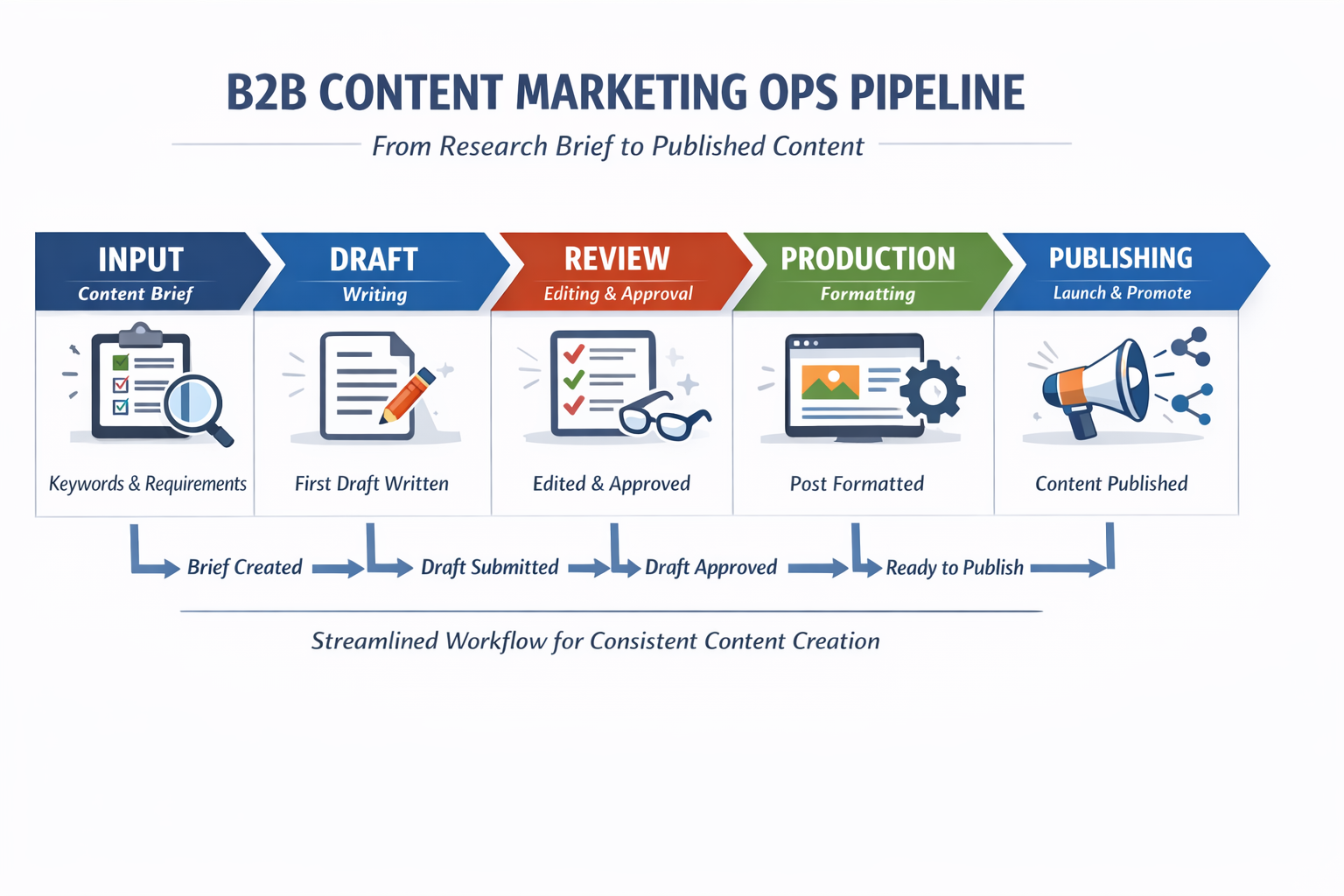
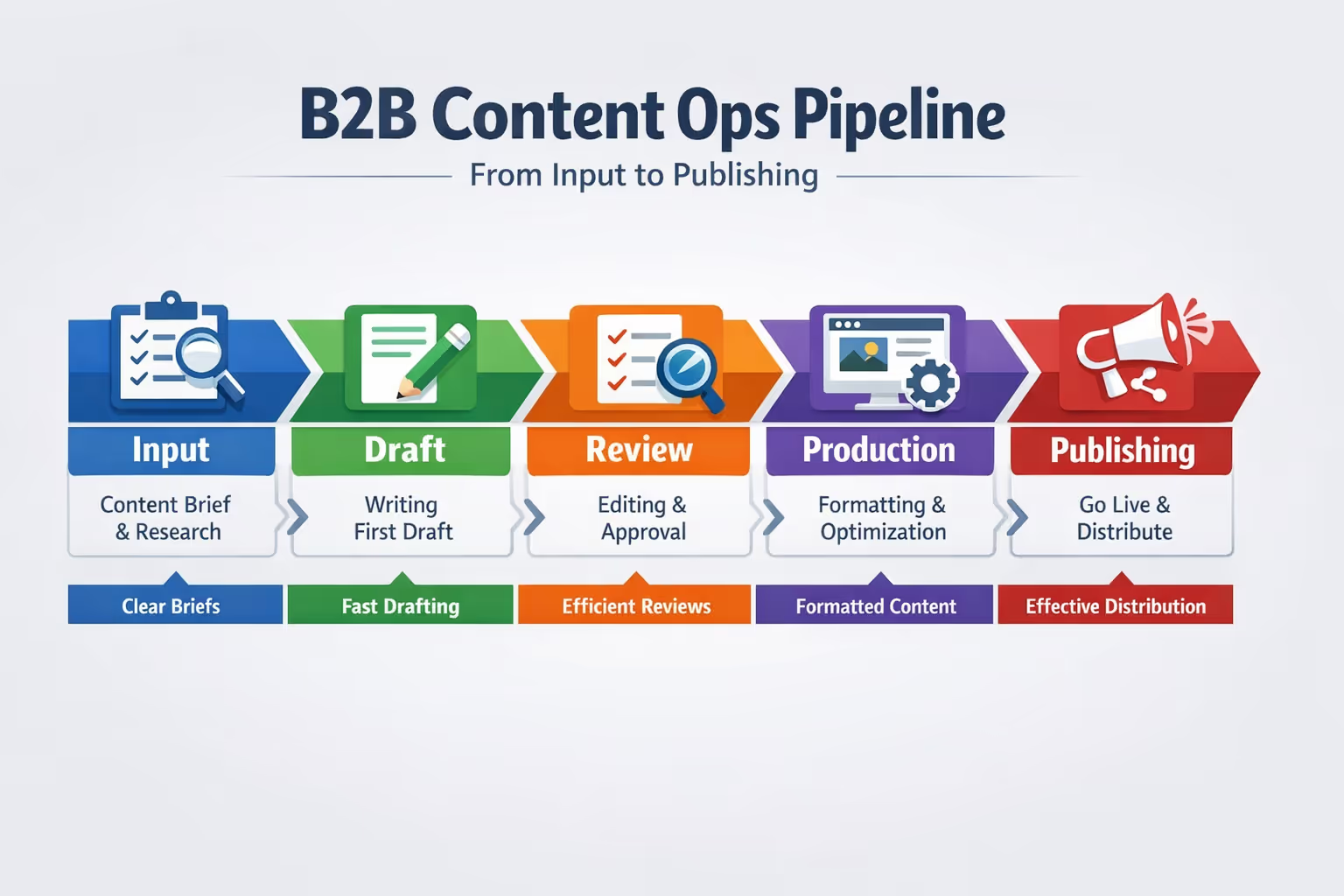
Every piece of content moves through distinct phases. When you treat these as separate operational stages—rather than one amorphous "writing" task—bottlenecks become visible and fixable.
Here's a quick reference before we dive deep:
| Stage | Primary Owner | Typical Time Allocation | Key Output |
| Input | Strategist/SEO Lead | 20% | Complete content brief |
| Draft | Writer | 30% | First draft |
| Review | Editor | 20% | Polished draft |
| Production | VA/Ops | 15% | Formatted post |
| Publishing | Ops/Marketing | 15% | Live content + distribution |
Stage 1: Input (Research and Requirements)
Before anyone writes a word, the inputs need to exist. This is where most content operations quietly fail.
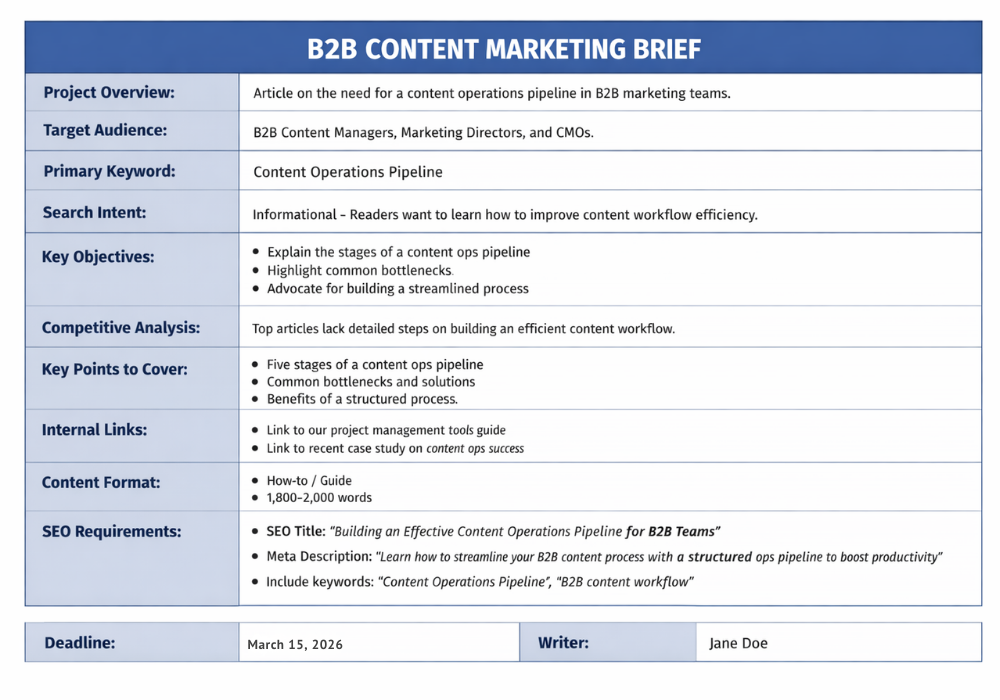
The 5 Non-Negotiables in Every Content Brief:
Primary keyword and search intent — What's the target keyword, and what does the searcher actually want to accomplish?
Audience segment and their specific questions — Who is this for, and what problem are they trying to solve?
Competitive gap — What are the top 3 ranking articles missing that we can provide?
Required internal links — Which existing pages should this post link to?
Format and structure requirements — Word count, required sections, content type (how-to, comparison, guide, etc.)
Most content delays start here. Writers receive vague assignments like "write something about lead generation" and waste hours figuring out what that actually means.
A Bad Brief Looks Like:
"Write a blog post about email marketing best practices. Around 1,500 words. Make it SEO-friendly."
A Good Brief Looks Like:
Primary Keyword: email marketing automation for small businessSearch Intent: Informational — reader wants to understand how automation works and whether it's worth the investmentTarget Audience: Marketing managers at companies with 10-50 employees who handle email manuallyCompetitive Gap: Top results focus on enterprise tools; nobody addresses budget constraints or simple starting pointsRequired Sections: What is email automation, 3 starter workflows, cost comparison, implementation timelineInternal Links: Link to our CRM integration guide, email template libraryWord Count: 1,800-2,200
A complete brief should take longer to assemble than the time it saves—but it eliminates the back-and-forth that kills momentum.
Stage 2: Draft Production
This is where the actual writing happens. The key operational insight: drafting should be the shortest stage, not the longest.
When inputs are complete and clear, a competent writer (human or AI-assisted) can produce a solid draft quickly. The "blank page problem" usually signals incomplete inputs, not insufficient talent.
Set firm time boundaries for drafts. If a 1,500-word article takes more than a few hours of active writing time, something upstream is broken.
Signs Your Input Stage Is Failing:
Writers email asking clarifying questions before starting
Drafts come back covering different topics than intended
Writers complain about not having enough information
First drafts require major structural changes
Fix those upstream, and drafting accelerates dramatically.
Stage 3: Review and Editing
Drafts need eyes before they go live. But review stages are where content goes to die.
The problem: unclear ownership and undefined standards. Who reviews for accuracy? Who checks SEO elements? Who approves the final version? When each question requires a meeting to answer, content stalls.
Build explicit review checkpoints with designated owners:
| Checkpoint | Owner | Turnaround | What They Check |
| Factual review | Subject matter expert | 24 hours | Claims accurate? Sources valid? |
| Brand review | Marketing lead | 24 hours | Tone matches voice guidelines? |
| SEO review | SEO specialist or editor | 24 hours | Keywords placed? Structure scannable? |
| Final approval | Content manager | 24 hours | Ready to publish? |
One person can handle multiple checkpoints. But each checkpoint needs a designated owner and a maximum turnaround time.
The Cardinal Rule: No more than two people should need to approve any single piece of content. Every additional approver doubles the delay risk.
Stage 4: Production and Formatting
Approved content still needs work before publishing:
Formatting for your CMS
Adding internal and external links
Inserting images and media
Writing meta descriptions and titles
Adding schema markup
These tasks are often treated as afterthoughts—handled by whoever remembers to do them. That's how you end up with posts missing featured images or broken links three months later.
Standard Production Checklist:
[ ] Post formatted in CMS with correct heading hierarchy
[ ] Featured image uploaded with alt text
[ ] Meta title (under 60 characters, includes primary keyword)
[ ] Meta description (under 155 characters, includes CTA)
[ ] All internal links inserted and tested
[ ] External links open in new tabs
[ ] Schema markup applied (FAQ, HowTo, Article as appropriate)
[ ] Categories and tags assigned
[ ] URL slug optimized
Every post goes through the same formatting steps in the same order. No exceptions, no "we'll fix it later."
Stage 5: Publishing and Distribution
The final stage isn't just clicking "publish." It includes:
Scheduling for optimal timing
Social media distribution
Email newsletter inclusion
Internal team notification
Updating any related posts with links to new content
Many B2B teams invest heavily in content creation and almost nothing in distribution. That's like building products and leaving them in the warehouse [2].
Building Your Pipeline With Real Tools
The right tools don't create a good ops pipeline—but they can accelerate one that's already designed well.
A Simple Pipeline Setup Using Common Tools:
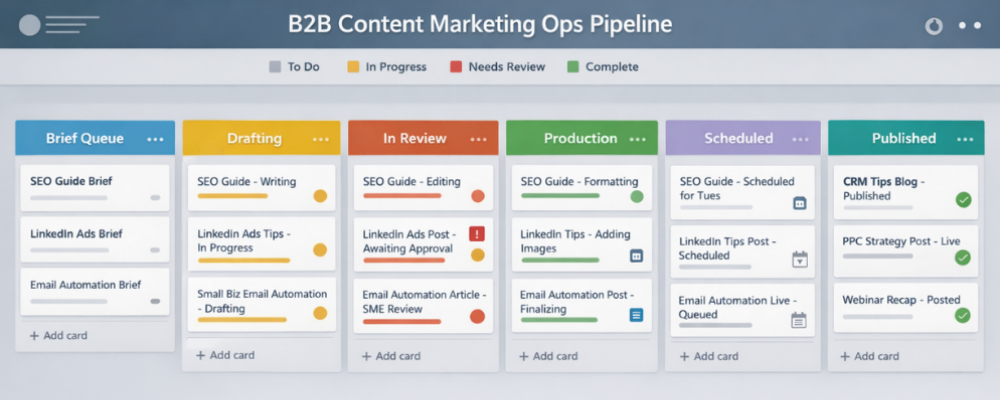
Project Management (Trello, Asana, or Monday):Create columns matching your pipeline stages. Every piece of content becomes a card that moves left to right. Anyone can see at a glance where content is stuck.
Example Trello structure:
Column 1: Brief Queue
Column 2: Drafting
Column 3: Review
Column 4: Production
Column 5: Scheduled
Column 6: Published
Automation Connections:Use Zapier or native integrations to trigger notifications when cards move. When a draft moves to "Review," the editor gets a Slack ping. When content moves to "Scheduled," social media posts auto-queue.
Brief Templates (Notion or Google Docs):Standardize your content briefs in a format that's easy to complete and easy to reference. The template should include all five non-negotiable fields with prompts that make completion obvious.
Editorial Calendar:Your project management tool can serve double duty, or use a dedicated calendar view. The key: visibility into what's publishing when, so you can spot gaps before they happen.
Identifying and Eliminating Bottlenecks
Once you map your pipeline stages, tracking where content gets stuck becomes straightforward.
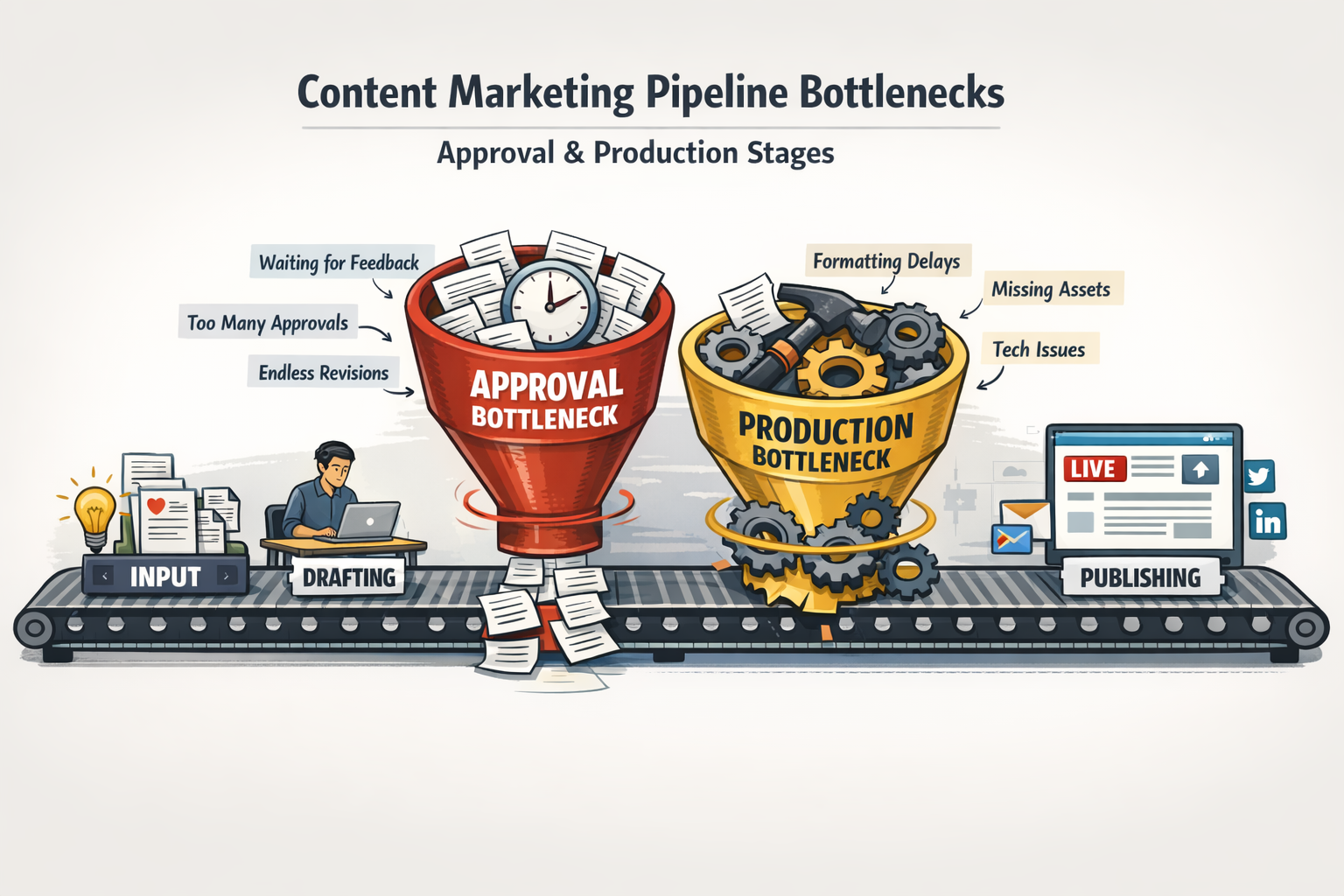
The Blank Page Bottleneck
If drafts take forever, trace backward. Usually the brief was incomplete, the topic was too vague, or the writer lacks the context needed to produce quickly.
Solution: Invest more in Stage 1. Better inputs create faster drafts. If writers consistently ask the same clarifying questions, those questions belong in your brief template.
The Approval Bottleneck
Content sitting in "review" for days or weeks signals unclear ownership or overcomplicated approval chains.
Solution: Reduce the number of people who must approve content. Designate one person as the final authority. Set maximum review times (24-48 hours is reasonable for most B2B content) and enforce them.
The approval bottleneck kills more content programs than any other factor. When too many stakeholders must review content, or when approval authority is unclear, posts languish indefinitely.
The Publishing Bottleneck
If approved content doesn't get published promptly, your production stage lacks structure.
Solution: Assign specific responsibility for the publish-and-distribute workflow. Consider automating parts of this process—scheduling tools and CMS templates reduce manual steps.
Where AI Fits in Your Pipeline
The trend toward AI-assisted content production is reshaping what's possible [3]. But AI isn't equally useful across all pipeline stages.
Where AI Accelerates Operations:
Brief generation: AI can draft initial briefs from a keyword, pulling in search intent data and competitor analysis
First draft production: With strong inputs, AI produces solid starting drafts that humans refine
Content repurposing: Turning a long-form post into social snippets, email copy, or summary versions
Publishing automation: Scheduling, distribution, and cross-posting
Where Humans Remain Essential:
Strategic topic selection (what to write about)
Final quality review (does this actually help our audience?)
Brand voice calibration (does this sound like us?)
Nuanced editing decisions (is this claim defensible?)
The most effective B2B content operations combine both: automated systems handle repetitive logistics while humans focus on decisions that require context and expertise.
Think of AI as a production accelerator, not a replacement for editorial judgment.
Building Consistency Through Systems
The goal of an ops pipeline isn't just efficiency. It's consistency.
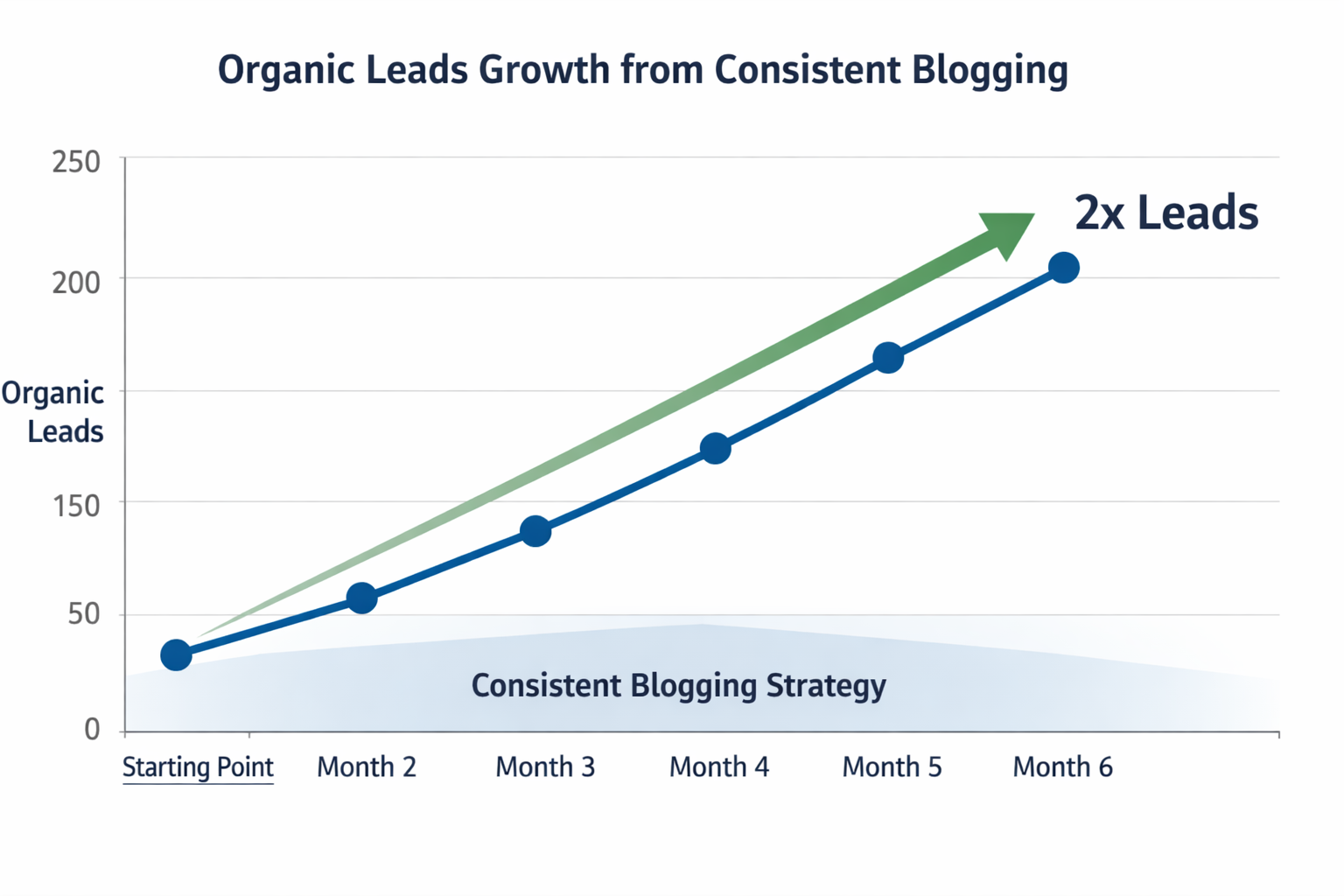
Search engines reward sites that publish regularly [4]. Domain authority compounds over time when fresh, relevant content appears predictably. Stop-and-start publishing undermines both SEO performance and audience trust.
A functioning ops pipeline makes consistency the default, not the exception. You don't need to "find time" for content because the system creates its own momentum.
Weekly Publishing Cadence
For most B2B companies, publishing 2-3 quality posts per week creates meaningful SEO traction within 3-6 months. That cadence requires:
2-3 briefs ready at the start of each week
2-3 drafts completed by mid-week
2-3 reviewed and formatted posts ready for publishing
Build your pipeline capacity around this target. If you can't sustain 2-3 posts weekly with current resources, either simplify your process or add capacity.
Batch Processing
Manufacturing figured this out decades ago: switching between tasks is expensive. The same principle applies to content.
Rather than context-switching between research, writing, and editing throughout the day, batch similar tasks:
Dedicate Monday mornings to brief creation for the week
Block Tuesday and Wednesday for drafting sessions
Reserve Thursday for review and editing passes
Handle production and scheduling on Fridays
Batching reduces cognitive overhead and increases throughput without increasing hours worked.
Measuring Pipeline Performance
You can't improve what you don't measure. Track these metrics for your content ops:
Throughput: Posts published per week/month
Cycle time: Average days from brief to publish
Stage duration: Time spent in each pipeline stage
Bottleneck frequency: Which stages most often cause delays
Quality consistency: How often does content require significant revision post-review?
Review these metrics monthly. Look for patterns. If cycle time is creeping up, identify which stage is slowing down. If throughput drops, trace backward to find the constraint.
The Compound Effect of Operational Excellence
Here's what changes when you build a real ops pipeline for B2B content marketing:
Publishing becomes predictable. You know exactly how many posts will go live next month because you can see them moving through the system.
Quality stabilizes. Standardized inputs and review checkpoints eliminate the variance that comes from ad-hoc processes.
Scale becomes possible. Adding capacity means expanding the pipeline—hiring more writers, adding review bandwidth—rather than hoping your team can somehow work faster.
Traffic compounds. Consistent publishing builds domain authority over time. Search engines reward reliability [5].
And perhaps most importantly: you stop wasting energy on logistics. The mental overhead of wondering "will we actually publish this?" disappears. That energy goes back into the work that matters—creating content that genuinely helps your audience.
Ready to stop managing content chaos and start running a real ops pipeline? Try the Blog Engine free and see how automated content operations work in practice.
Frequently Asked Questions
How long does it take to see results from consistent B2B content publishing?
Most B2B companies see measurable SEO improvements within 3-6 months of consistent publishing. Search engines need time to crawl, index, and evaluate new content. Domain authority builds gradually as your content library grows and earns backlinks. The key is maintaining publishing consistency long enough for compounding effects to materialize—stopping and restarting resets the clock.
What's the ideal team size for managing a B2B content ops pipeline?
A functional content pipeline can work with as few as 2-3 people handling different roles, or scale to dedicated specialists for each stage. The critical factor isn't team size but clear role definition. Every pipeline stage needs an owner, whether that's one person wearing multiple hats or separate specialists for research, writing, editing, and production. Ambiguity about ownership causes more delays than limited headcount.
How do I know if my content brief is complete enough?
A complete brief answers every question a writer might ask before starting. Test this by giving a brief to someone unfamiliar with the topic—if they need clarification before drafting, the brief needs more detail. Essential elements include target keyword, search intent, audience segment, required sections, word count, internal links, and competitive differentiators. When writers can start immediately without emailing questions, your briefs are working.
Should I use AI tools for B2B content production?
AI tools can significantly accelerate drafting when combined with strong inputs and human oversight. They work best for initial draft generation, content repurposing, and formatting assistance. Human review remains essential for factual accuracy, brand voice, and strategic alignment. The most effective approach treats AI as a production accelerator, not a replacement for editorial judgment—use it to handle repetitive work while humans focus on quality control.
What's the most common reason B2B content pipelines fail?
The approval bottleneck kills more content programs than any other factor. When too many stakeholders must review content, or when approval authority is unclear, posts languish indefinitely. The fix is simple but requires organizational commitment: designate one person as final approver, limit total reviewers to two or fewer, and set maximum review turnaround times that everyone respects.
About This Content
This article was produced by The Mighty Quill's content team, combining deep expertise in B2B marketing operations with practical experience building scalable content systems. Our team includes specialists with backgrounds in SEO, content strategy, and marketing automation who have helped businesses across SaaS, e-commerce, and professional services build sustainable organic traffic engines. We've made every mistake described here—and built the systems to prevent them.
Cited Works
Ford Motor Company — "The Moving Assembly Line and the Five-Dollar Workday." https://corporate.ford.com/articles/history/moving-assembly-line.html
Content Marketing Institute — "B2B Content Marketing Research: Annual Report." https://contentmarketinginstitute.com/research/
HubSpot — "The State of AI in Marketing."
https://www.hubspot.com/state-of-marketing
Search Engine Journal — "How Often Should You Blog for SEO?" https://www.searchenginejournal.com/how-often-should-you-blog-for-seo/
Moz — "Domain Authority: What It Is and How to Improve It." https://moz.com/learn/seo/domain-authority