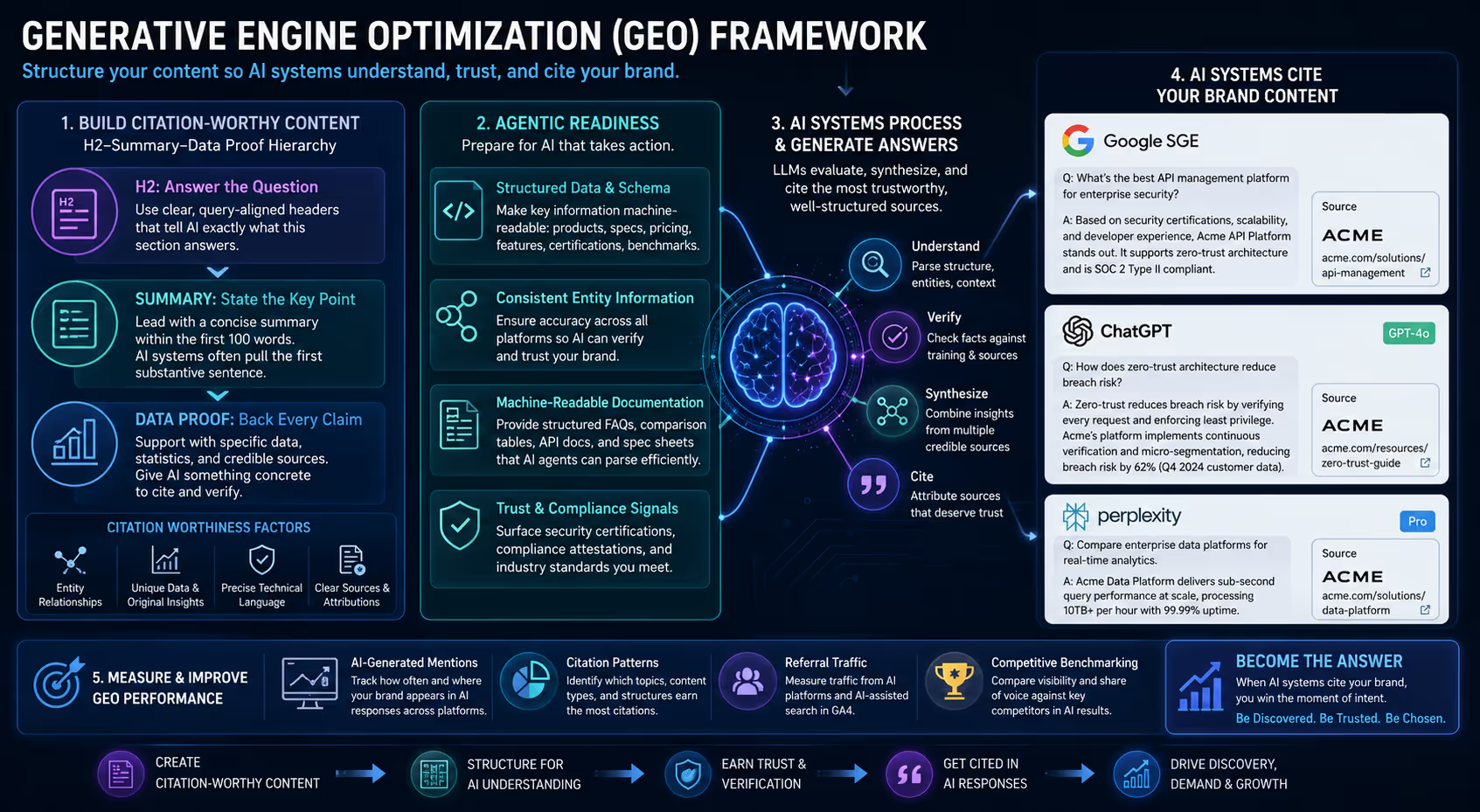
AI search doesn't navigate your site. It interprets it.
When Perplexity, ChatGPT, or Google's AI Overview decides whether to cite your content, they're not clicking through your navigation menu. They're processing your entire site as a web of semantic relationships—determining in milliseconds whether you've built genuine expertise or just published isolated posts competing for keywords.
This changes everything about how internal linking needs to work.
Traditional SEO treated internal links primarily as crawl paths and authority signals. That model still applies—but it's no longer sufficient. AI systems don't just follow links; they use them to understand how your ideas connect. A scattered linking structure tells these systems your content lacks coherent expertise. A strategic linking architecture tells them you're a source worth citing.
Here's how to build internal linking strategies that work for both traditional crawlers and the AI systems increasingly shaping how people find information.
How AI Search Systems Interpret Your Site Structure
To understand why internal linking matters more now, you need to understand how AI search differs from traditional search.
Writing posts structured for AI Overview citations completes this picture — the internal linking architecture tells AI systems how your content is organized, while the answer-ready structure within each post tells them which passages are worth citing.
Google's crawlers follow links, index pages, and assign PageRank based on link relationships [1]. That process is mechanical—following paths and counting signals.
AI systems work differently. Large language models represent content as points in a high-dimensional semantic space. When you link two pages together, you're not just creating a crawl path—you're signaling to AI systems that these concepts are related. Strong internal linking essentially moves related content closer together in the AI's understanding of your site.
Think of it this way: if traditional SEO treated links as roads between pages, AI search treats them as evidence of conceptual relationships. The AI is asking: Does this website demonstrate comprehensive, connected expertise on this topic?
Sites with well-structured internal linking architectures are more likely to be cited in AI-generated responses because they present information in ways that LLMs can easily parse and trust [2]. When your content forms clear conceptual clusters with strong internal connections, AI systems can confidently extract and cite your information.
Building Topic Cluster Architectures That Signal Expertise
The foundation of AI-friendly internal linking is topic clustering. This isn't a new concept, but its importance has intensified as AI systems evaluate topical authority.
For a concrete implementation of this architecture in a lead-generation context, the 7-link block framework for lead-gen internal linking provides a repeatable per-post structure — specifying exactly which link types go where within each article to move readers toward conversion without over-optimizing.
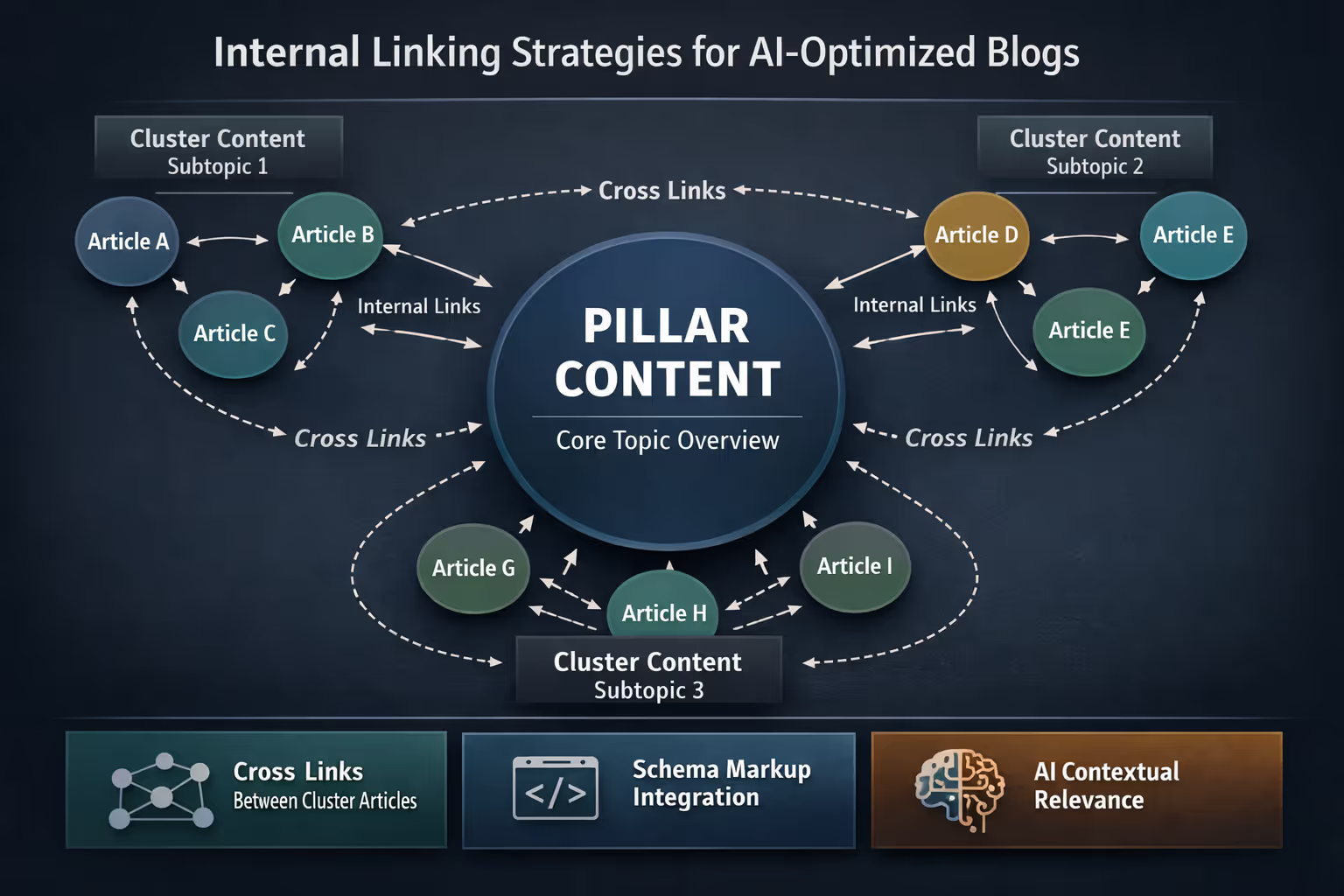
A topic cluster consists of three elements:
Pillar content: A comprehensive page covering a broad topic
Cluster content: Supporting articles addressing specific subtopics
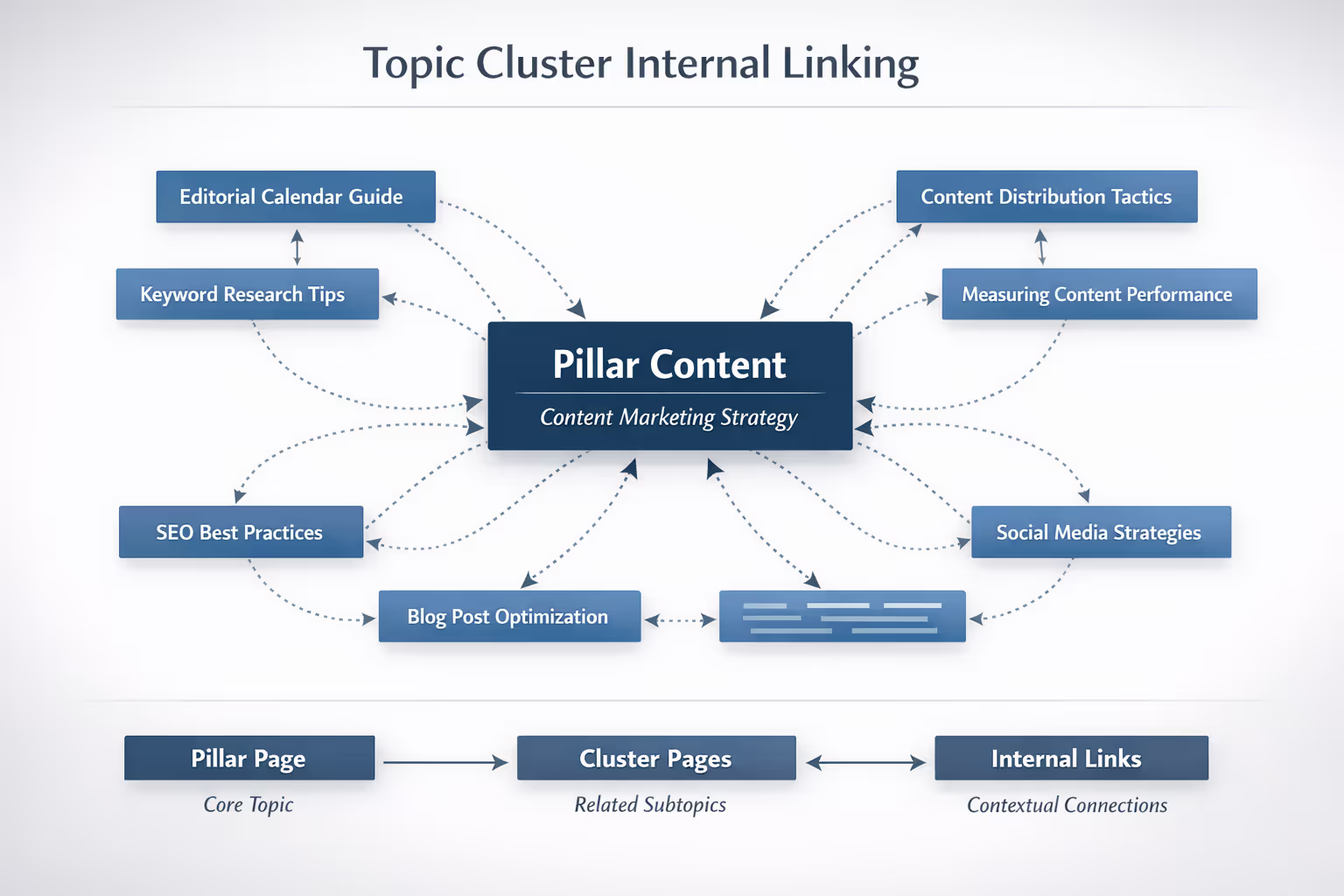
Internal links: Bidirectional connections between pillar and cluster pages, plus cross-links between related cluster articles
For example, a pillar page on "content marketing strategy" might link to cluster articles about editorial calendars, keyword research, content distribution, and performance measurement. Each cluster article links back to the pillar and cross-links to related cluster pages where contextually relevant.
Topic cluster architecture only works if each piece in the cluster targets a distinct angle — which is why having a keyword topic bank SOP to avoid cannibalization is the structural prerequisite for internal linking strategy to function as intended at scale.
This structure signals topical authority to both Google and AI systems. It demonstrates that you don't just have one article on a subject—you've covered it from multiple angles with genuine depth.
Building effective clusters requires focusing on semantic relationships rather than keyword variations. AI systems understand concepts, not just word matches. Your cluster pages should genuinely expand on different aspects of the pillar topic, not rehash the same information with slightly different phrasing [3].
When planning clusters, map out the distinct questions someone researching your topic would have. Each cluster page should answer a specific question that the pillar page touches on but doesn't fully address. The links between them should feel like natural "learn more" pathways—because that's exactly what AI systems are evaluating.
Schema Markup Integration for Enhanced AI Recognition
Internal links become significantly more powerful when paired with structured data. Schema markup helps search engines and AI systems understand the nature and context of your content—and specific schema properties can reinforce the relationships you're building through internal links [4].
For the full implementation guide — covering Article, FAQ, and HowTo schema types with validation steps and the specific properties that help AI systems parse your content — schema markup that reinforces site structure explains how structured data and internal linking work together as a combined authority signal.
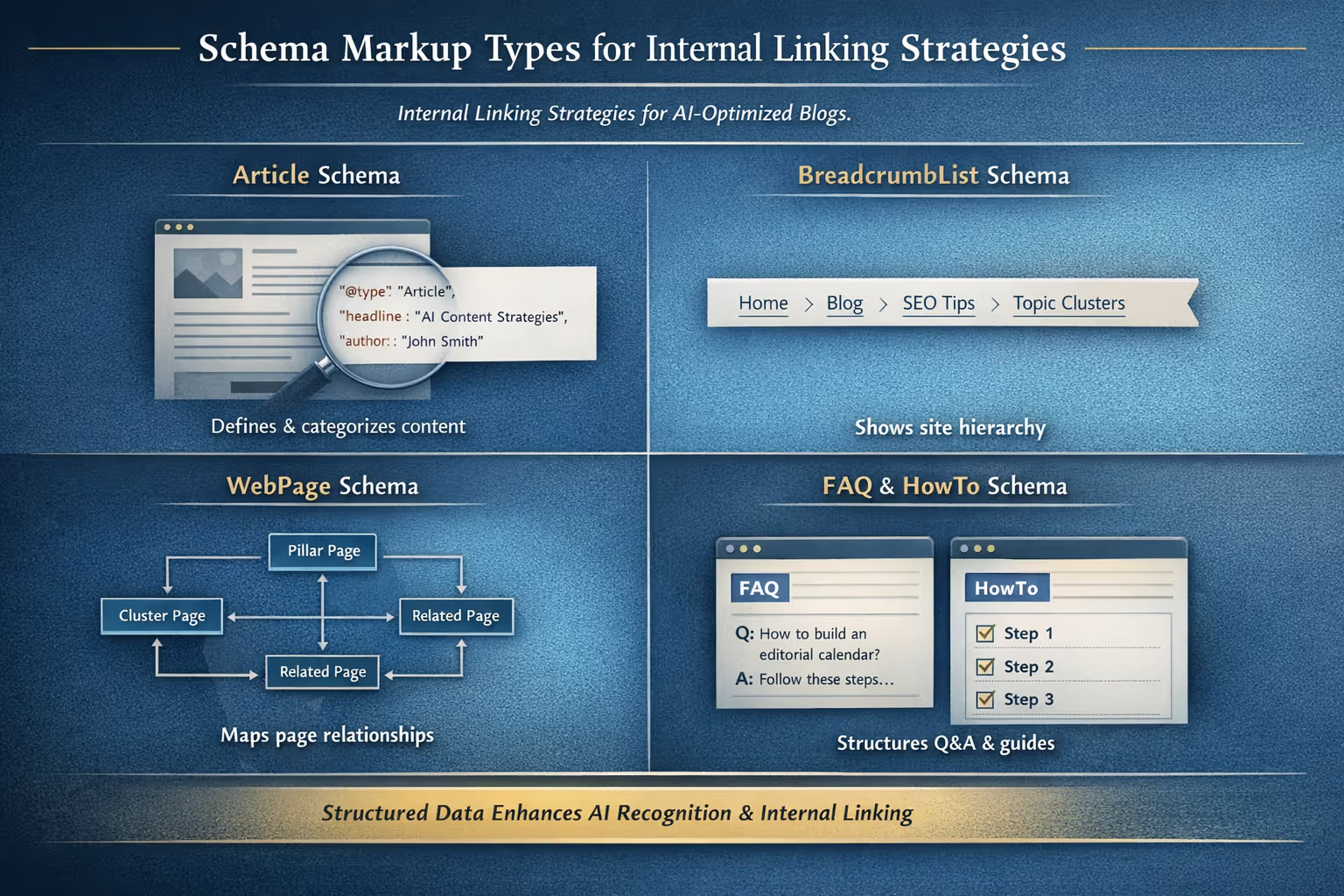
Core Schema Types for Internal Linking
| Schema Type | Purpose | AI Benefit |
|---|---|---|
| Article | Identifies content type and metadata | Helps AI categorize and cite content |
| BreadcrumbList | Shows site hierarchy | Clarifies topical relationships |
| WebPage | Defines page relationships | Supports entity recognition |
| FAQPage | Structures Q&A content | Increases AI answer extraction |
| HowTo | Formats instructional content | Improves step-by-step citations |
Going Deeper: The mentions and about Properties
Beyond basic schema types, two properties are particularly valuable for AI optimization: mentions and about.
The about property explicitly tells AI systems what entity or topic your page covers. The mentions property indicates other entities referenced in your content. When you implement these properties and they align with your internal linking structure, you're giving AI systems multiple reinforcing signals about how your content relates.
For example, if your pillar page uses about schema pointing to "Content Marketing Strategy" and your cluster pages use mentions to reference that same entity while linking back to the pillar, you're creating a coherent semantic signal that AI systems can easily interpret.
BreadcrumbList schema is particularly powerful when implemented alongside your internal links. Breadcrumbs that show a clear path from homepage to category to article reinforce your site hierarchy for AI crawlers. When your breadcrumb structure matches your internal linking architecture, AI systems can confidently understand where each piece of content fits within your overall knowledge base.
FAQPage schema combined with internal links creates natural citation paths. When you include FAQ sections with internal links to more detailed content, you're creating exactly the kind of structured, connected information that AI assistants prefer to cite [5].
Contextual Anchor Text Strategies for Semantic Clarity
Anchor text—the clickable text in a hyperlink—has always been an SEO signal. For AI-optimized blogs, the strategy shifts toward semantic clarity that helps both humans and machines understand relationships.
AI systems parse anchor text to understand the relationship between linked pages. Generic anchors like "click here" or "read more" provide no semantic value. Overly optimized anchors that repeat exact-match keywords on every link look manipulative and can trigger algorithmic skepticism.
The goal is descriptive, natural anchor text that accurately represents the linked content while including relevant entity names where appropriate.
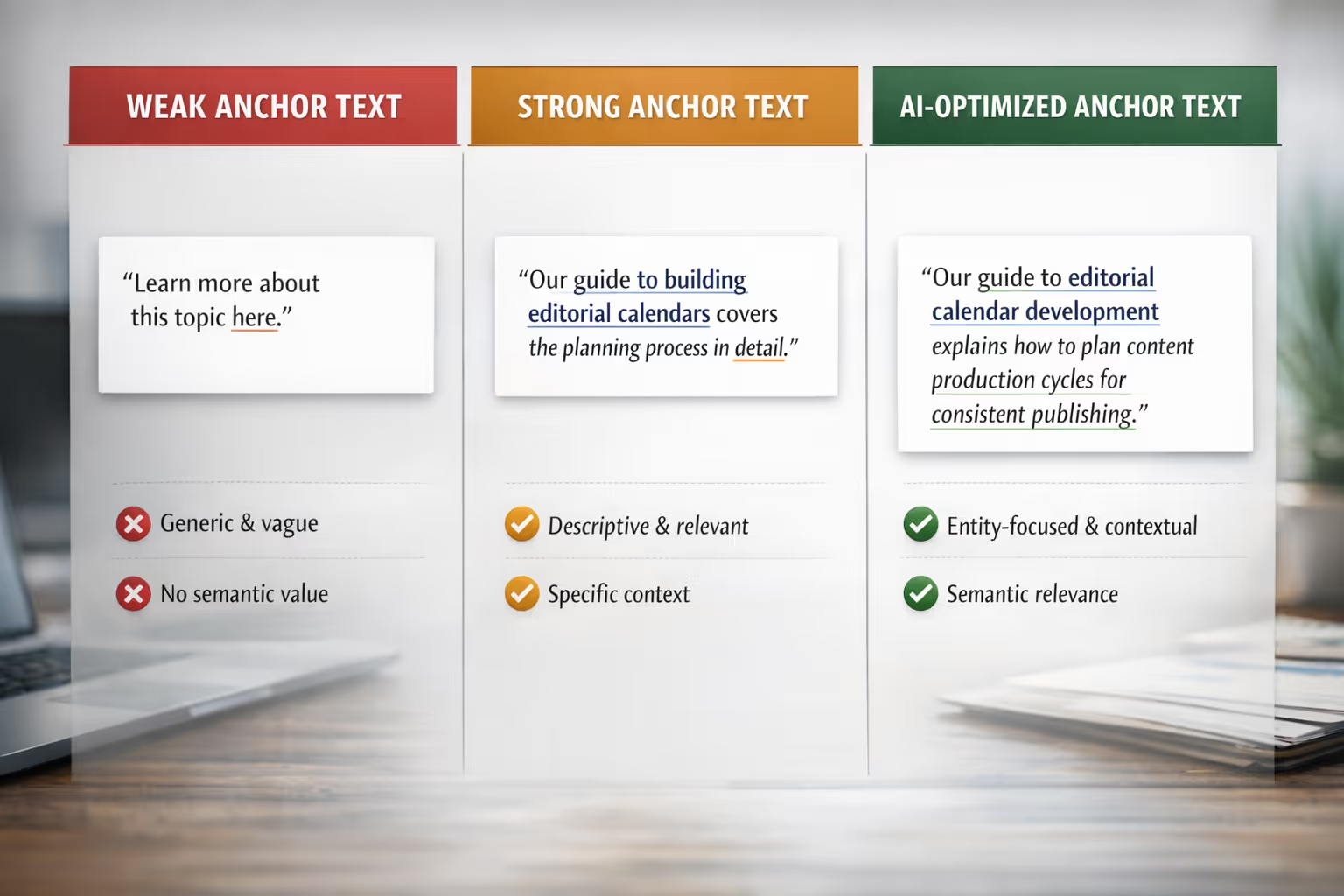
Anchor Text Examples (Weak → Strong → AI-Optimized)
Weak:
"Learn more about this topic here."
Strong:
"Our guide to building editorial calendars covers the planning process in detail."
AI-Optimized:
"Our guide to editorial calendar development explains how to plan content production cycles for consistent publishing."
The AI-optimized version includes the specific entity ("editorial calendar development") while providing context about what the reader will find. This helps AI systems understand the semantic relationship between the source page and the destination.
When creating anchor text, consider what question a reader might have at that moment. The anchor should signal that clicking will answer that question. This aligns human intent with AI interpretation—both benefit from clear, specific anchors.
Vary your anchor text naturally across your site. Linking to the same page with identical anchor text dozens of times sends unnatural signals. Use variations that reflect the different contexts where each link appears, while keeping entity names consistent where they add clarity [6].
Using AI to Draft Internal Link Suggestions at Scale
Here's where modern tools become genuinely useful—not to replace your judgment, but to surface connections you might miss manually across a large content library.
A Practical Process for AI-Assisted Link Auditing
Step 1: Inventory your content systematically
Create a spreadsheet or database with all published URLs, their primary topics, target keywords, and the main question each page answers. This becomes your reference for AI analysis.
Step 2: Use AI to identify semantic relationships
Feed your content inventory to an AI assistant with a prompt like:
"Analyze these blog posts and identify which pages cover semantically related topics. For each page, suggest 2-3 other pages it should link to, and explain the conceptual relationship between them. Focus on connections that would help a reader explore the topic more deeply."
The AI will surface relationships based on topical overlap that you might miss when reviewing content individually.
Step 3: Identify orphan content
Ask the AI to flag pages that appear conceptually isolated—content that doesn't have obvious connections to your other posts. These represent missed opportunities for authority distribution and may indicate gaps in your topic clusters.
Step 4: Generate contextual placement suggestions
For high-priority links, ask the AI to suggest specific passages where an internal link would naturally fit:
"Here is the full text of [Article A]. Suggest 2-3 specific sentences where I could naturally add a link to [Article B about editorial calendars]. The link should feel helpful to readers, not forced."
Step 5: Review and implement with human judgment
AI suggestions are starting points, not finished decisions. Review each recommendation considering:
Does this link genuinely help the reader?
Does it fit naturally in context?
Does it support your overall topic cluster strategy?
This process scales internal linking optimization without sacrificing quality. You're reviewing curated recommendations rather than manually auditing hundreds of pages blind.
For teams who want the internal linking strategy handled as part of production rather than retrofitted afterward, blog writing services that handle internal linking strategy deliver content with link placements already mapped to your site architecture — so each post arrives linking-ready rather than requiring a separate audit pass.
Link Placement and User Experience
Where you place internal links affects both user engagement and how search systems weight those signals.
Links within the main body content typically carry more weight than sidebar or footer links because they're contextually embedded and more likely to be clicked [7]. However, placement should always prioritize genuine usefulness over algorithmic gaming.
High-Value Link Placements
Early in the article: Links in the first few paragraphs reach more readers (many don't scroll to the end) and signal importance to search systems. If you're referencing a concept you've covered in depth elsewhere, link early.
Within supporting paragraphs: When you mention a related concept that deserves more explanation than you can provide in context, link to your detailed content on that topic. This is the most natural form of internal linking.
Conclusion sections: Readers finishing an article are primed for deeper exploration. Link to logical next steps—the natural "what should I read next?" pathways.
FAQ sections: Questions naturally invite links to more comprehensive answers. If someone asks "How do I build an editorial calendar?" and you have a full guide on that topic, link to it.
Placements to Use Sparingly
Navigation and footer links: Useful for site structure but carry less contextual weight. These are "always available" links rather than contextually relevant recommendations.
Excessive sidebar links: Can feel cluttered and dilute focus. Use sparingly for truly related content.
Avoid overwhelming readers with links. A paragraph with five internal links feels chaotic and desperate. One or two well-placed links per major section typically strikes the right balance between helpfulness and readability.
Measuring Internal Linking Performance
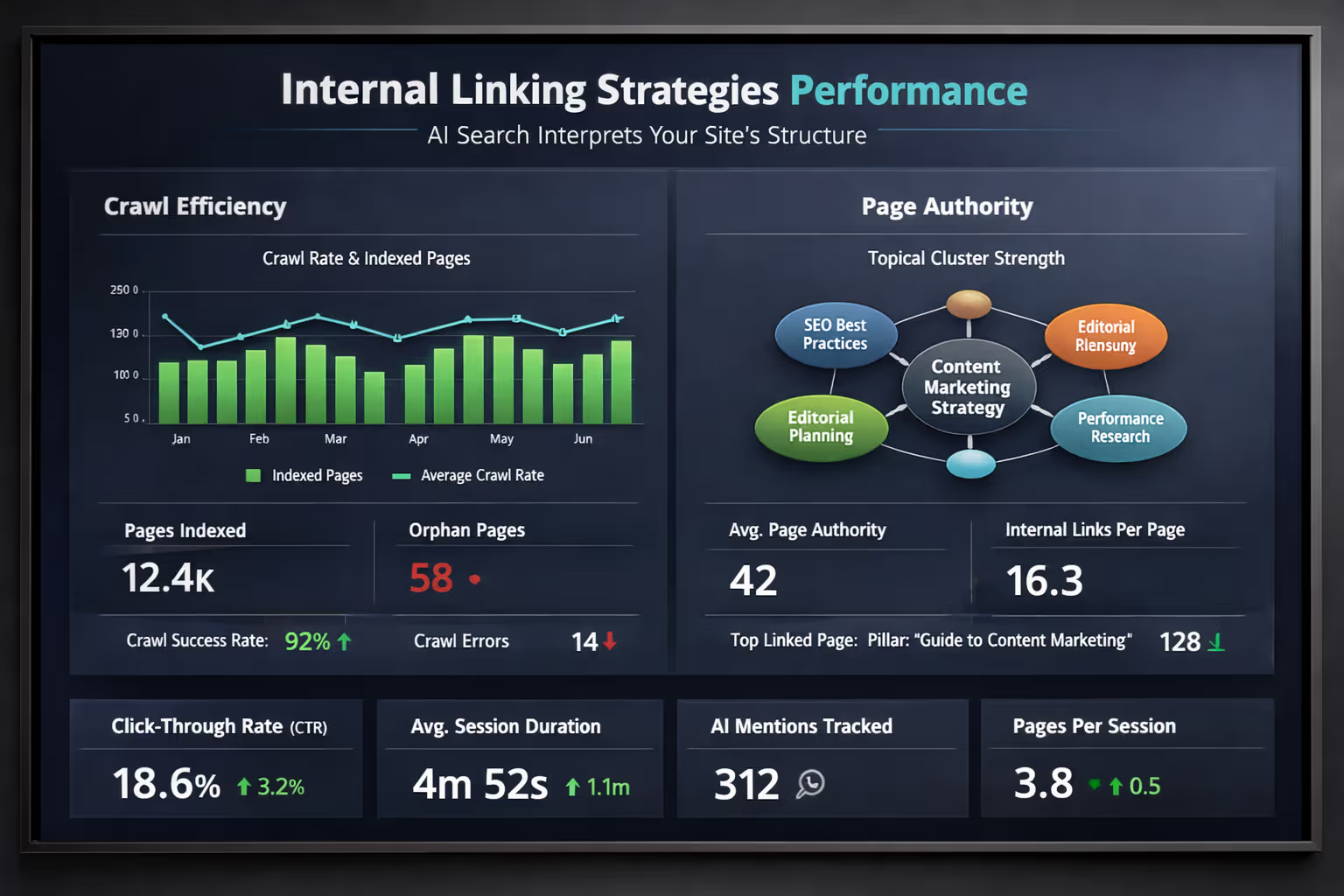
Internal linking optimization isn't complete without measurement. Track these metrics to understand what's working:
Crawl efficiency: Use Google Search Console to monitor how quickly new pages get indexed and whether any pages are orphaned from crawlers' perspective. If pages aren't being discovered, your internal linking may have gaps.
Page authority distribution: Tools like Ahrefs and Moz show internal link counts and how authority flows through your site [8]. Look for important pages receiving few internal links—they may need more support.
User engagement with links: Analyze click-through rates on internal links using heatmapping tools or Google Analytics event tracking. Which links actually get clicked? This reveals whether your links are genuinely useful or just present.
AI citation tracking: Monitor whether your content appears in AI-generated answers. Tools are emerging specifically to track visibility in AI search results—this is an evolving measurement area worth watching.
Time on site and pages per session: Strong internal linking should increase both metrics as readers navigate deeper into your content. If these metrics are flat, your links may not be compelling enough.
Review these metrics quarterly and adjust your linking strategy based on performance. Pages that should be performing well but aren't may need stronger internal link support from your highest-traffic content.
Common Internal Linking Mistakes to Avoid
Even well-intentioned internal linking strategies can undermine your goals.
Linking to low-quality pages: Internal links pass authority. Pointing readers toward thin or outdated content hurts both user experience and SEO performance. Before adding a link, ask whether the destination page is genuinely worth visiting.
Ignoring deep pages: Many sites over-link to their homepage and top-level category pages while neglecting valuable content buried deeper in the site architecture. Your best internal linking opportunities often involve lifting up quality content that lacks visibility.
Forcing irrelevant links: If a link doesn't make sense contextually, don't include it. AI systems are increasingly sophisticated at detecting unnatural patterns, and forced links frustrate readers.
Neglecting link maintenance: Broken internal links waste crawl budget and frustrate users. Audit regularly and fix or remove dead links. This is especially important after site migrations or content consolidation.
Keyword-stuffing anchor text: Exact-match anchor text on every link looks manipulative to both search systems and readers. Write anchor text naturally, focusing on clarity over keyword density.
Handling Internal Links for Zero-Click Searches
One question we hear frequently: if AI search delivers answers without clicks, why bother optimizing internal links?
The answer is that internal linking serves dual purposes. First, it still supports traditional search visibility where clicks happen. Second—and increasingly important—strong internal linking makes your site more likely to be cited as a source in AI-generated responses.
When AI systems cite sources, they're selecting from content that demonstrates clear expertise and trustworthy structure. Your internal linking architecture is a primary signal of that organization. Even if users don't click through from the AI answer, your brand gets visibility as an authoritative source.
Additionally, users who do click through from AI citations tend to be highly qualified—they've already read the AI summary and want deeper information. A well-linked site keeps these valuable visitors engaged longer.
Does Linking to External Sources Hurt AI Rankings?
No—and in fact, thoughtful external linking can strengthen your content's credibility.
AI systems are trained to recognize authoritative, well-researched content. Citing reputable external sources signals that your content is grounded in established knowledge, not invented from whole cloth. This builds trust with both AI systems and human readers.
The key is relevance and quality. Link to authoritative sources that genuinely support your points. Don't link externally just to appear well-researched—link because the external source adds value for your reader.
Balance external links with internal links. If every link in an article points externally, you're sending all your referral traffic away. A healthy ratio includes more internal links than external, with external links reserved for citations, definitions from authoritative sources, or genuinely valuable external resources.
Building Your Internal Linking Strategy for AI Search
Internal linking for AI-optimized blogs requires thinking beyond traditional SEO mechanics.
Build topic clusters that demonstrate comprehensive expertise on your core subjects. Implement schema markup—especially BreadcrumbList, about, and mentions properties—to reinforce content relationships. Use descriptive anchor text that helps both humans and machines understand what they'll find. Leverage AI tools to identify linking opportunities at scale while maintaining human judgment on implementation. Measure results and refine continuously.
The sites that will win in AI search are those that present clear, authoritative, well-organized information. Your internal linking structure is a primary signal of that organization—it's how AI systems understand what you know and how your knowledge connects.
Start by auditing your existing internal links. Identify your strongest content clusters and ensure they're properly connected. Find orphan pages that deserve more visibility and link to them from relevant high-traffic content. Then build from there.
Ready to optimize your blog for AI search? Book a strategy call with The Mighty Quill to see how a consistent content engine can strengthen your site's authority and visibility.
Frequently Asked Questions
How many internal links should each blog post include?
There's no universal formula, but most blog posts benefit from three to ten contextually relevant internal links. Focus on quality and relevance over hitting a number—each link should genuinely help readers find related information. Shorter posts might need fewer links, while comprehensive guides can support more. The test is whether every link feels natural within the content rather than forced for SEO purposes. If a link makes you pause and wonder whether it belongs, it probably doesn't.
Do internal links help with AI search rankings specifically?
Yes. Internal links help AI systems understand your site's topical structure and expertise depth. AI search platforms evaluate whether a source demonstrates comprehensive, connected knowledge on a subject. Well-linked content clusters signal that expertise clearly by showing AI systems how your ideas relate to each other. While traditional ranking factors still apply, organized internal linking increasingly influences whether your content gets cited in AI-generated responses because it makes your expertise easier for AI systems to parse and trust.
How often should I audit my internal linking structure?
Quarterly audits work well for most sites. During each audit, check for broken links, identify orphan pages receiving no internal links, and evaluate whether new content has been properly integrated into existing topic clusters. Sites publishing frequently may benefit from monthly quick-checks, while smaller sites can audit less often. Consistency matters more than frequency—the goal is ensuring your internal linking structure evolves alongside your content library rather than becoming stale.
Should I use the same anchor text when linking to a page multiple times?
No—vary your anchor text naturally. Using identical anchor text for every link to the same page looks unnatural to search engines and AI systems. Instead, use variations that reflect the different contexts where each link appears. Each anchor should accurately describe the linked content while fitting naturally within its surrounding paragraph. Keep entity names consistent where they add clarity, but vary the supporting language around them.
Can internal linking alone improve my search visibility?
Internal linking is essential infrastructure but not a standalone solution. It improves crawlability, distributes page authority, and helps establish topical expertise—all of which support better visibility. However, internal linking works best alongside high-quality content, solid technical SEO fundamentals, and external authority signals like backlinks. Think of internal linking as the connective tissue that helps search systems understand and trust your content—necessary, but most effective when the content itself delivers genuine value.
About This Content
This article was produced by The Mighty Quill's content team, which combines extensive digital marketing experience with AI-assisted research and human editorial oversight. Our founder has over 15 years of experience in SEO and content strategy, working with SaaS companies, e-commerce brands, and marketing agencies. We specialize in creating content systems that perform in both traditional and AI-driven search environments, ensuring every piece is optimized for visibility while maintaining genuine value for readers.
Cited Works
[1] Google Search Central — "How Google Search Works: Crawling and Indexing." https://developers.google.com/search/docs/fundamentals/how-search-works
[2] Moz — "The Beginner's Guide to SEO: Internal Links." https://moz.com/learn/seo/internal-link
[3] HubSpot — "Topic Clusters: The Next Evolution of Content Strategy." https://blog.hubspot.com/marketing/topic-clusters-seo
[4] Schema.org — "Getting Started with Schema Markup."
https://schema.org/docs/gs.html
[5] Google Search Central — "FAQ Structured Data Guidelines." https://developers.google.com/search/docs/appearance/structured-data/faqpage
[6] Ahrefs — "Anchor Text: A Data-Driven Guide."
https://ahrefs.com/blog/anchor-text/
[7] Nielsen Norman Group — "How Users Read on the Web." https://www.nngroup.com/articles/how-users-read-on-the-web/
[8] Ahrefs — "Internal Links for SEO: An Actionable Guide."
https://ahrefs.com/blog/internal-links-for-seo/