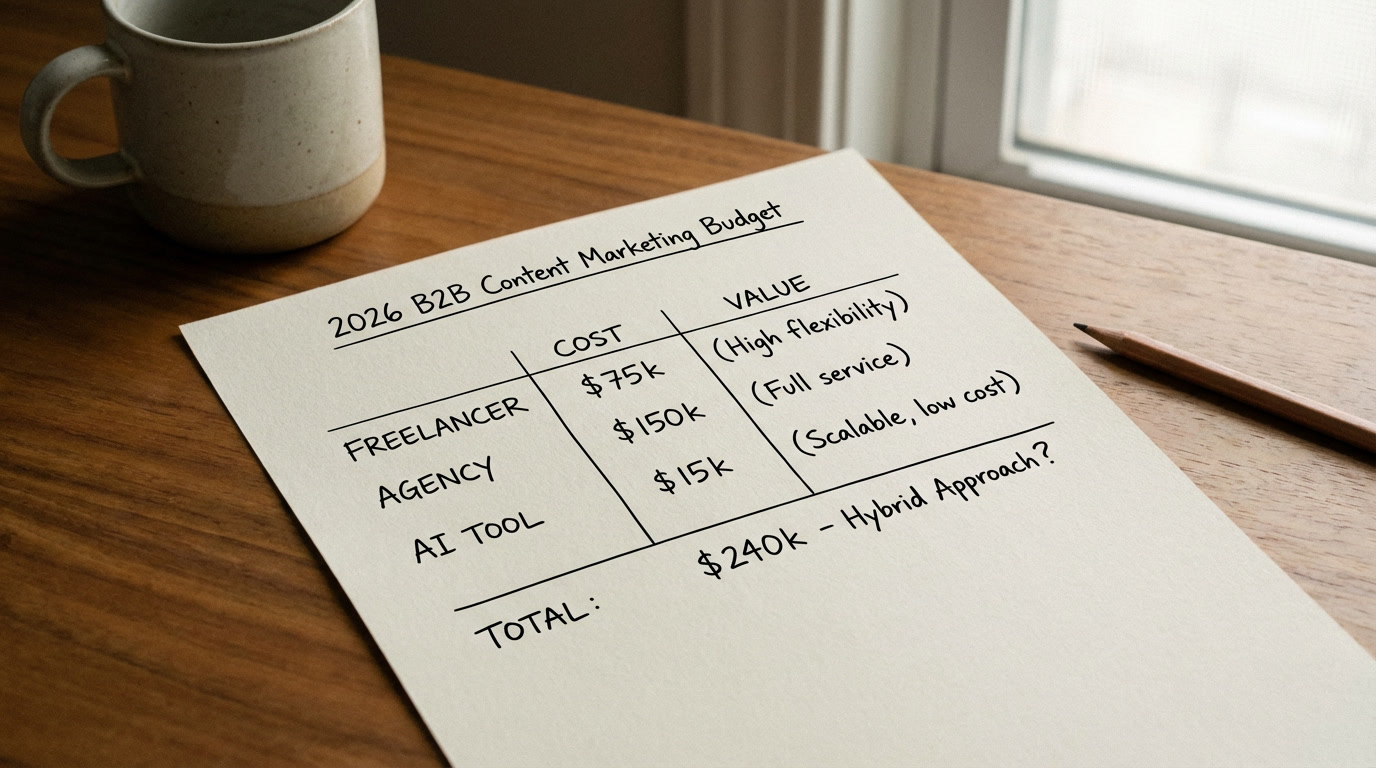
If you're planning your content marketing budget for 2026, you've probably noticed something frustrating: pricing information is all over the map. One freelancer quotes $150 per post. An agency wants $2,500. A DIY tool costs $29 per month. And now there's an entirely new category—AI-assisted managed services—that most pricing guides don't even mention.
So how much should B2B blog content actually cost?
The answer depends on what you're buying. A blog post isn't just a blog post. You're paying for research depth, strategic alignment, SEO optimization, editorial quality, and sometimes publishing support. The price reflects which of those elements are included—and who's doing the work.
This guide breaks down B2B blog content costs across every major category: freelancers, agencies, DIY tools, and the emerging AI+human managed service model. By the end, you'll know exactly what to budget and which option fits your business.
Why B2B Content Pricing Varies So Dramatically
Content pricing confusion exists because buyers and sellers often measure different things.
A freelancer charging $200 might deliver a solid 1,200-word draft in your voice. An agency charging $1,500 for the same word count might include keyword research, competitive analysis, custom graphics, and SEO metadata. Neither price is "wrong"—they're just different products.
B2B content also carries higher stakes than consumer content. A blog post targeting enterprise software buyers needs industry expertise, accurate technical details, and strategic keyword targeting. That expertise commands higher rates than generalist writing.
Why 2026 Pricing Looks Different
Several market forces are reshaping content costs heading into 2026:
AI has collapsed the middle of the market. Two years ago, you'd pay $300–$500 for a competent generalist writer. Today, AI tools can produce that same "competent but generic" draft for nearly nothing. This pushes pricing toward two extremes: cheap AI-assisted content or premium expert content. The middle tier is disappearing.
Inflation has raised the floor. Experienced freelancers and agency professionals have increased their rates to match rising costs of living. According to the Editorial Freelancers Association's 2024 rate survey, copywriting and content writing rates have increased measurably over the past two years [1].
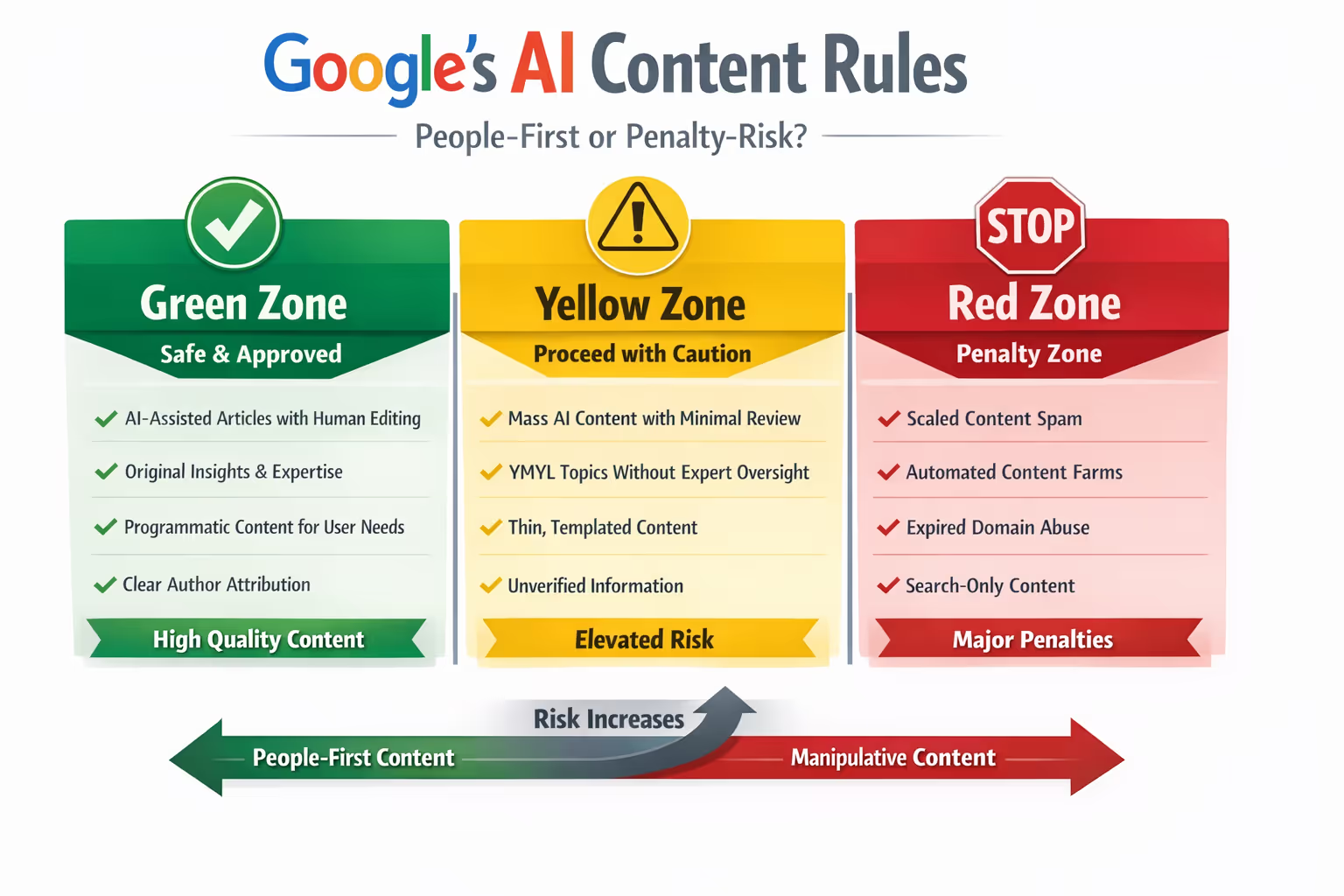
Quality expectations have risen. Google's helpful content updates reward depth, expertise, and originality. Content that would have ranked adequately in 2022 now gets buried. Businesses are learning—sometimes painfully—that cheap content often costs more in the long run through poor performance and wasted publishing effort.
B2B Blog Content Pricing by Category
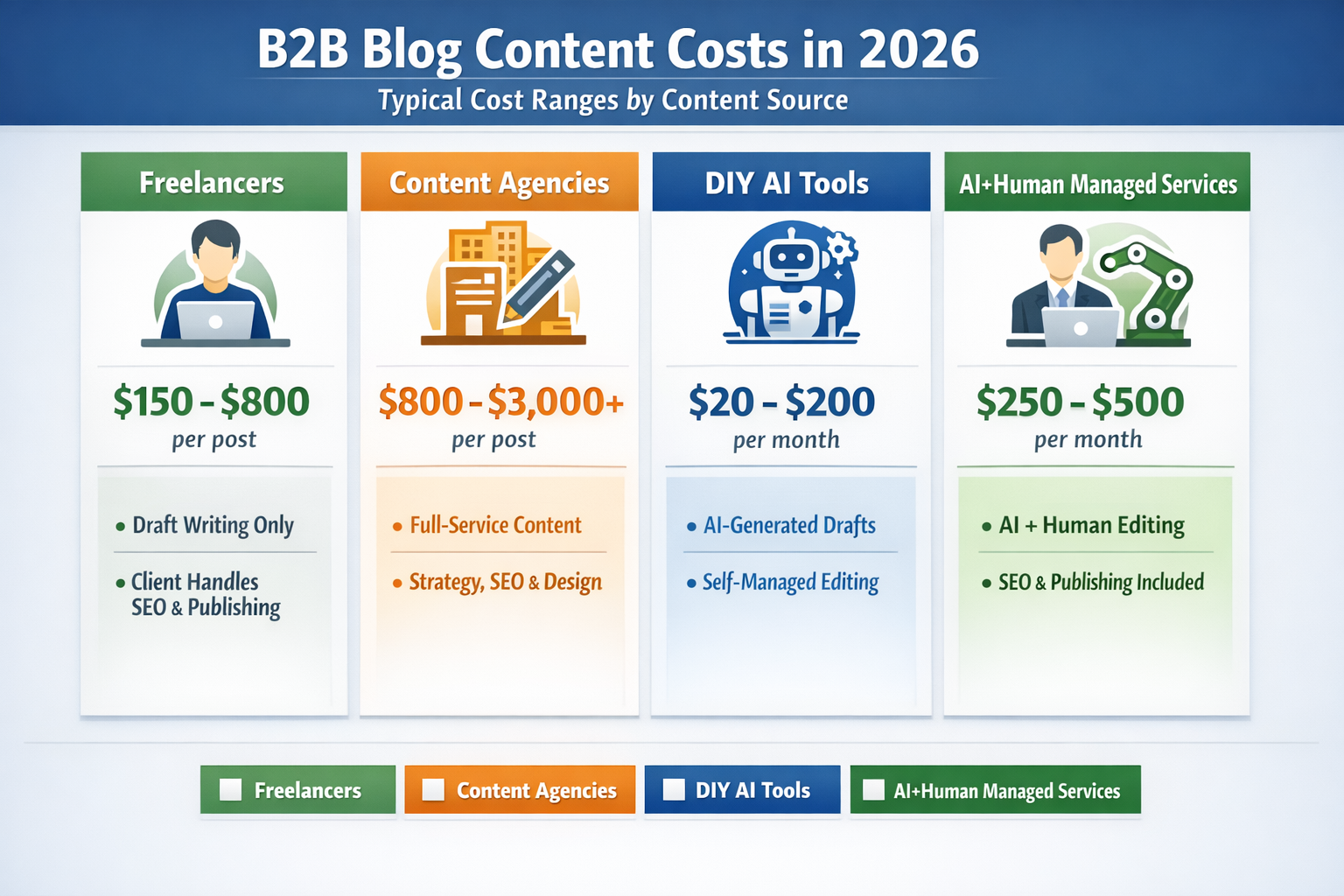
Here's what you can expect to pay across each major content sourcing option in 2026:
| Category | Typical Cost | What's Included | Best For |
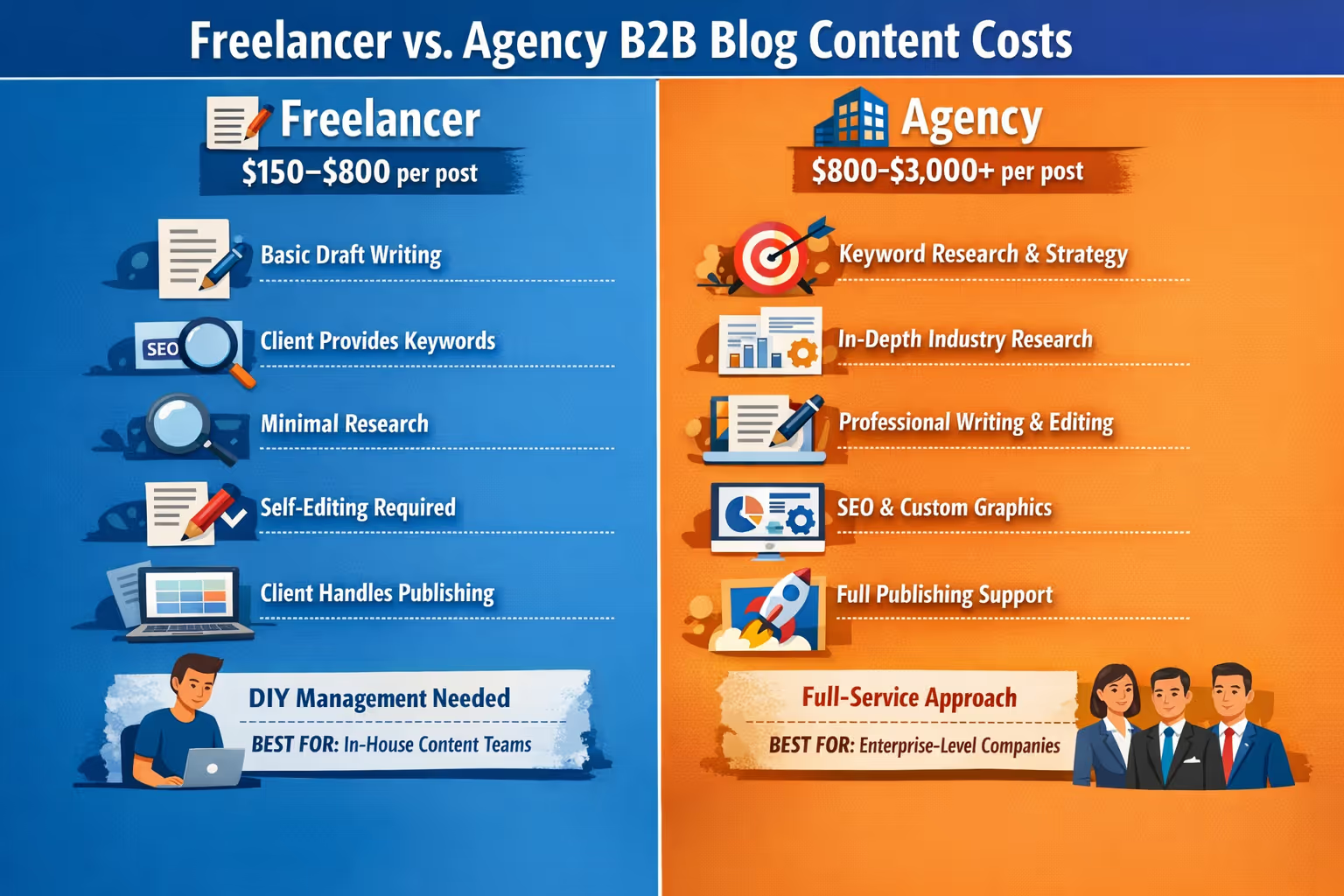
| Freelance Writers | $150–$800 per post | Draft only; client manages SEO, editing, publishing | Teams with in-house content strategy |
| Content Agencies | $800–$3,000+ per post | Strategy, writing, editing, SEO, sometimes design | Enterprises needing full-service support |
| DIY AI Tools | $20–$200 per month | AI-generated drafts; user handles everything else | Teams with editorial capacity and time to polish |
| AI+Human Managed Services | $250–$500 per month | Keyword research, AI drafts, human editing, publishing | Growth teams wanting consistent output without staff |
Let's examine each category in detail.
Freelance Writer Pricing for B2B Content
Freelance writers remain the most common source for B2B blog content. Rates vary based on experience, niche expertise, and turnaround time.
Entry-level freelancers typically charge $50–$150 per post. At this level, you're usually getting generalist writers who may lack B2B expertise. Quality control becomes your responsibility, and you'll likely spend significant time on revisions.
Mid-tier freelancers with B2B experience charge $250–$500 per post. These writers understand business audiences and can handle moderately technical topics. Many deliver clean drafts that need minimal editing. According to the Contently Freelance Rates Database, this range reflects the current market for experienced B2B writers [2].
Expert freelancers in specialized niches command $600–$1,200+ per post. If you need content about cybersecurity, healthcare IT, or complex financial services, expect to pay premium rates for writers who truly understand your space and can speak credibly to sophisticated buyers.
Hidden Costs of Freelancer Management
The per-post price doesn't capture everything you'll spend. Freelancer management requires:
Time sourcing and vetting candidates
Briefing writers on each topic
Reviewing and editing drafts
Managing revisions and deadlines
Handling invoicing and payments
Content marketing leaders report spending substantial hours weekly coordinating with external writers—time that doesn't show up in the per-post cost [3]. If your team is already stretched thin, the "cheaper" freelancer option may actually cost more when you factor in your own labor.
My advice: Don't hire a freelancer unless you have someone internally who can manage them. Otherwise, you're not saving money—you're just hiding the cost in your own calendar.
Agency Pricing for B2B Blog Content
Content marketing agencies offer full-service solutions: strategy, writing, editing, SEO optimization, and sometimes design and publishing.
Boutique agencies typically charge $500–$1,500 per post. You'll get dedicated account management and consistent writer access, though strategic depth varies.
Mid-sized agencies charge $1,000–$2,500 per post. At this level, expect documented processes, SEO integration, and quality assurance systems.
Enterprise agencies charge $2,000–$5,000+ per post. These engagements include comprehensive content strategy, detailed buyer persona alignment, and executive-level reporting.
Understanding Agency Pricing Models
Agencies don't always price per post. You'll encounter several structures:
Per-post pricing works for predictable, one-off projects. You know exactly what you're paying for each deliverable.
Monthly retainers typically range from $3,000–$15,000 for ongoing content programs. Retainers often include strategy, a set number of deliverables, and account management.
Project-based pricing covers defined campaigns or content audits. A three-month content strategy engagement might run $10,000–$25,000 depending on scope.
When Agency Pricing Makes Sense
Agencies work best when you need:
Comprehensive content strategy (not just execution)
Large volumes with consistent quality
Access to specialized design or video resources
Enterprise-level compliance and approval workflows
For companies publishing just a few posts monthly, agency minimums and retainer structures often don't align with actual needs. You may pay for capacity you don't use. If an agency quotes a $5,000/month minimum and you only need four posts, you're paying $1,250 per post whether that's the value or not.
DIY AI Writing Tool Costs
AI writing tools have exploded in availability. Platforms like Jasper, Writer, and Copy.ai offer subscription-based access to AI-generated content.
Basic tiers run $20–$50 per month for limited word counts and features.
Professional tiers cost $50–$150 per month and include more words, templates, and integrations.
Enterprise tiers charge $200–$500+ monthly for teams, custom training, and advanced features.
The Real Cost of DIY AI Content
The subscription price understates your actual investment. AI tools generate raw drafts—someone still needs to:
Research keywords and topics
Prompt the AI effectively
Edit for accuracy and brand voice
Optimize for SEO
Format and publish
Here's what I've seen repeatedly: teams sign up for AI tools expecting to "automate" content, then discover they're spending just as much time editing AI drafts as they would have spent writing from scratch. The tool didn't save time—it just shifted where the time went.
Google's helpful content guidelines prioritize expertise and original insight—qualities that raw AI drafts rarely demonstrate [4]. Unedited AI content typically lacks the depth and nuance that drives SEO performance. It reads like exactly what it is: a machine guessing at what a human expert might say.
The math problem: If you're paying $100/month for an AI tool and spending 3 hours per post editing the output, you haven't saved money compared to paying a competent freelancer $400 for a polished draft. You've just traded dollars for your own time.
For teams with available editorial capacity and genuine expertise to add, AI tools can accelerate production. For teams already stretched thin, they often create more work than they save.
AI+Human Managed Services: The Emerging Category
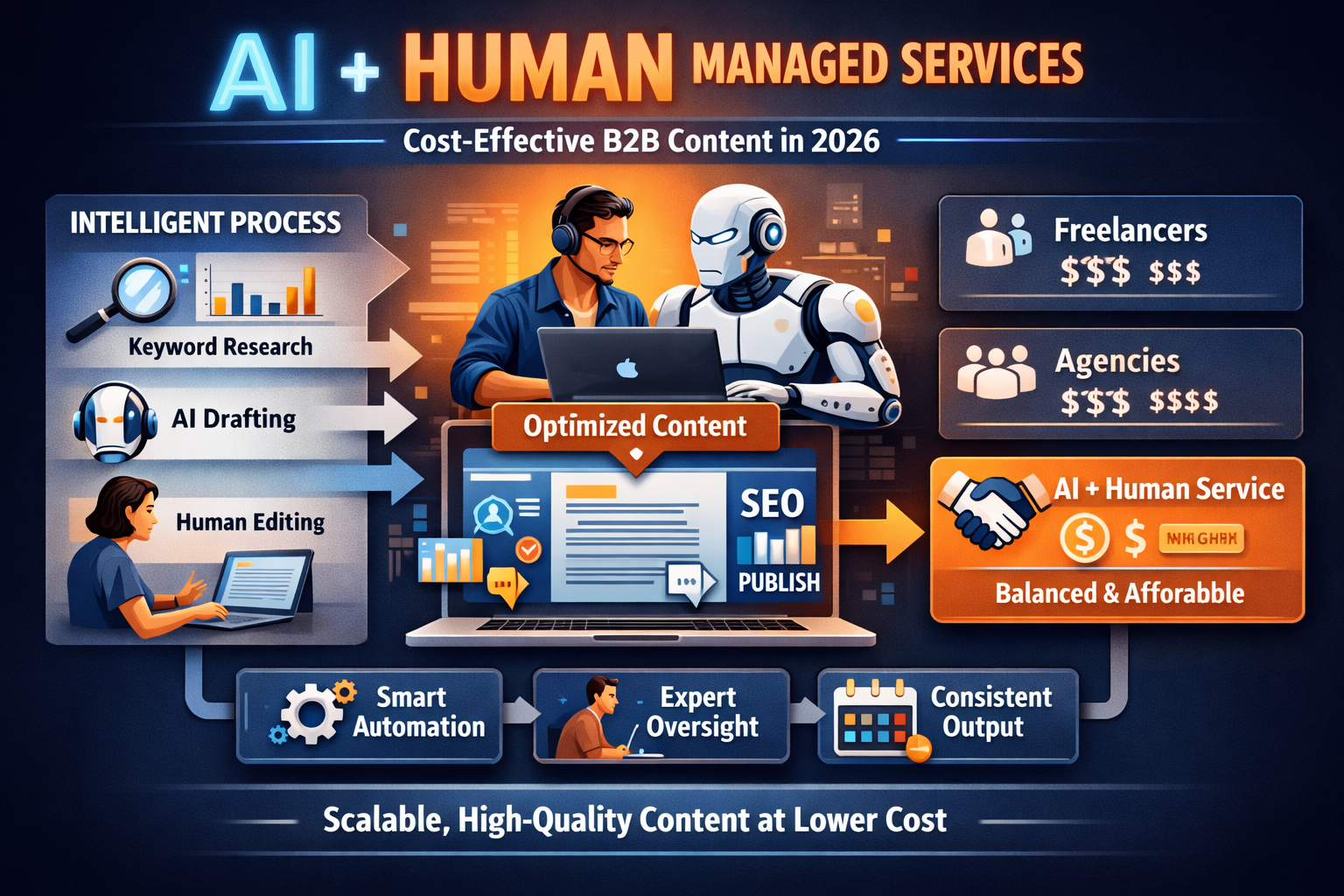
A newer pricing category has emerged that most guides overlook: AI-assisted managed services. These providers combine AI efficiency with human oversight to deliver consistent, quality content at scale.
The model typically works like this:
Strategic keyword and topic research (human-led)
AI-assisted draft generation
Human editing for accuracy, voice, and SEO
Optional publishing and optimization
Pricing generally runs $250–$500 per month for regular content delivery—significantly less than agencies, but with far more support than DIY tools or freelancer coordination.
How This Differs from Cheap Content
You might wonder: if some managed services deliver content at $60–$100 per post equivalent, how is that different from the $50 posts I warned against earlier?
The difference is process, not just price.
Offshore content farms charging $25–$75 per post typically deliver generic, unresearched content written by generalists with no strategic input. They're optimizing for volume, not performance. The content exists; it just doesn't work.
AI+human managed services at $250–$500/month use AI to reduce the production cost while investing human time in the strategic work: keyword research, topic selection, editorial oversight, and SEO optimization. The AI handles first drafts; humans handle everything that requires judgment.
The per-post cost might look similar on a spreadsheet, but the output is fundamentally different. One is cheap content. The other is efficiently-produced quality content.
Why This Model Exists
The AI+human approach addresses a specific market gap. Many growing businesses need:
Consistent publishing (not sporadic freelancer availability)
SEO-optimized content (not raw AI output)
Affordable pricing (not agency retainers)
Minimal management burden (not DIY coordination)
Research consistently shows that companies publishing frequently see substantially more organic traffic than those posting sporadically [5]. The managed service model makes that consistency achievable without hiring full-time staff or burning out your existing team.
How to Calculate Your Content Marketing Budget
Rather than starting with prices, start with your goals.
Step 1: Determine publishing frequency
How many posts per week or month will actually move your metrics? For most B2B companies building organic traffic, two to four posts weekly delivers meaningful results over time. Less than that, and you're not generating enough signal for search engines to notice.
Step 2: Assess internal capacity honestly
Do you have someone to manage freelancers, edit AI drafts, or coordinate with agencies? Be realistic. "We'll figure it out" usually means "nobody will do it consistently."
If the answer is no, factor management labor into "cheaper" options—or choose an option that doesn't require it.
Step 3: Define quality requirements
Technical industries with complex buyer journeys need deeper content than simple awareness posts. A post about enterprise data security has different requirements than a post about office productivity tips. Match your content source to your actual quality needs.
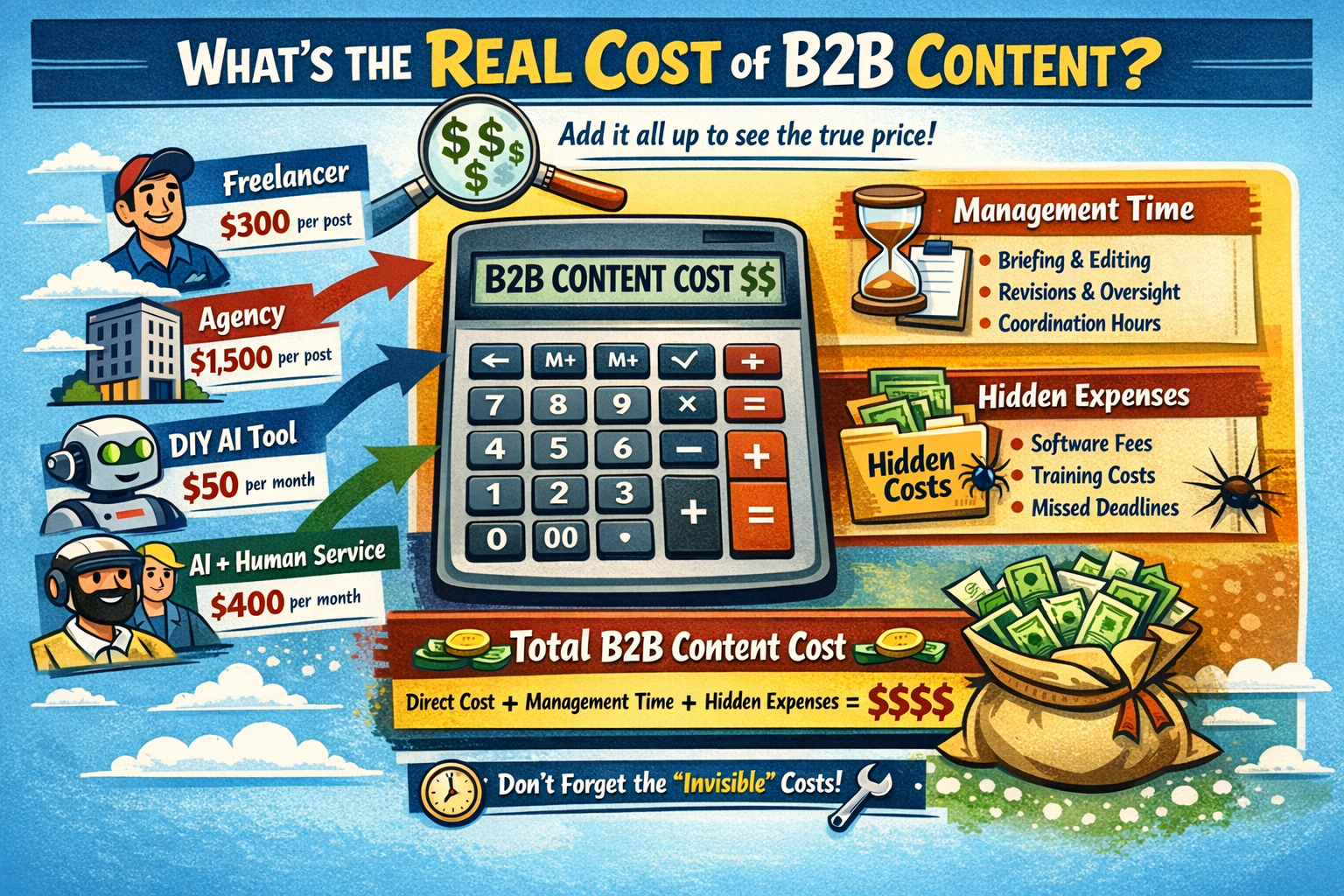
Step 4: Calculate total cost of ownership
Compare not just sticker prices, but everything: management time, revision cycles, missed deadlines, and the opportunity cost of inconsistent publishing. A $200 post that requires $150 worth of your time to manage isn't a $200 post.
Sample Budget Scenarios
Scenario A: SaaS startup, 8 posts monthly
| Option | Direct Cost | Management Time | Total Effective Cost |
| Mid-tier freelancer | $350/post × 8 = $2,800 | ~10 hours @ $75/hr = $750 | ~$3,550/month |
| Agency | $1,200/post × 8 = $9,600 | ~2 hours @ $75/hr = $150 | ~$9,750/month |
| Managed service | ~$400/month | ~2 hours @ $75/hr = $150 | ~$550/month |
Scenario B: Enterprise B2B, 4 premium posts monthly
| Option | Direct Cost | Management Time | Total Effective Cost |
| Expert freelancer | $800/post × 4 = $3,200 | ~6 hours @ $100/hr = $600 | ~$3,800/month |
| Mid-tier agency | $2,000/post × 4 = $8,000 | ~2 hours @ $100/hr = $200 | ~$8,200/month |
| Managed service + internal SME review | ~$400/month + 4 hours internal = $400 | ~$800/month |
The "right" budget depends entirely on your specific capacity, quality needs, and growth goals. There's no universal answer—but there is a right answer for your situation.
What Drives B2B Content Pricing Up or Down
Understanding price drivers helps you negotiate effectively and avoid overpaying.
Factors that increase cost:
Technical or regulated industries (healthcare, finance, cybersecurity)
Original research or data requirements
Executive interviews or SME involvement
Tight deadlines or rush requests
Heavy revision cycles
Strategic consulting beyond writing
Factors that decrease cost:
Clear briefs and established style guides
Flexible timelines
Long-term commitments or volume discounts
Standardized content formats
AI-assisted production with human quality control
Investing upfront in better briefs and clearer processes often reduces per-post costs over time—regardless of which sourcing model you choose. The 30 minutes you spend writing a detailed brief can save hours of revision later.
Red Flags in Content Pricing
Unusually low prices often signal problems:
$25–$75 per "B2B" post from human writers: At this rate, you're likely getting offshore content farms producing generic, unresearched content that won't rank or convert. No experienced B2B writer can afford to work at these rates while delivering quality.
No discovery process: Quality content requires understanding your business. Providers who skip onboarding and discovery produce generic output that sounds like it could be for any company in your industry.
"Unlimited revisions" at rock-bottom prices: If revisions are "free," the provider expects you won't ask—or they've built minimal effort into the original draft. Someone pays for revision time; make sure you understand who.
Guaranteed rankings: No legitimate content provider can guarantee specific search positions. SEO results depend on dozens of factors outside any writer's control. Promises of "page one in 30 days" are a red flag, not a selling point.
Unusually high prices deserve scrutiny too:
Premium prices, generalist writers: Ask for relevant B2B samples in your industry. A writer charging $800/post should demonstrate genuine expertise, not just confidence.
Agency minimums mismatched to your needs: Don't pay for 20 posts monthly if you need 8. Ask about flexible arrangements or find a provider whose model fits your scale.
Opaque deliverables: Understand exactly what you're getting before signing. "Content strategy" means different things to different agencies. Get specifics.
How Much Does Editing AI Content Cost?
This question deserves its own answer because it's increasingly relevant.
If you're using AI tools in-house and need to budget for editing, expect:
Professional editors charge $50–$100 per hour for substantive editing of AI-generated content. A 1,500-word AI draft typically requires 1–2 hours of editing to reach publishable quality, depending on how good your prompts are.
Specialized B2B editors with industry expertise charge $75–$150 per hour. If your content covers technical topics, you need an editor who can verify accuracy, not just fix grammar.
Per-piece editing rates typically run $100–$300 per post for transforming AI drafts into polished content. This includes fact-checking, adding depth, improving flow, and optimizing for SEO.
The hidden cost here is finding editors who understand both AI content patterns and your industry. Generic proofreading won't cut it—you need someone who can recognize when AI is confidently wrong and fix it.
Making the Final Decision
Choose your content sourcing model based on three factors:
Available management capacity: If you have editorial bandwidth, freelancers or DIY tools may work. If you're already overwhelmed, look for managed solutions that don't require your constant attention.
Quality requirements: Highly technical content needs specialist writers or rigorous editorial processes. General awareness content has more flexibility. Match your solution to your actual needs.
Budget reality: Compare total cost—not just unit prices—across options that meet your quality threshold. The cheapest option isn't cheap if it doesn't work.
For many growing B2B companies, AI+human managed services offer compelling economics: consistent quality, minimal management burden, and pricing that scales with actual output rather than agency overhead or freelancer unpredictability.
Start Building Your Content Engine
Your 2026 content budget should fund consistent, strategic publishing—not sporadic, reactive posting. Whatever sourcing model you choose, prioritize reliability and quality over raw cost.
The companies winning at organic search aren't necessarily spending the most. They're publishing consistently, targeting the right keywords, and delivering genuine value to their readers. That's achievable at almost any budget if you choose the right model for your situation.
Ready to see what consistent B2B content actually looks like? Try the Mighty Quill Blog Engine free—get two custom posts in 48 hours with no commitment.
Frequently Asked Questions
What's a reasonable cost per blog post for B2B companies?
B2B blog content typically costs $150–$800 from freelancers, $800–$3,000 from agencies, or $60–$125 per post equivalent through managed AI+human services. The "right" price depends on your industry complexity, quality requirements, and internal management capacity. Technical niches command higher rates due to expertise requirements—don't expect cybersecurity content at generalist prices.
Should I use AI tools or hire writers for B2B content?
Both approaches have tradeoffs. AI tools cost less per word but require significant human editing to meet B2B quality standards—typically 1–2 hours per post from someone with editorial skills and industry knowledge. Professional writers cost more but deliver strategic, expert content. Many companies now use AI+human hybrid approaches that combine AI efficiency with editorial oversight, getting better economics without the quality risks of unedited AI output.
How much should I budget for content marketing annually?
Most B2B companies allocate between $30,000 and $150,000 annually for content marketing, depending on company size and growth goals. Startups often start with $500–$2,000 monthly for consistent blog content, scaling as organic traffic compounds. The key metric isn't total spend—it's whether you're publishing consistently enough to build search visibility over time. Sporadic publishing rarely delivers results regardless of per-post quality.
Why do content agencies charge so much more than freelancers?
Agencies bundle services that freelancers typically don't provide: keyword research, content strategy, SEO optimization, editorial oversight, project management, and sometimes publishing. You're also paying for consistency, scalability, and reduced management burden. However, agency overhead structures can inflate costs beyond the value delivered. Compare what's specifically included before assuming higher prices mean better results for your situation.
How quickly will B2B content generate ROI?
Content marketing typically requires three to six months before meaningful traffic and lead improvements appear. SEO results compound over time—early posts build domain authority that helps later posts rank faster. Companies publishing two to four times weekly see substantially better results than sporadic publishers. Budget planning should account for this ramp-up period rather than expecting immediate returns; content is an investment that appreciates, not a campaign with instant results.
About This Guide
This pricing guide was developed by The Mighty Quill, an AI-powered content engine built for B2B growth teams. Our team combines over 15 years of digital marketing experience with modern AI capabilities to help companies publish SEO-optimized content consistently—without the management burden of freelancers or the overhead of traditional agencies.
Cited Works
[1] Editorial Freelancers Association — "Editorial Rates Survey." https://www.the-efa.org/rates/
[2] Contently — "The Freelance Rates Database." https://contently.com/rates-database/
[3] Content Marketing Institute — "B2B Content Marketing: Benchmarks, Budgets, and Trends." https://contentmarketinginstitute.com/research/
[4] Google Search Central — "Creating Helpful, Reliable, People-First Content." https://developers.google.com/search/docs/fundamentals/creating-helpful-content
[5] HubSpot — "How Often Should Companies Blog? Frequency Benchmarks." https://blog.hubspot.com/marketing/blogging-frequency-benchmarks