You've committed to publishing two blog posts per week. The content calendar is set. The first articles are live.
Now the question that keeps every marketer up at night: When does this actually start working?
Here's the short answer before we dig in:
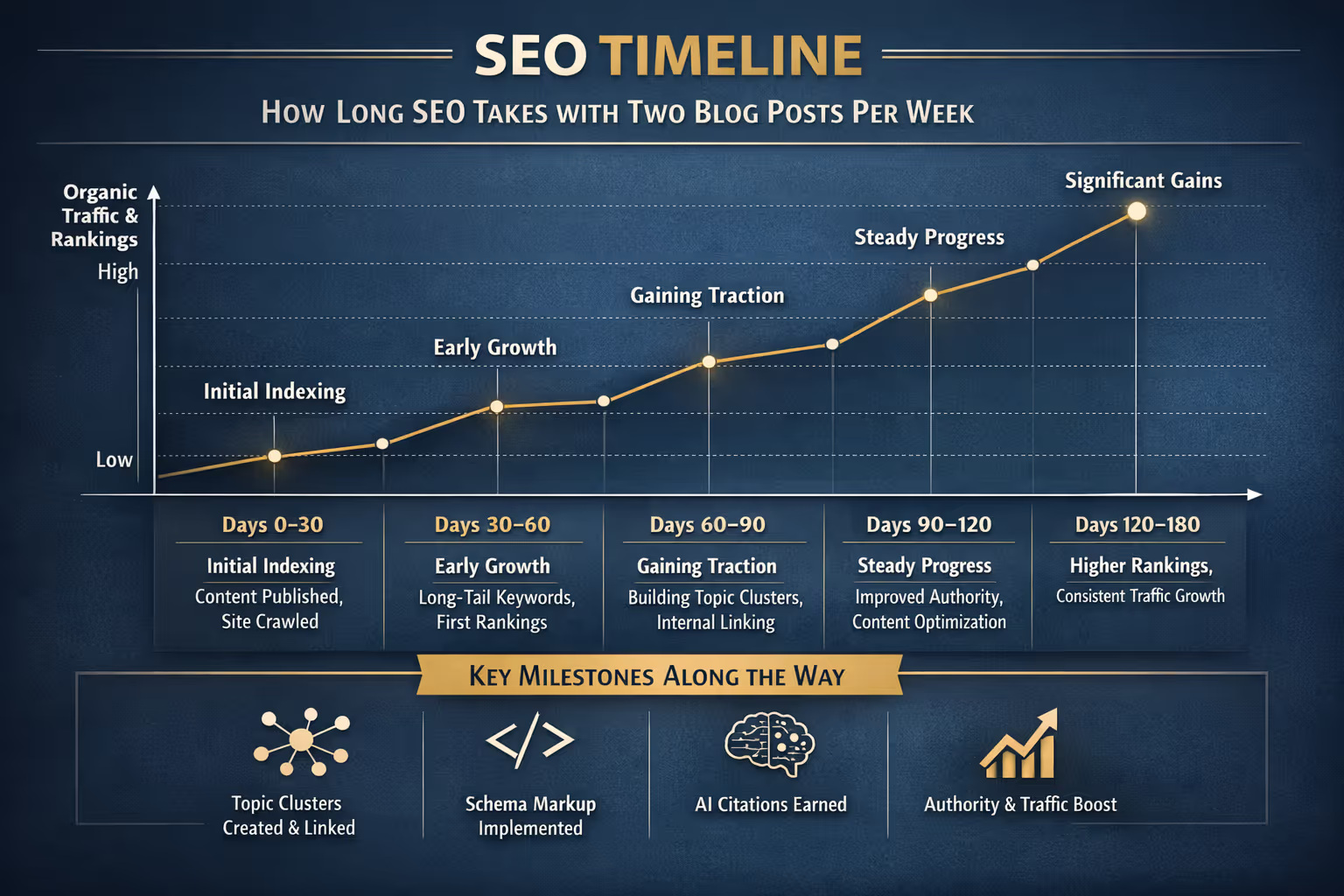
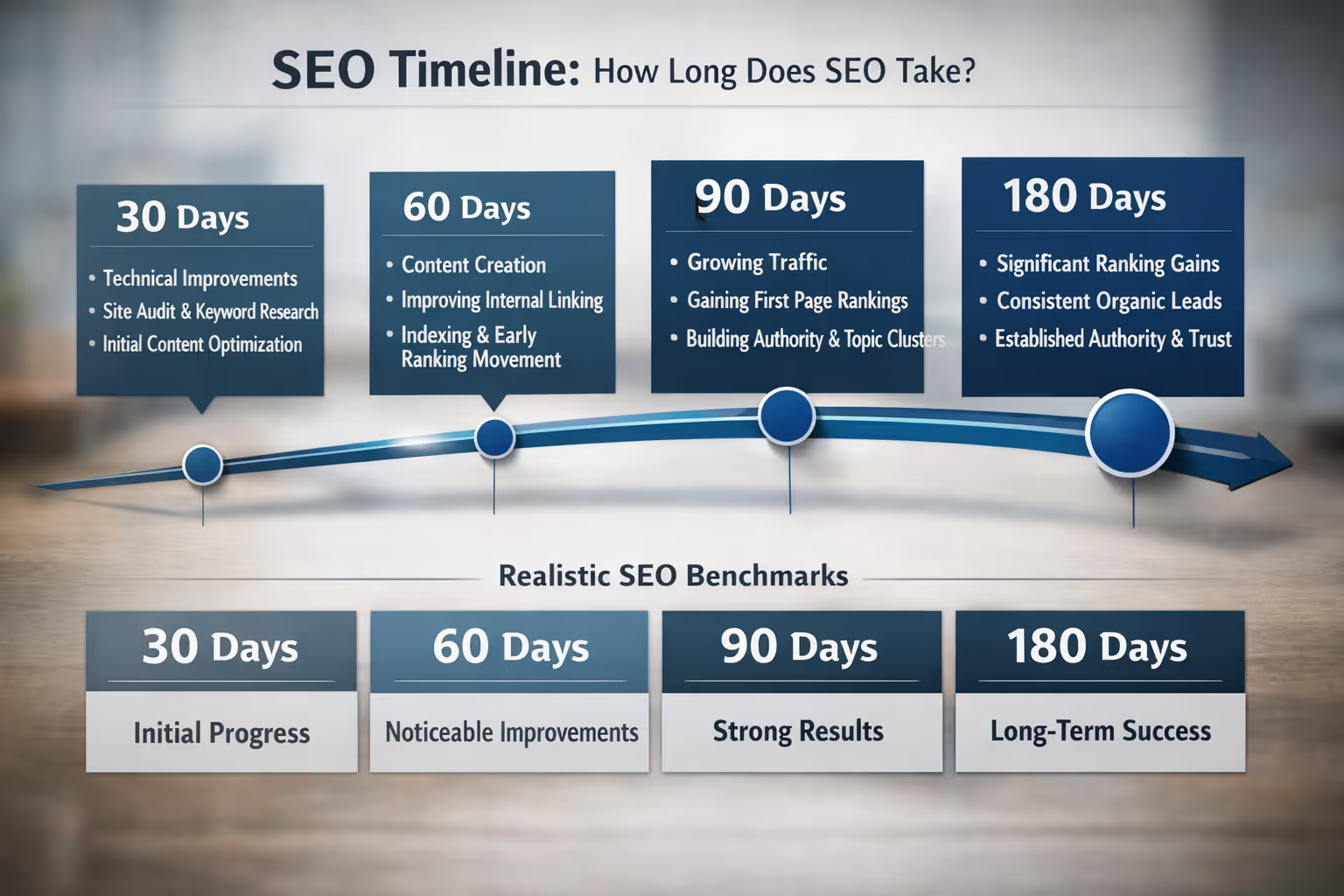
| Phase | Timeframe | Primary Metric | Realistic Expectation |
|---|---|---|---|
| Indexation | Days 1-30 | Pages indexed, crawl frequency | All posts indexed, crawling increasing |
| Signal | Days 31-60 | Impressions, keyword discovery | Impressions climbing, ranking for unexpected terms |
| Traction | Days 61-90 | First page rankings, organic clicks | 2-4 posts generating consistent traffic |
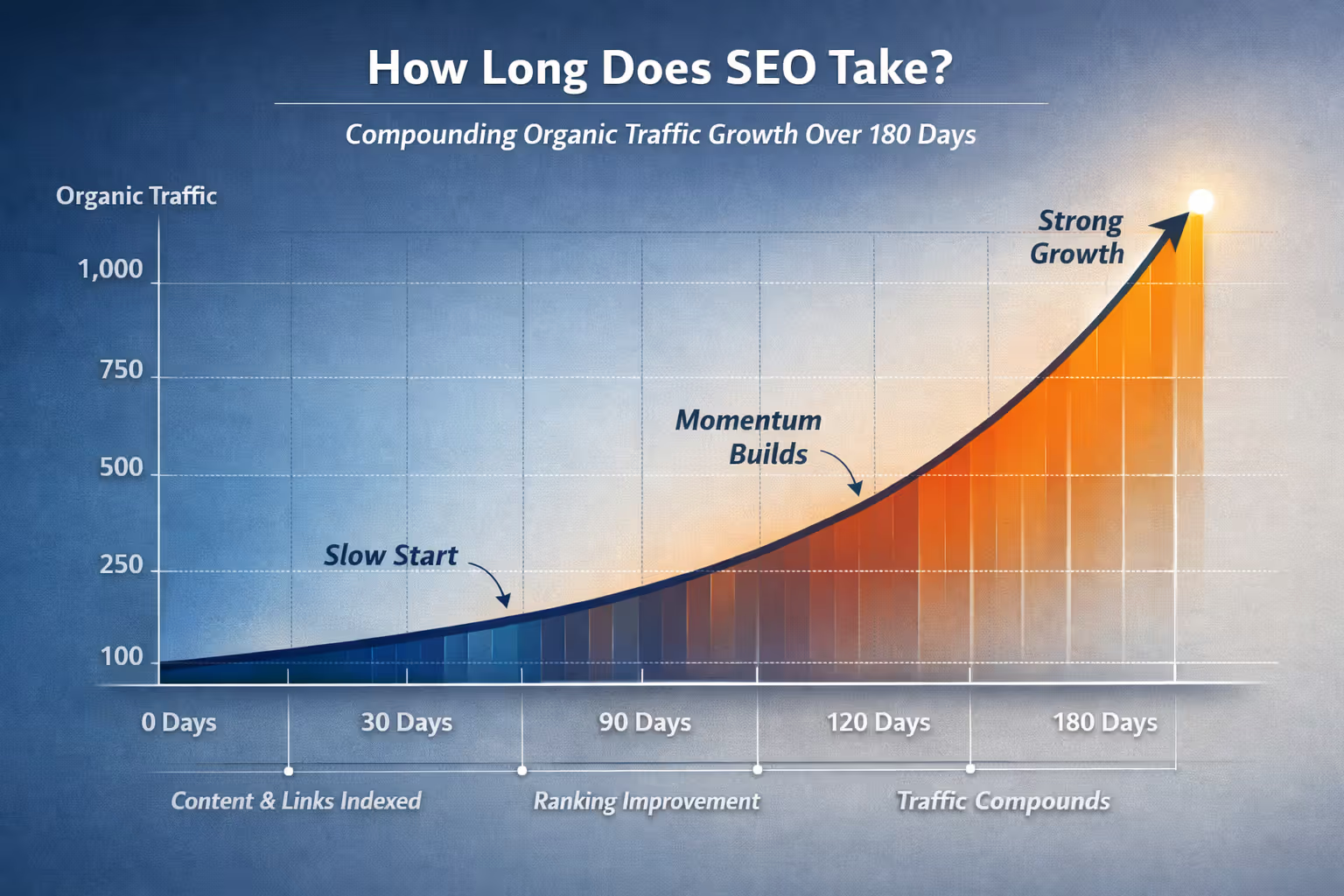
| Compounding | Days 91-180 | Traffic growth rate, conversion attribution | 300%+ traffic increase, clear ROI path |
Now let's break down exactly what happens at each stage—and the specific signals that tell you when something needs to change.
What This Timeline Assumes (Read This First)
These benchmarks apply to sites with low-to-medium domain authority—think newer businesses or established companies that haven't invested heavily in SEO yet.
If you're working with a DR 70+ site that already ranks well, you'll likely see traction in days or weeks, not months. The fundamentals still apply, but the timeline compresses significantly.
Equally important: this timeline assumes your two posts per week aren't random topics. They need to be:
Topically clustered (building depth in related subject areas)
Targeting appropriate keyword difficulty (lower-competition terms first)
Matching actual search intent (answering what people are really asking)
Publish two unrelated, highly competitive posts weekly and you'll wait far longer than 90 days for results. Publish strategically and the compounding effect kicks in faster.
The Compounding Reality of Consistent Content Publishing
Google's documentation confirms that fresh, regularly updated content signals site vitality [1]. But the mechanism isn't just about "more content = more keywords." It's about compounding effects:
More indexed pages create more entry points
Internal linking networks strengthen over time
Topical authority builds as you cover related subjects
Crawl frequency increases as Google recognizes your publishing pattern
At two posts per week, you're adding roughly 8-9 pieces of content monthly. That's 100+ new indexed pages annually—each one a potential ranking opportunity.
The catch? These effects compound slowly at first, then accelerate. Most businesses quit during the slow phase.
I watched a SaaS client flatline for 47 days—impressions barely moving, clicks nonexistent. They nearly pulled the plug. Then around day 52, three posts suddenly started climbing. By day 90, those same posts drove 40% of their organic traffic.
That's the pattern. Slow, slow, slow... then not slow.
Days 1-30: The Indexation Phase
Key takeaway: Ignore traffic. Focus entirely on whether Google is finding and processing your content.
What you're measuring: Indexation velocity and crawl behavior.
Realistic expectations: Minimal organic traffic. This phase is infrastructure, not results.
Leading Indicators to Track
During the first month, watch these signals instead of obsessing over traffic:
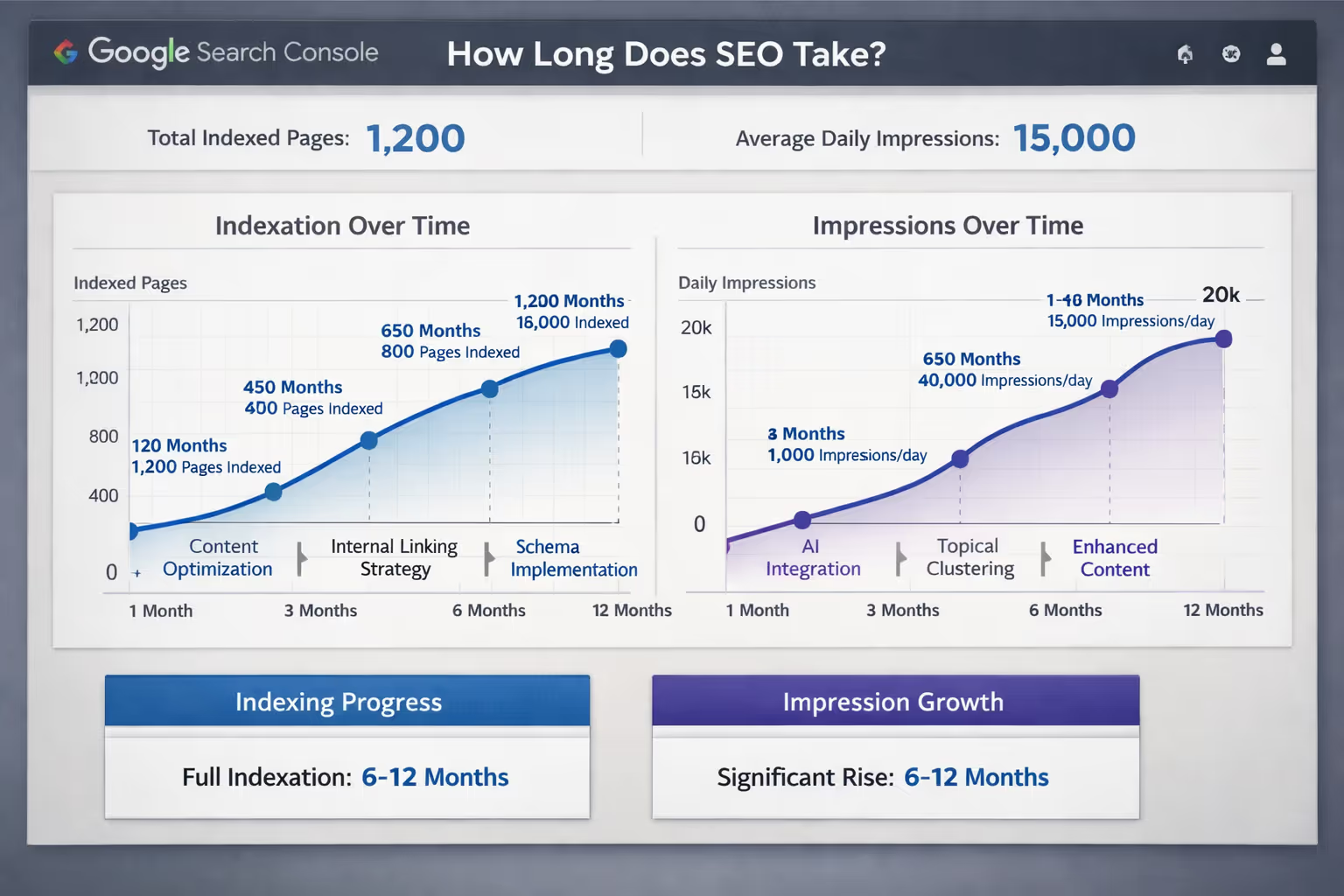
Indexation velocity – Are your posts appearing in Google Search Console's "Pages" report within 48-72 hours? For new sites, this might take 1-2 weeks. For established domains, it should happen within days.
Crawl stats – Check Search Console's crawl stats report. You should see crawl requests increasing as you publish more content [2].
Initial impressions – Even without clicks, Search Console should show impressions for your target keywords. Any impressions mean Google is testing your content in results.
What Success Looks Like at Day 30
8 posts published and indexed
Crawl frequency stable or increasing
First impressions appearing in Search Console (even single digits count)
No manual actions or indexing errors
Pivot Triggers: When to Intervene
Red flag: Posts not indexing within 2 weeks.
Check for crawl errors in Search Console. Submit URLs manually via the URL Inspection tool. Verify your sitemap is submitted and updating. Review robots.txt for accidental blocks.
Red flag: Zero impressions after 3 weeks.
Your keywords may be too competitive or your content isn't matching search intent. Review the top-ranking pages for your target terms. Are you answering the same questions? Adjust your next batch accordingly.
Days 31-60: The Signal Phase
Key takeaway: Impressions should climb. Clicks remain sparse. Rankings will bounce around wildly—this is normal.
What you're measuring: Whether Google is testing your content in search results.
Realistic expectations: Data gets interesting but misleading if you don't know what you're seeing.
Leading Indicators to Track
Impression growth rate – Total impressions should increase week-over-week. Research from Ahrefs found that the average page takes 2-6 months to reach its ranking potential, with most movement happening after the first 60 days [3].
Keyword discovery – Search Console should show you ranking for keywords you didn't explicitly target. This indicates Google understands your topical relevance.
Position volatility – Your posts will bounce between positions 20-80 (or disappear entirely) before stabilizing. This is Google testing where you belong.
Click-through rate patterns – For keywords where you're ranking 5-15, start noting CTR. This becomes your optimization lever later.
What Success Looks Like at Day 60
16-17 posts published and indexed
Impressions up 50-200% from day 30
Ranking for 2-3x more keywords than you targeted
First organic clicks trickling in (even 10-20 total is progress)
At least one post showing consistent impressions for its target keyword
Pivot Triggers: When to Intervene
Red flag: Impressions flat or declining.
Audit your most recent posts against search intent. Pull the top 3 ranking pages for your keywords and compare: Are you covering the same subtopics? Is your content more comprehensive or less? Adjust your content angle for upcoming posts.
Red flag: High impressions but zero clicks.
Your titles and meta descriptions aren't compelling enough. CTR benchmarks vary by position—position 1 averages roughly 27% CTR, while position 5 drops to about 6-7% [4]. If you're significantly below these benchmarks, rewrite your titles.
Red flag: Posts disappearing from index.
Check for thin content flags. Posts under 300 words or with significant duplicate content may be deindexed. Consolidate or expand underperforming content.
Days 61-90: The Traction Phase
Key takeaway: Your first "winner" posts emerge. Traffic becomes measurable. Clear patterns develop about what's working.
What you're measuring: Whether individual posts are finding their ranking equilibrium and driving actual traffic.
Realistic expectations: SEO starts feeling real. You can point to specific posts generating specific results.
Leading Indicators to Track
Month three separates sites that break through from those that stall:
Traffic from content – Filter Google Analytics to show organic traffic landing on blog posts only. This number should climb weekly, even if overall site traffic hasn't moved much.
Ranking stability – Posts should start settling into consistent positions rather than bouncing. A post that holds position 8-12 for two weeks straight is more valuable than one that briefly hits position 3 then disappears.
Internal linking effects – Older posts should start receiving impressions for new keywords as you link to them from newer content. This indicates topical authority building.
Engagement signals – Time on page, scroll depth, and pages per session from organic visitors. Content that keeps readers engaged tends to climb [5].
What Success Looks Like at Day 90
24-26 posts published and indexed
2-4 posts generating consistent weekly traffic
At least one post ranking on page 1 for a target keyword
Organic traffic to blog section up 100%+ from day 30
Clear content winners and losers emerging
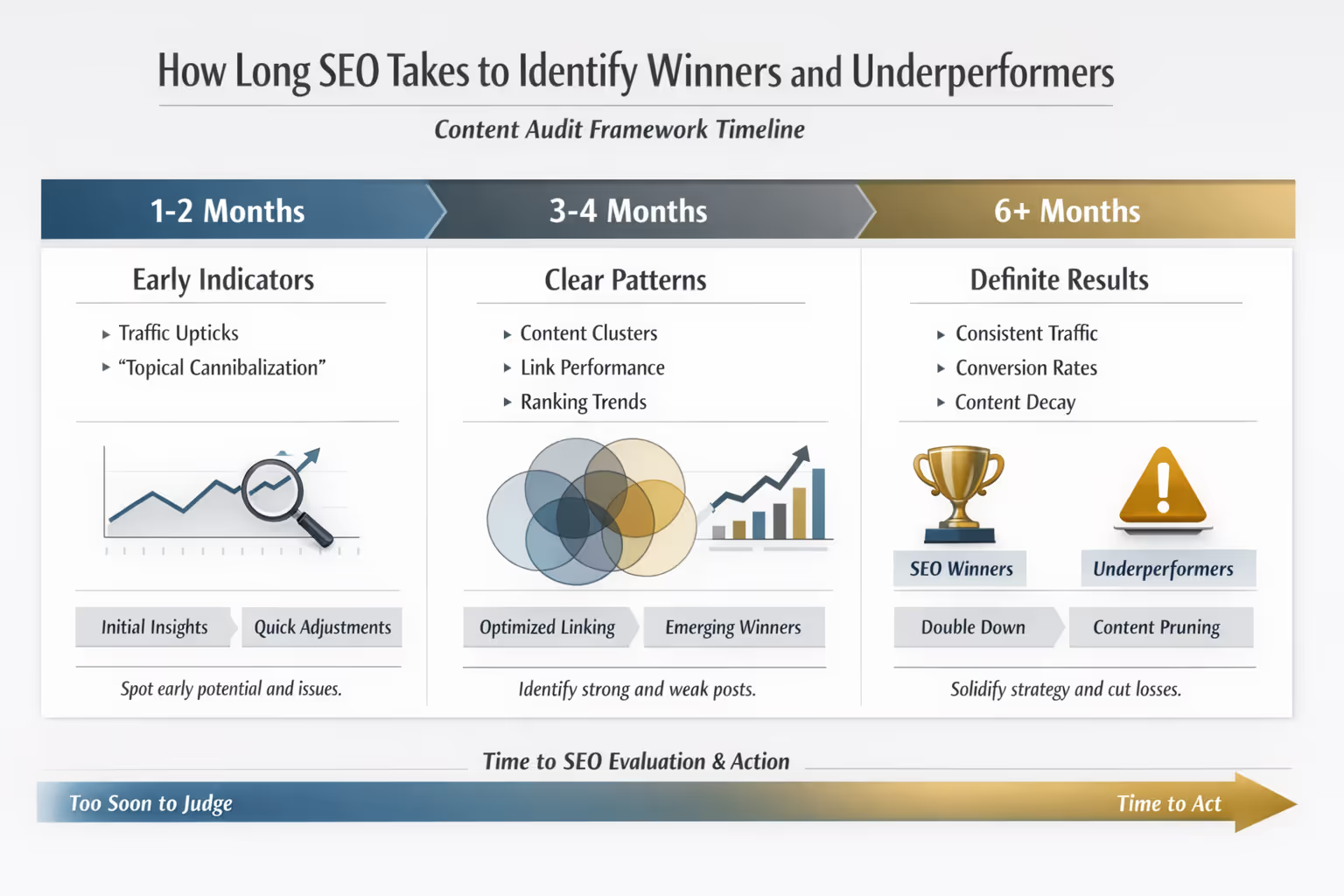
The 90-Day Audit Framework
At this point, categorize your content into three buckets:
| Category | Signal | Action |
|---|---|---|
| Winners | Consistent impressions, climbing positions, generating clicks | Double down. Add internal links. Consider expanding. |
| Potential | High impressions, stuck at positions 8-20 | Optimize. Improve titles, add sections, build internal links. |
| Underperformers | Minimal impressions, no position movement | Evaluate. Refresh angle, consolidate with similar content, or prune. |
Pivot Triggers: When to Intervene
Red flag: No posts reaching page 1-2 (positions 1-20).
Your keyword targeting may be too aggressive. Shift upcoming content toward lower-competition, longer-tail keywords. Build topical depth before attacking head terms.
Red flag: Traffic coming but from wrong keywords.
This is actually good news disguised as confusion. You've found what Google thinks you're relevant for. Adjust your content strategy to lean into these discovered opportunities.
Red flag: Engagement metrics poor across the board.
Content quality issue. Review your formatting, readability, and whether you're actually answering the search intent. Consider whether content needs more human editing and genuine expertise.
What to Do When Indexation Stalls
Indexation problems are common, especially for newer sites or sites without established authority. Here's a systematic approach:
Immediate Fixes (Week 1-2)
Verify technical basics – Run your site through Google's URL Inspection tool. Look for "Crawled - currently not indexed" or "Discovered - currently not indexed" status.
Check your sitemap – Ensure it's submitted to Search Console and updates automatically when you publish.
Improve internal linking – Pages with no internal links are harder for Google to find and may be seen as low-value. Every new post should link to and from at least 2-3 other pages.
Request indexing manually – Use Search Console's URL Inspection tool to request indexing for important pages. Limit this to 10-20 pages daily.
Longer-Term Solutions (Week 3+)
Increase content quality signals – Add author bios, publish dates, and clear expertise indicators. Google's helpful content guidelines emphasize demonstrating experience and expertise [6].
Build external signals – A single quality backlink can accelerate indexation dramatically. Focus on one genuine outreach effort per week.
Audit content quality – Google may be choosing not to index content it deems unhelpful. Consolidate thin posts and ensure every page offers unique value.
Days 91-180: The Compounding Phase
Key takeaway: Traffic growth accelerates. Your "content moat" becomes visible. Early posts continue climbing as overall site authority increases.
What you're measuring: Whether your content library is generating sustainable, growing organic traffic.
Realistic expectations: This is where consistent publishing separates professional content operations from hobby blogs.
Leading Indicators to Track
Keyword portfolio growth – You should be ranking for hundreds of keywords across your content library, not just your target terms. Each post pulls in variations, questions, and related searches.
Non-branded traffic percentage – The ratio of organic traffic from branded vs. non-branded terms indicates how well your content attracts new audiences. Healthy content programs see 60-80% non-branded organic traffic.
Revenue attribution – Can you trace leads or sales back to specific blog content? This is the metric that justifies continued investment.
Compounding effects – Older posts should continue climbing as newer posts link to them and your overall domain authority increases.
What Success Looks Like at Day 180
50+ posts published and indexed
10-15 posts generating meaningful weekly traffic
Multiple page-1 rankings for target keywords
Organic traffic to blog section up 300-500% from day 30
Clear path from content to conversion
Refresh and Prune: When to Update Underperformers
By day 180, you have enough data to make strategic decisions about underperforming content.
When to Refresh
Criteria:
Post is 90+ days old
Has impressions but stuck at positions 10-30
Topic still relevant to your business
Tactics:
Update statistics and examples
Add new sections based on "People Also Ask" questions
Improve internal linking from newer, higher-performing posts
Enhance with original insights or data
When to Prune
Criteria:
Post is 120+ days old
Minimal impressions (under 100 monthly)
Topic overlap with better-performing content
No conversion potential
Tactics:
Redirect to a stronger related post (301 redirect)
Consolidate with similar content into one comprehensive piece
Delete and remove from sitemap (for truly irrelevant content)
Pruning low-quality pages can improve overall site performance by allowing link equity and crawl budget to flow to stronger content [7].
Why Most Businesses Quit Too Early
The uncomfortable truth: most companies abandon their content strategy somewhere between days 45 and 75.
This is precisely the worst time to stop.
You've invested in the indexation phase. You've sent signals to Google that you're serious about content. Your posts are just beginning to find their ranking equilibrium.
Quitting now means your competitors—the ones who keep publishing—will compound past you. And when you restart in six months, you begin the timeline from scratch.
The 90-Day Math
The compounding clock starts when you publish your first post. Every week you delay is a week of compound growth you'll never recover.
Here's what 90 days of consistent publishing creates:
26 indexed pages, each targeting different keywords
26 opportunities for internal linking
26 contributions to your topical authority
26 potential entry points for organic traffic
That's not just content. That's the foundation of an organic traffic engine.
Ready to start your 90-day timeline? Try the Mighty Quill Blog Engine free—get 2 custom articles within 48 hours and see exactly what consistent, SEO-optimized publishing looks like.
Frequently Asked Questions
How long until I see my first organic click from blog content?
Most sites publishing 2 posts weekly see first meaningful clicks between days 30-45, with consistent traffic developing by day 60-90. This varies based on domain authority, keyword competition, and content quality. Focus on impression growth first—clicks follow once Google tests your content in higher positions.
What if my posts are indexed but getting zero impressions?
Zero impressions typically means a keyword targeting problem, not a technical issue. Your content may target keywords too competitive for your current domain authority, or the content doesn't match what searchers expect. Audit the top-ranking pages for your keywords and adjust your angle to match search intent more precisely.
Should I focus on publishing new content or optimizing existing posts?
During the first 90 days, prioritize new content to build your indexed page count and topical coverage. After day 90, shift to a 70/30 split: 70% new content, 30% optimization and refresh of existing posts. This maintains publishing momentum while extracting more value from proven topics.
How do I know if my content quality is the problem versus just needing more time?
Check engagement metrics for posts that are ranking and receiving traffic. If time-on-page is under 30 seconds and bounce rates exceed 85%, quality is likely the issue. If engagement looks healthy but rankings are slow, you probably need more time and continued publishing to build authority.
When should I consider pruning or removing old blog posts?
Wait until a post is at least 120 days old before considering removal. Some content takes 4-6 months to find its ranking potential. Prune only when a post has minimal impressions, no ranking movement, and either overlaps significantly with stronger content or no longer aligns with your business focus.
About The Mighty Quill
The Mighty Quill is an AI-powered content engine built by digital marketing practitioners with over 15 years of hands-on SEO and content strategy experience. We've watched countless content programs succeed and fail, and we built our service specifically to solve the consistency problem that kills most SEO efforts. Every recommendation in this article comes from real-world testing across dozens of content programs—patterns observed, timelines tracked, and pivot points documented.
Cited Works
[1] Google Search Central — "Creating helpful, reliable, people-first content." https://developers.google.com/search/docs/fundamentals/creating-helpful-content
[2] Google Search Central — "Crawl Stats report." https://support.google.com/webmasters/answer/9679690
[3] Ahrefs — "How Long Does It Take to Rank in Google?" https://ahrefs.com/blog/how-long-does-it-take-to-rank/
[4] Backlinko — "Google CTR Stats." https://backlinko.com/google-ctr-stats
[5] Search Engine Journal — "Google's Leaked API Documents Confirm User Engagement Signals." https://www.searchenginejournal.com/google-algorithm-ranking-factors/
[6] Google Search Central — "Google Search's helpful content system." https://developers.google.com/search/docs/appearance/helpful-content-system
[7] Moz — "The Pruning Paradox: Why Deleting Pages Can Improve SEO." https://moz.com/blog/content-pruning-how-to-audit-content