Six months ago, a mid-sized B2B e-commerce company selling industrial equipment had a blog that hadn't seen a new post in four months. Their website looked professional. Their products were competitive. But their organic traffic had flatlined, and their lead pipeline was running dry.
The company wasn't doing anything obviously wrong. They simply weren't doing enough. Without fresh content, their site had become a functional asset generating nothing—like a delivery truck sitting in the parking lot with the keys still inside.
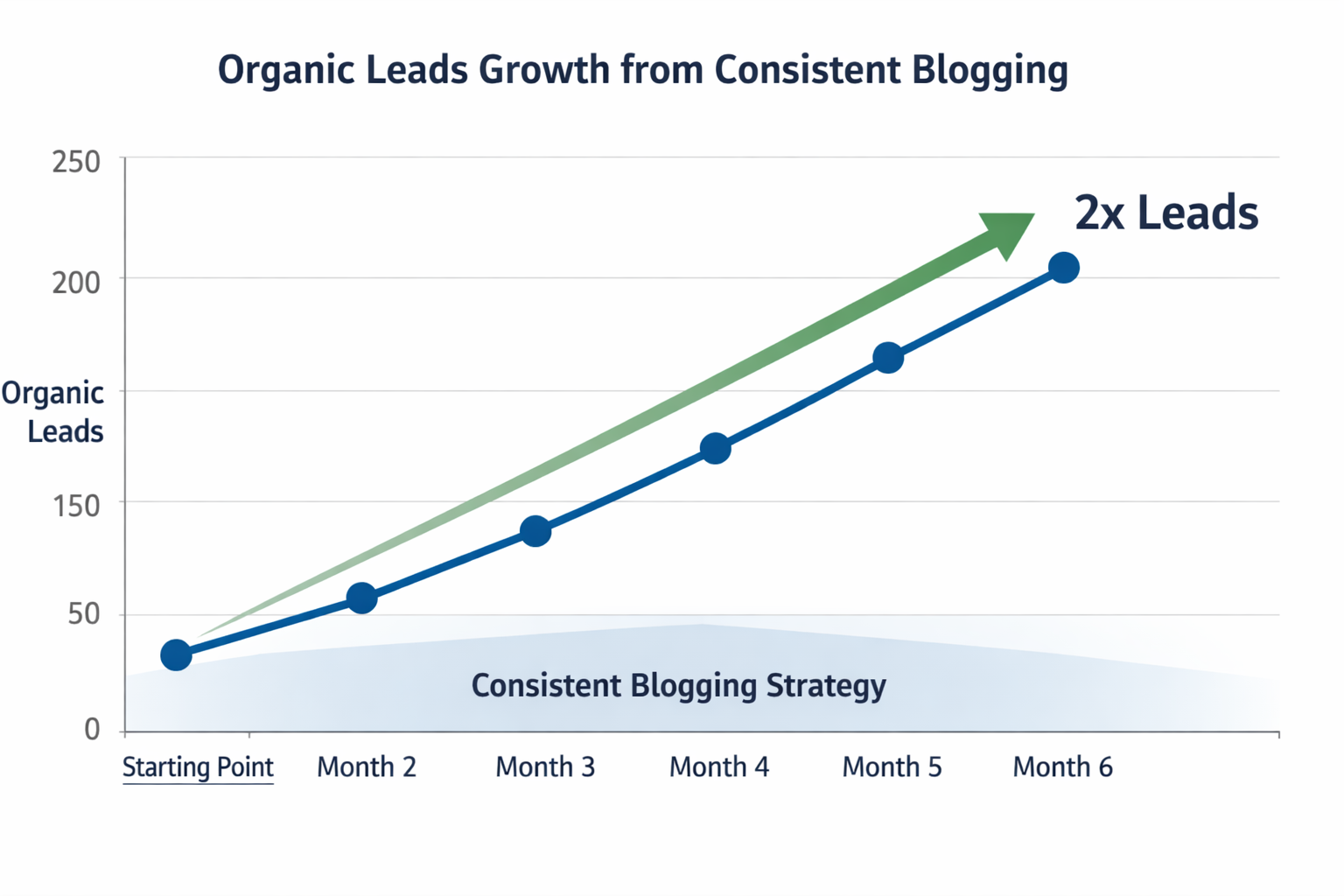
This is what happens when a company stops treating its blog as an afterthought and starts treating it as an engine. Over six months of consistent, strategic publishing, their organic leads doubled. Not through paid ads. Not through a website redesign. Through content.
Here's exactly how it happened—and what it took to get there.
The Starting Point: A Website That Wasn't Working
Before the transformation began, the company showed classic symptoms of content neglect:
Publishing averaged one post every six to eight weeks
No documented keyword strategy or editorial calendar
Topics chosen reactively based on internal requests, not search demand
Minimal internal linking between existing posts
No optimization for what searchers actually wanted to learn
Their Google Search Console data confirmed the problem. Impressions had declined for three consecutive quarters. Click-through rates sat below 2%. And organic leads—visitors who actually converted into sales opportunities—had stalled at roughly the same number for over a year.
This pattern is common. According to Google's own documentation on creating helpful content, websites that fail to demonstrate ongoing expertise and activity struggle to maintain search visibility [1].
The site wasn't broken. It was starving.
What Changed: Building a Consistent Blogging System
The turnaround didn't require a massive budget increase or a full content team. It required a system—one that could be executed reliably week after week.
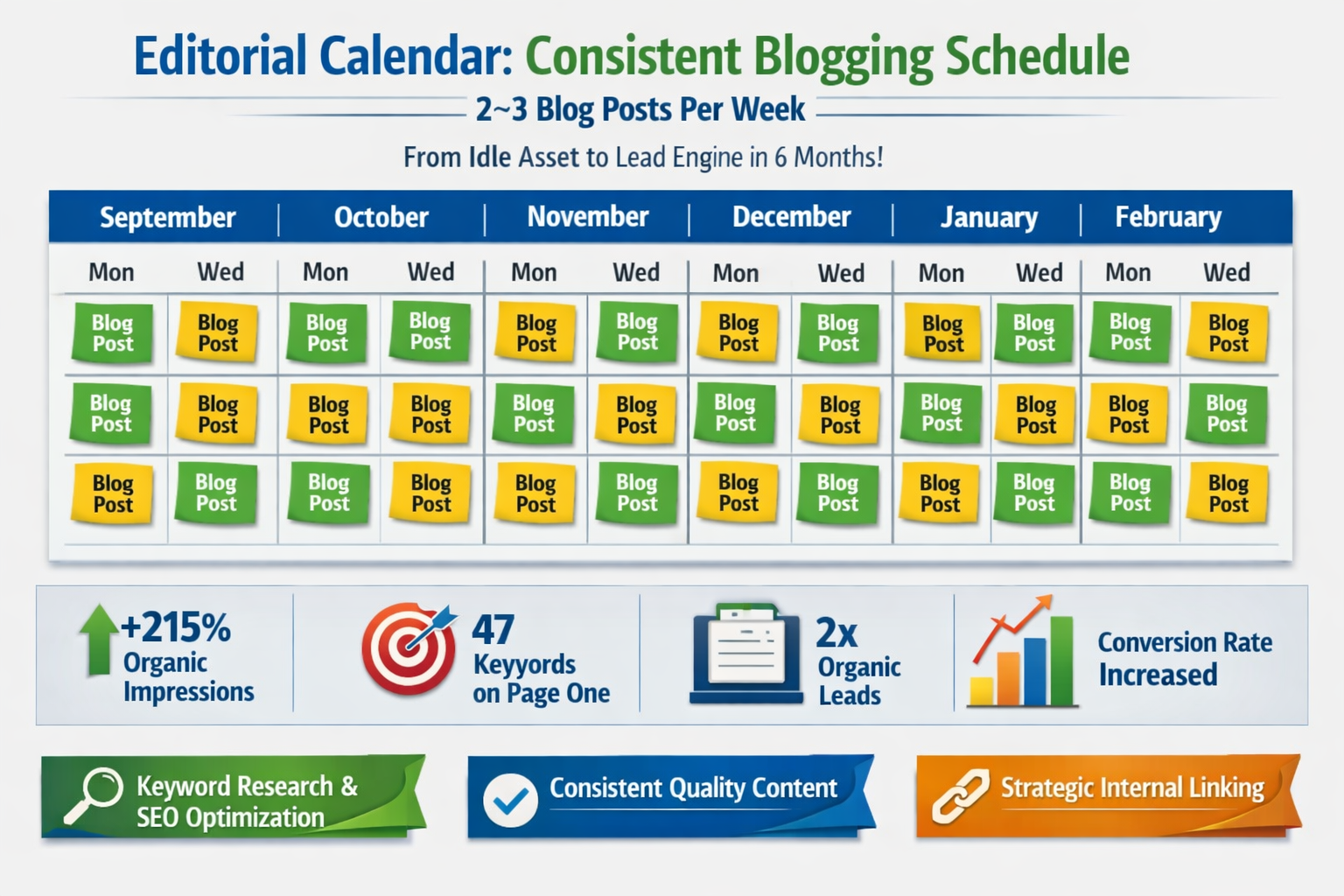
Publishing Cadence: Two to Three Posts Per Week
The new strategy committed to publishing two to three SEO-optimized posts every week. No skipped weeks. No "we'll catch up next month."
This consistency matters more than most marketers realize. According to Moz's comprehensive SEO research, search engines reward websites that demonstrate ongoing activity and topical depth. A single post might rank for its target keyword, but a consistent publishing cadence builds the domain-level authority that lifts all content [2].
Over six months, this meant roughly 50 new posts versus the 6 they would have published at their old pace.
Strategic Topic Selection Using Keyword Research
Random content produces random results. The new approach started with structured keyword research to build a topic bank of high-intent searches relevant to the company's products.
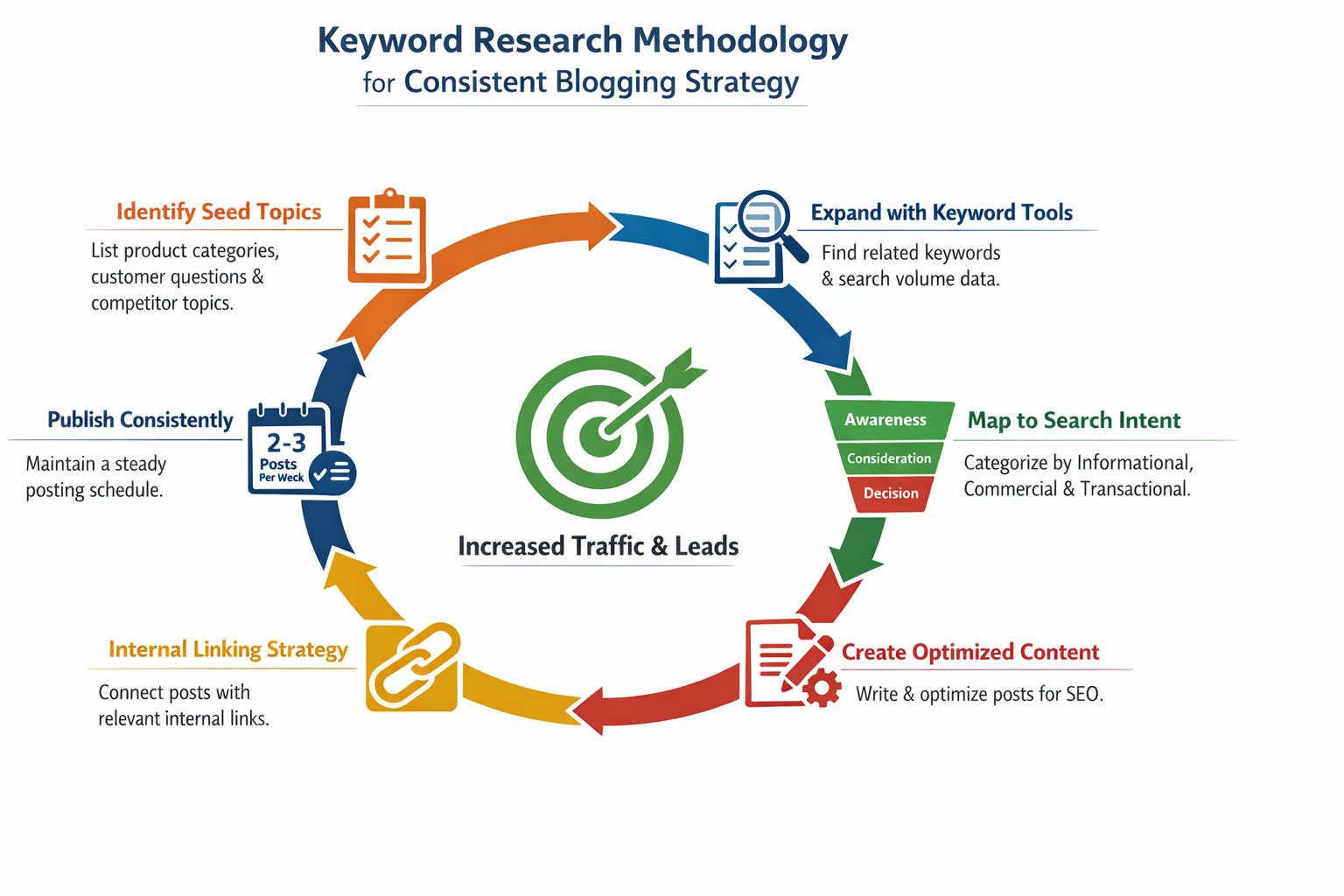
The methodology followed three steps:
Step 1: Identify seed topics. The team listed every product category, common customer question, and competitor comparison that came up in sales conversations.
Step 2: Expand using keyword tools. Each seed topic was run through keyword research tools to find related searches, questions, and long-tail variations. The focus was on queries with clear intent and manageable competition—terms where a well-crafted post could realistically reach page one within three to six months.
Step 3: Map to intent stages. Topics were categorized by search intent:
Informational: "How does [product type] work?"
Commercial investigation: "[Product A] vs [Product B]"
Transactional: "Best [product type] for [use case]"
This ensured the content calendar addressed prospects at every stage of the buying journey, not just top-of-funnel awareness.
On-Page Optimization: Making Good Content Findable
Strong writing isn't enough if search engines can't understand what a post is about. Each article received systematic on-page optimization:
Title tags and meta descriptions written for both relevance and click-through appeal
Header hierarchy (H2s and H3s) structured to signal content organization and target secondary keywords
Internal links connecting each new post to relevant product pages, service descriptions, and related articles
Schema markup added for article structure and FAQ sections where appropriate
Image optimization including descriptive file names and alt text
These aren't optional extras. Google's SEO Starter Guide explicitly identifies these elements as foundational practices that help search engines match content to queries [3].
Content Quality: Writing for Humans First
Here's where many content strategies fail. They prioritize publishing frequency over reader value, producing posts that technically exist but that nobody wants to read.
The posts that drove results followed a different standard. They read like they were written by someone who understood the industry—because they were reviewed by people who did. Explanations were clear. Advice was practical. Technical details were accurate. No filler paragraphs padding word counts.
One client described the shift this way: "The content reads like an expert wrote it, not a robot."
This matters for two reasons. First, Google's systems increasingly evaluate content quality signals like time on page, scroll depth, and return visits. Second, visitors who find genuine value are more likely to explore further—and eventually convert.
The Results: What Six Months of Consistency Delivered
Numbers tell the real story. Here's how the transformation unfolded.
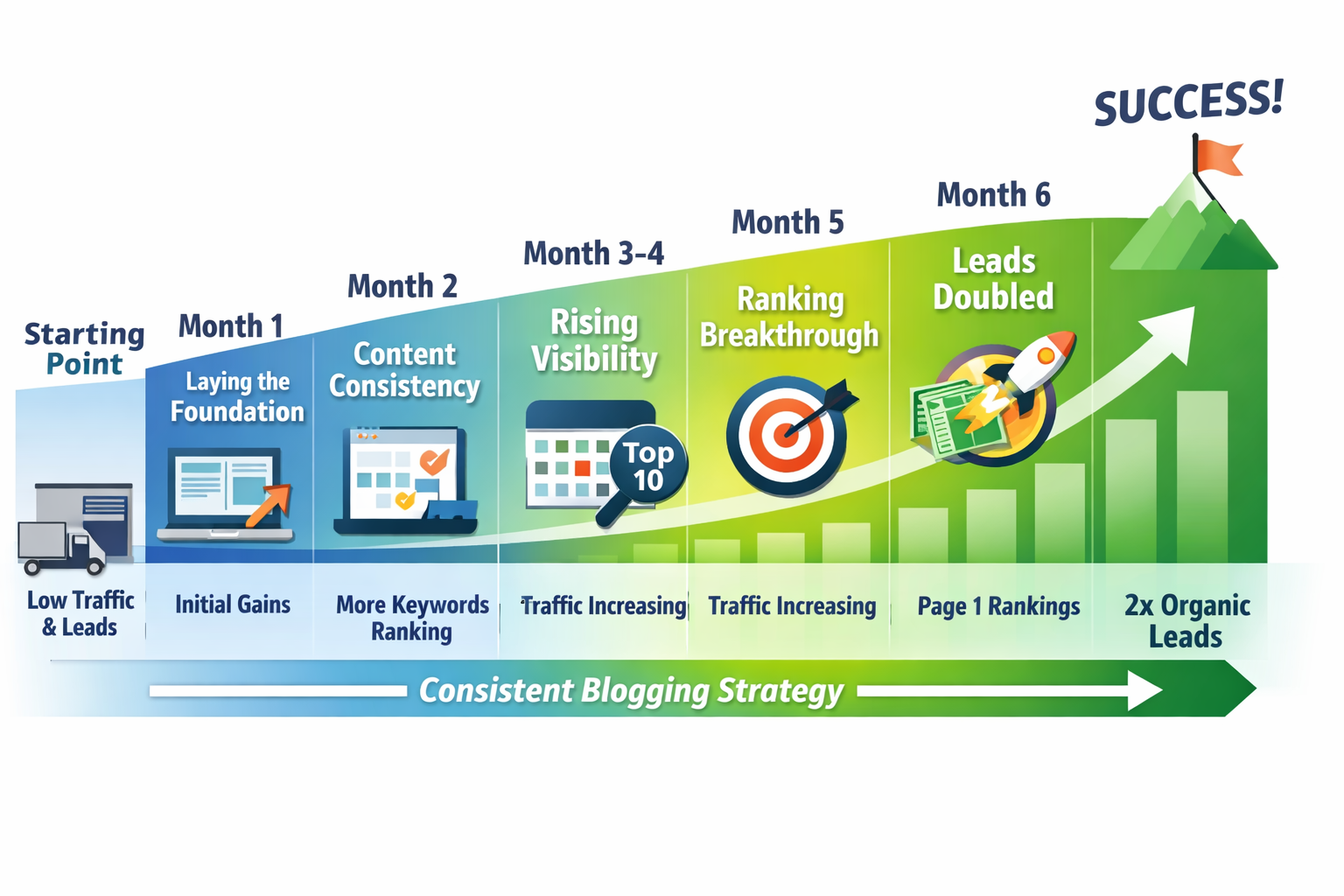
Months 1–2: Building the Foundation
The first eight weeks showed modest gains. New content takes time to get indexed, evaluated, and ranked. But early signals were encouraging:
New posts began appearing in search results for target keywords, mostly on pages two and three
Average time on page increased as visitors engaged with helpful, specific content
Internal linking started distributing page authority across the site's content library
This is the phase where most companies abandon their content strategy. They expect immediate results, and when rankings don't spike overnight, they conclude that "blogging doesn't work for us."
That's a mistake. Content marketing compounds—but only if you keep publishing through the quiet early months.
Months 3–4: Momentum Builds
By month three, compounding effects became visible. Earlier posts climbed higher in rankings as newer content reinforced the site's topical authority. The site was building what SEO professionals call "topical clusters"—interconnected content that signals deep expertise to search engines [4].
During this period:
Organic impressions increased substantially week over week
Several target keywords moved from page two to page one
Referral traffic from search began exceeding direct traffic for the first time
Months 5–6: The Doubling Effect
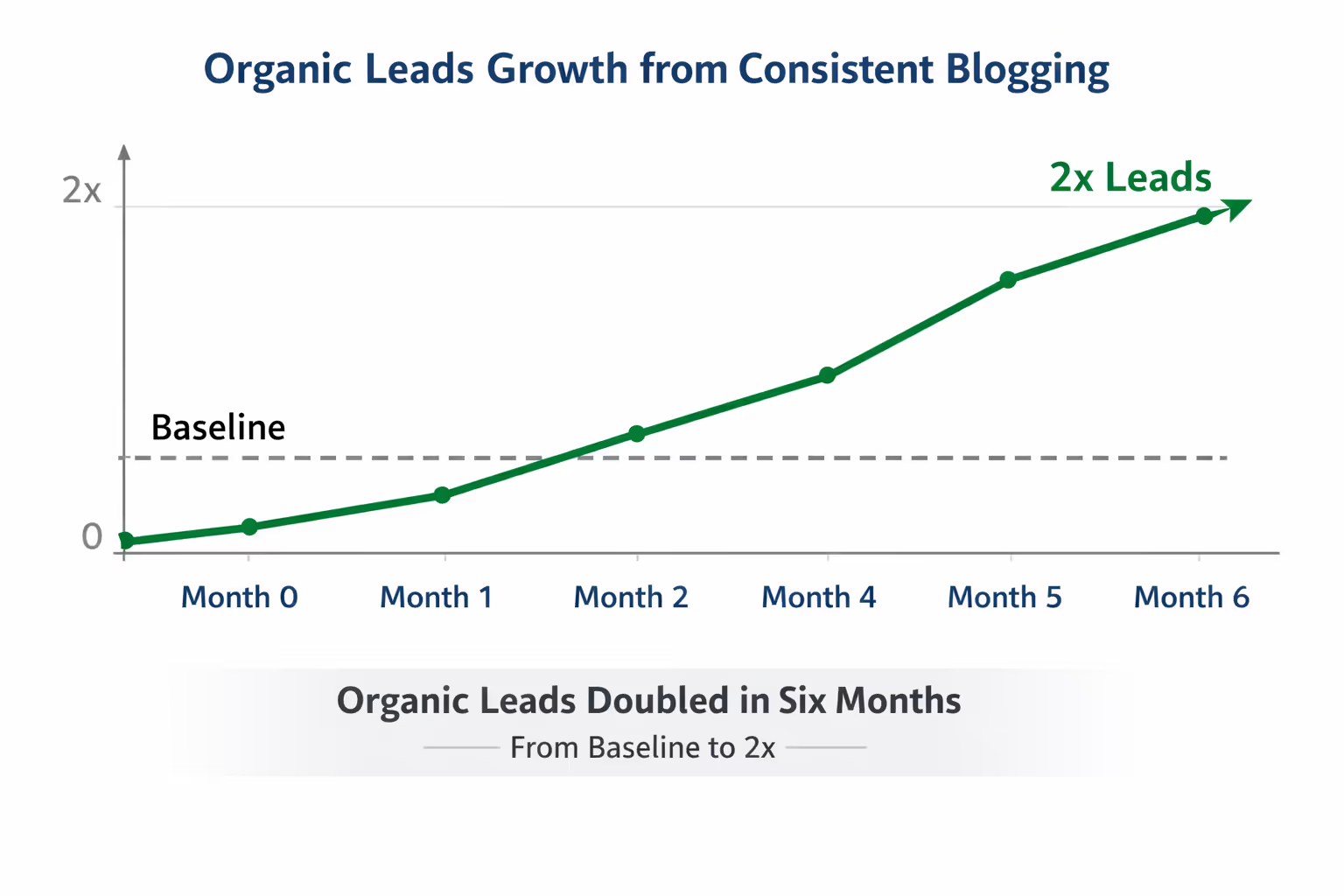
The final two months delivered the payoff. Organic leads—not just traffic, but actual conversion form submissions—doubled compared to the six months prior.
| Metric | Before | After 6 Months |
| Weekly publishing frequency | ~1 post per month | 2–3 posts per week |
| Organic impressions | Declining quarter over quarter | +215% growth |
| Keywords ranking page one | 12 | 47 |
| Organic lead conversion rate | Below industry average | Competitive with paid channels |
| Monthly organic leads | Baseline | 2x baseline |
This wasn't a fluke. It was the predictable result of consistent effort compounding over time.
Why Consistent Blogging Improves Lead Conversion Rate
Understanding why these results happened matters more than simply celebrating that they did.
Search Engines Reward Sustained Activity
Google's algorithms favor websites that demonstrate ongoing expertise, authoritativeness, and trustworthiness—the principles often summarized as E-E-A-T. According to Google's documentation on how search works, these quality signals influence which content surfaces for relevant queries [5].
A blog that publishes twice weekly accumulates content—and authority—far faster than one publishing monthly. That velocity difference compounds. Over six months, it's the difference between 50+ posts building interconnected authority and a handful of isolated articles.
More Quality Content Creates More Entry Points
Each blog post targeting a distinct keyword becomes a potential entry point to your website. More quality posts targeting different searches means more opportunities for the right prospects to find you.
Think of it like fishing. One line in the water might catch something. Fifty lines, each in a carefully researched spot, dramatically improve your odds—and let you reach fish you'd never encounter otherwise.
Helpful Content Builds the Trust That Converts
Lead conversion rate doesn't depend solely on traffic volume. It depends on traffic quality and visitor trust.
When someone lands on a blog post that genuinely helps them—that answers their question clearly, demonstrates expertise, and provides practical value—they're more likely to explore further. To check out related articles. To visit a product page. To fill out a contact form.
Generic, thin content does the opposite. It signals that maybe you don't know what you're talking about. Visitors bounce. Leads don't materialize.
Strategic Internal Linking Guides the Journey
Strategic internal linking connects your content into a coherent experience. A visitor who lands on an informational post can naturally flow to related articles, then to a service page, then to a conversion point.
Without this architecture, visitors read one post and leave. With it, they take a guided journey that builds trust and moves them toward action.
The Real Cost of Not Publishing Consistently
Understanding what the company gained also means understanding what inconsistent publishing costs.
Lost Visibility to Competitors
Every week your competitors publish content you don't, they claim territory you could have owned. Research from Backlinko analyzing over 11 million Google search results found that top-ranking pages consistently demonstrate topical depth and comprehensive coverage—qualities that require sustained publishing effort [6].
The industrial equipment company discovered that several competitors had been publishing weekly for years. They weren't necessarily producing better content—just more of it, more consistently.
Wasted Domain Authority
You've invested in building your website. Your domain has accumulated age, backlinks, and baseline authority. Without fresh content, that investment sits idle—like owning a storefront on a busy street but never opening the doors.
Higher Customer Acquisition Costs
When organic traffic doesn't deliver leads, most companies compensate with increased paid advertising. But according to research from the Content Marketing Institute, content marketing generates approximately three times the leads of paid search advertising per dollar spent [7].
Organic traffic, by contrast, compounds. A post published today can drive leads for years without additional spend.
Missed Compounding
Perhaps the biggest cost is opportunity cost. The company that starts consistent blogging today will be substantially ahead in six months. The company that waits another six months to start falls further behind a curve that never stops moving.
Building Your Own Organic Lead Engine
The results described here aren't magic. They're the predictable outcome of doing specific things consistently over time.
Step 1: Commit to a Sustainable Publishing Cadence
Two to three posts per week is the target that balances authority-building speed with quality maintenance. If you can't sustain that pace with internal resources, consider outsourcing to a system built for consistent production.
The key word is sustainable. Publishing five posts one week and zero the next three defeats the purpose.
Step 2: Build a Topic Bank Before You Write
Don't guess at topics. Use keyword research tools to identify what your audience actually searches for. Build a topic bank deep enough to draw from for three to six months.
Focus on queries where your expertise can provide genuine value and where competition allows realistic ranking potential.
Step 3: Match Content to Search Intent
Understand what searchers want when they type a query. Are they learning about a topic? Comparing options? Ready to buy?
Write content that matches their stage. An informational post shouldn't hard-sell. A product comparison should provide genuine comparison value, not just promote your option.
Step 4: Optimize Every Post for Discovery
On-page SEO isn't optional. Title tags, meta descriptions, header structure, internal links, schema markup—these details determine whether good content actually gets found.
Treat optimization as part of the writing process, not an afterthought.
Step 5: Measure What Matters
Track organic impressions and traffic trends in Google Search Console. Monitor keyword rankings for your target terms. Most importantly, measure leads generated from organic visitors.
Look for trends over rolling three-month periods rather than daily fluctuations. Content marketing success shows up in trajectories, not snapshots.
Step 6: Stay Patient Through Months Two, Three, and Four
Organic growth takes time. The companies that win are the ones that keep publishing through the quiet middle months when results are building but not yet obvious.
The industrial equipment company could have quit at month two when rankings barely budged. They didn't. By month six, they understood why.
From Idle Asset to Lead Engine
Remember that website sitting idle? Six months of consistent, strategic blogging turned it into something fundamentally different.
The website didn't change. The products didn't change. What changed was the content engine powering everything.
That engine now works around the clock. It attracts visitors searching for solutions the company provides. It builds trust through genuinely helpful content. It guides those visitors toward conversion.
And it keeps compounding.
This is what consistent blogging makes possible. Not overnight success—but sustainable, scalable growth that doesn't depend on ad budgets or algorithm luck.
Ready to start your own six-month transformation? Get your first 2 articles free and see what consistent, strategic content can do for your organic leads.
Frequently Asked Questions
How long does it take to see results from consistent blogging?
Most websites begin seeing measurable improvements in organic impressions and keyword rankings within three to four months of consistent publishing. However, the compounding effect means results accelerate over time—month six typically shows dramatically more progress than month three. Lead conversion improvements often follow traffic gains by four to eight weeks as new visitors move through the consideration cycle.
How many blog posts per week actually make a difference?
Two to three SEO-optimized posts per week represents the threshold where most businesses see meaningful organic growth within six months. This frequency builds topical authority quickly while maintaining quality standards. Publishing less can work but extends the timeline proportionally. Publishing more requires proportionally more resources and risks quality dilution without proportional returns.
What types of blog posts generate the most leads?
Posts targeting commercial investigation intent—comparisons, "best of" guides, and solution-focused content—typically generate the highest lead conversion rates. However, informational content builds the traffic base and trust that makes those conversions possible. A balanced content strategy addresses prospects at every stage, from initial awareness through purchase decision.
How do you measure whether a blogging strategy is working?
Track three levels of metrics: visibility (impressions and rankings), traffic (organic sessions and new users), and outcomes (lead form submissions from organic visitors). Monitor trends over rolling 90-day periods rather than daily or weekly fluctuations. The most important leading indicator is whether you're ranking for more relevant keywords each month.
Can consistent blogging really double organic leads?
Yes, particularly for businesses starting from a baseline of inconsistent or minimal publishing. The company described in this article doubled leads in six months starting from a neglected blog. Results vary based on starting point, industry competitiveness, and execution quality—but businesses following consistent publishing with strategic optimization regularly report substantial lead growth within six to twelve months.
About Our Expertise
This article draws on direct experience building content systems that deliver measurable organic growth. The Mighty Quill team combines over 15 years of digital marketing experience—spanning SEO, e-commerce, and content strategy—with systems designed for consistent, high-quality execution. Our approach is grounded in real client results, including the metrics and transformations described in this piece. We focus on what actually works: strategic topic selection, proper optimization, and relentless consistency.
Cited Works
[1] Google Search Central — "Creating helpful, reliable, people-first content." https://developers.google.com/search/docs/fundamentals/creating-helpful-content
[2] Moz — "The Beginner's Guide to SEO."
https://moz.com/beginners-guide-to-seo
[3] Google Search Central — "SEO Starter Guide." https://developers.google.com/search/docs/fundamentals/seo-starter-guide
[4] HubSpot — "Topic Clusters: The Next Evolution of Content Strategy." https://blog.hubspot.com/marketing/topic-clusters-seo
[5] Google Search Central — "Understanding how Google Searchghn works." https://developers.google.com/search/docs/fundamentals/how-search-works
[6] Backlinko — "We Analyzed 11.8 Million Google Search Results." https://backlinko.com/search-engine-ranking
[7] Content Marketing Institute — "B2B Content Marketing Research." https://contentmarketinginstitute.com/research/