
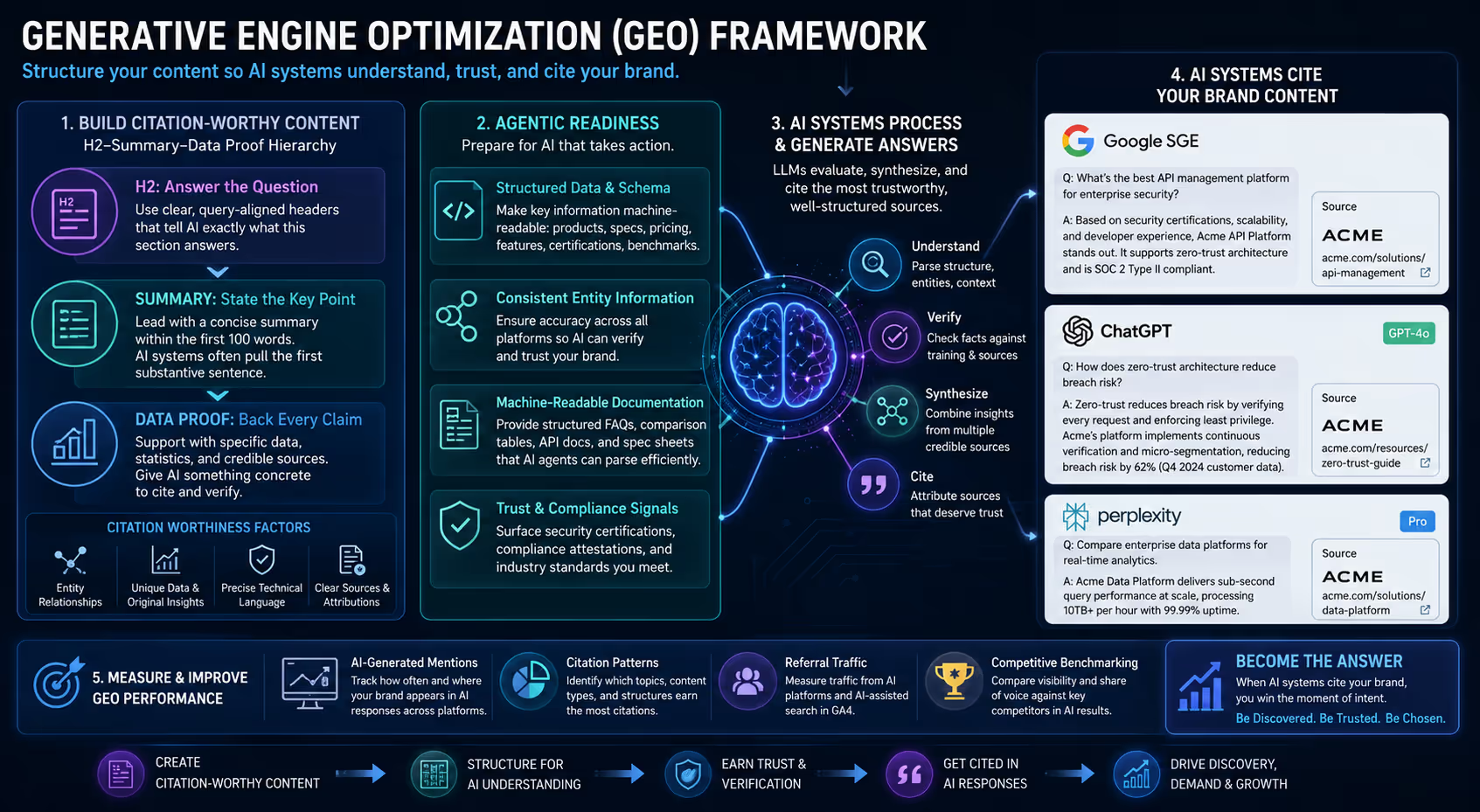
The way buyers discover technology solutions is shifting beneath our feet.
Search engines no longer simply return a list of blue links—they synthesize answers directly from the sources they trust most. For high-tech brands competing in crowded markets, this represents both a significant challenge and a massive opportunity.
Generative Engine Optimization (GEO) is the emerging discipline of structuring your content so AI systems—from Google's Search Generative Experience to ChatGPT and Perplexity—can accurately understand, cite, and recommend your brand. If traditional SEO was about ranking on page one, GEO is about becoming the answer.
For technology companies, where complex products require clear explanation and trust signals carry outsized weight, mastering GEO isn't optional. It's the difference between being discovered or being invisible in the new search landscape.
What Is Generative Engine Optimization?
Generative Engine Optimization refers to the practice of optimizing digital content specifically for AI-powered search and discovery systems. Unlike traditional SEO, which focuses on keyword placement and backlink profiles, GEO prioritizes content structure, factual density, and what researchers call "citation worthiness"—the likelihood that an AI will reference your content when generating answers [1].
Large language models (LLMs) have fundamentally changed how information gets surfaced. These systems don't just match keywords to pages. They evaluate content quality, verify claims against their training data, and synthesize responses that blend multiple authoritative sources [2].
For high-tech brands, this shift matters enormously. Your potential customers increasingly ask AI assistants questions like "What's the best enterprise data platform for real-time analytics?" or "How does zero-trust architecture work?" The brands that appear in those AI-generated responses capture attention at the exact moment of intent.
Why High-Tech Brands Need a Different GEO Approach
Technology companies face unique challenges in generative search that other industries don't encounter as acutely:
Technical products require precise explanation. Ambiguity kills trust. When an AI synthesizes information about your platform, vague marketing language gets filtered out in favor of concrete, verifiable statements.
The competitive landscape is dense with similar messaging. Enterprise software companies often describe themselves using nearly identical terminology—"scalable," "secure," "intelligent." AI systems struggle to differentiate brands that sound the same.
Technology buying cycles are long and research-intensive. Decision-makers consult multiple sources, including AI tools, before ever contacting sales. The brands that appear consistently across these AI-generated research summaries build familiarity and credibility before the first conversation.
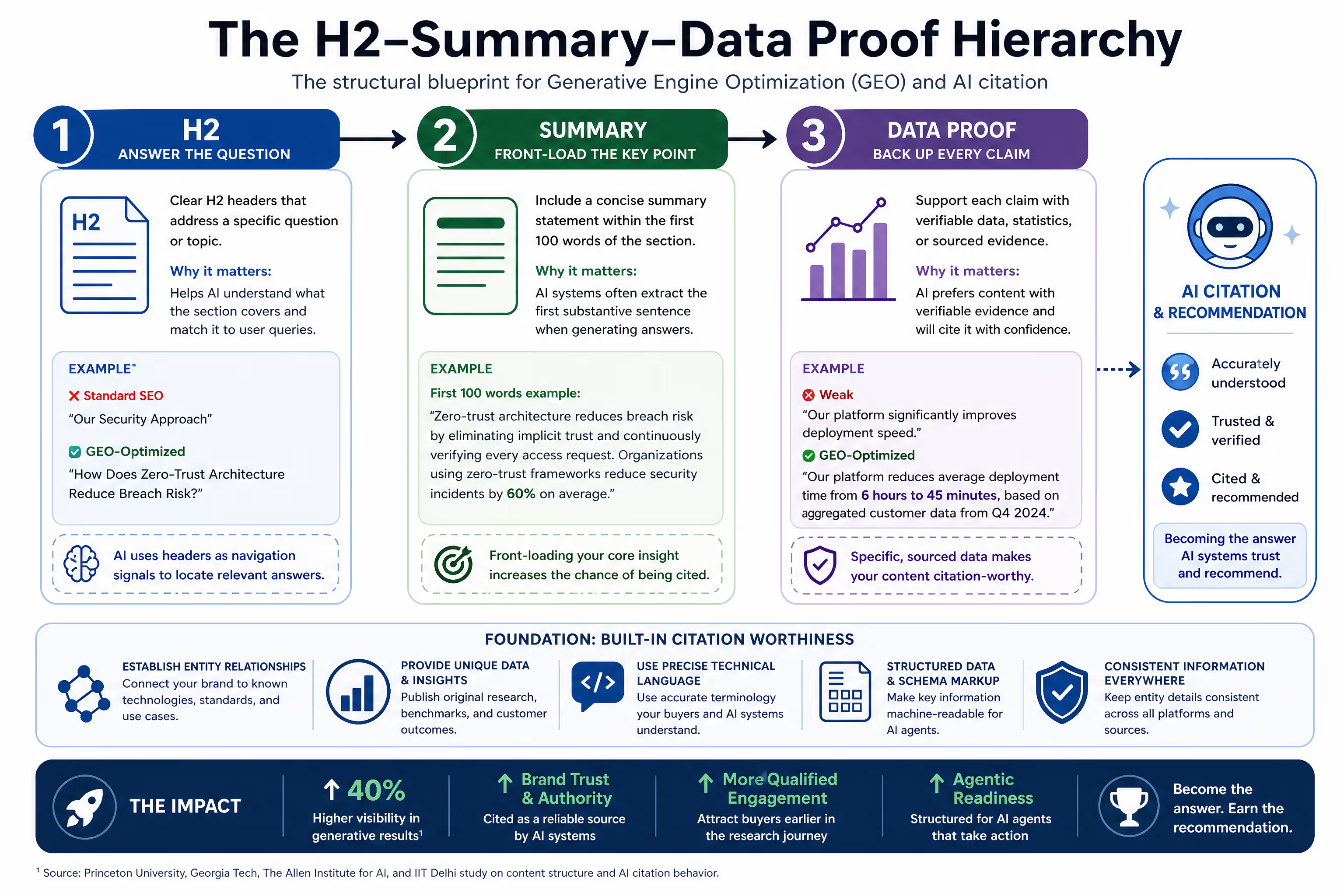
Research published by Princeton University, Georgia Tech, The Allen Institute for AI, and IIT Delhi examined how content structure affects AI citation behavior. Their study found that content incorporating specific optimization techniques—including authoritative language, statistical evidence, and clear sourcing—showed visibility improvements of up to 40% in generative engine responses compared to unoptimized content [1].
That's a significant gap. And for high-tech brands, closing it requires intentional structural choices.
The H2-Summary-Data Proof Hierarchy
The most effective GEO content follows a consistent structural pattern that AI systems can easily parse and verify. We call this the H2-Summary-Data Proof hierarchy.
Clear H2 Headers That Answer Specific Questions
Each major section should address a discrete topic or question. AI systems use headers as navigation signals to understand what each content block covers. Headers phrased as questions or clear topic statements perform better because they match the natural language queries users pose to AI assistants.
Standard SEO header: "Our Security Approach"
GEO-optimized header: "How Does Zero-Trust Architecture Reduce Breach Risk?"
The second version directly mirrors how buyers actually search. It tells the AI exactly what question this section answers—making it far more likely to be pulled into a generated response.
Summary Statements Within the First 100 Words
Every section should lead with a concise summary of its key point. This isn't just good writing practice—it's structurally necessary for AI citation.
Generative systems often pull the first substantive sentence from a relevant section when constructing responses. Front-loading your core insight increases the probability that your specific language appears in AI answers, with proper attribution when the system provides sources.
Data Proof Supporting Each Claim
AI systems are trained to prefer content that includes verifiable evidence. Specific statistics, research citations, and quantifiable outcomes signal credibility that vague assertions cannot match.
Before (weak): "Our platform significantly improves deployment speed."
After (GEO-optimized): "Our platform reduces average deployment time from 6 hours to 45 minutes, based on aggregated customer data from Q4 2024."
The second version gives AI systems something concrete to cite. The first version gets ignored in favor of competitors who provide specifics.
Building "Citation Worthiness" Into Your Content
Citation worthiness isn't about gaming algorithms. It's about producing content that genuinely deserves to be referenced as an authoritative source.
Establish Entity Relationships
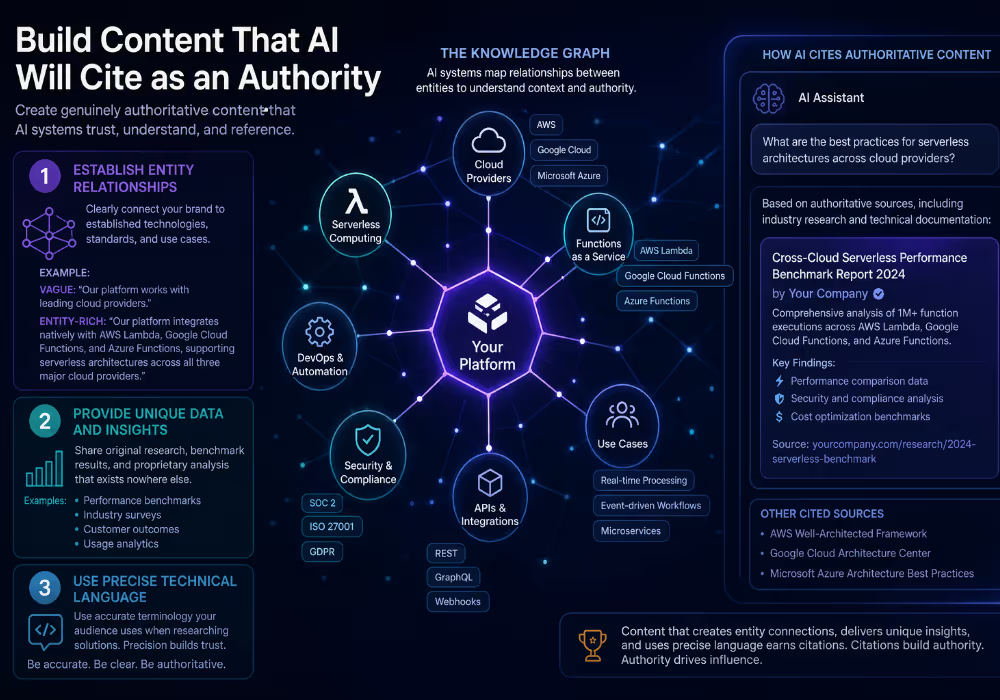
Google's Knowledge Graph and similar systems map relationships between entities—companies, products, technologies, and concepts [4]. Your content should clearly establish where your brand fits within this web of relationships.
When you write about your platform, explicitly connect it to established technology categories, standards, and use cases. If your solution implements specific protocols or integrates with known systems, name them precisely. These entity relationships help AI systems understand what your brand is and what it does.
Consider this contrast:
Vague: "Our platform works with leading cloud providers."
Entity-rich: "Our platform integrates natively with AWS Lambda, Google Cloud Functions, and Azure Functions, supporting serverless architectures across all three major cloud providers."
The second version creates explicit entity connections that AI systems can map and verify.
Provide Unique Data and Insights
AI systems can access vast amounts of information. Generic explanations of common concepts won't differentiate your content. What AI cannot fabricate is original data—research findings, benchmark results, customer outcomes, or proprietary analysis that exists nowhere else.
High-tech brands sitting on performance data, usage analytics, or industry surveys have a significant advantage. Publishing these insights in structured formats creates content that AI must cite because the information cannot be sourced elsewhere.
Use Precise Technical Language
Resist the temptation to simplify complex topics into meaningless marketing speak. Technical audiences—and the AI systems serving them—respond better to precise terminology used correctly.
This doesn't mean writing impenetrable jargon. It means using the exact terms your buyers use when researching solutions, explaining them clearly, and demonstrating genuine domain expertise through accuracy.
Agentic Readiness: Preparing for AI That Takes Action
Here's where things get interesting—and where most brands aren't paying attention yet.
The next evolution of AI search isn't just answering questions. It's taking action on behalf of users. AI agents are increasingly capable of researching vendors, comparing features, and even initiating procurement workflows without direct human supervision at every step.
Imagine a scenario: A VP of Engineering asks their AI assistant to "find three API management platforms that support GraphQL and have SOC 2 compliance, then schedule demos with the top option." The AI doesn't just search—it evaluates, compares, and acts.
This "agentic" future requires brands to think beyond visibility. Your digital presence needs to provide the structured information that AI agents require to make recommendations and complete tasks.
Structured Data and Schema Markup
Implementing comprehensive schema markup helps AI systems parse your content accurately [5]. Product specifications, pricing structures, feature comparisons, and company information should all be available in machine-readable formats.
For high-tech brands, this includes technical specifications that might seem granular:
API documentation
Integration capabilities
Security certifications
Compliance attestations
Performance benchmarks
AI agents will increasingly query these details when evaluating solutions for their users.
Consistent Entity Information Across Platforms
AI systems cross-reference information from multiple sources to verify accuracy. Ensure your company name, product names, executive team, and key claims remain consistent across:
Your website
LinkedIn company pages
Crunchbase
G2 and similar review platforms
Industry publications
Press releases
Inconsistencies create confusion for AI systems, potentially leading to inaccurate representations or reduced confidence in citing your content.
Machine-Readable Documentation
Technical documentation optimized for human readers may not serve AI agents effectively. Consider creating supplementary resources—structured FAQ sections, comparison tables, and specification sheets—that AI systems can process efficiently.
The brands that prepare for agentic search now will have significant advantages as this technology matures and adoption accelerates.
Measuring GEO Performance
Traditional SEO metrics like keyword rankings and organic traffic remain relevant, but GEO requires additional measurement approaches.
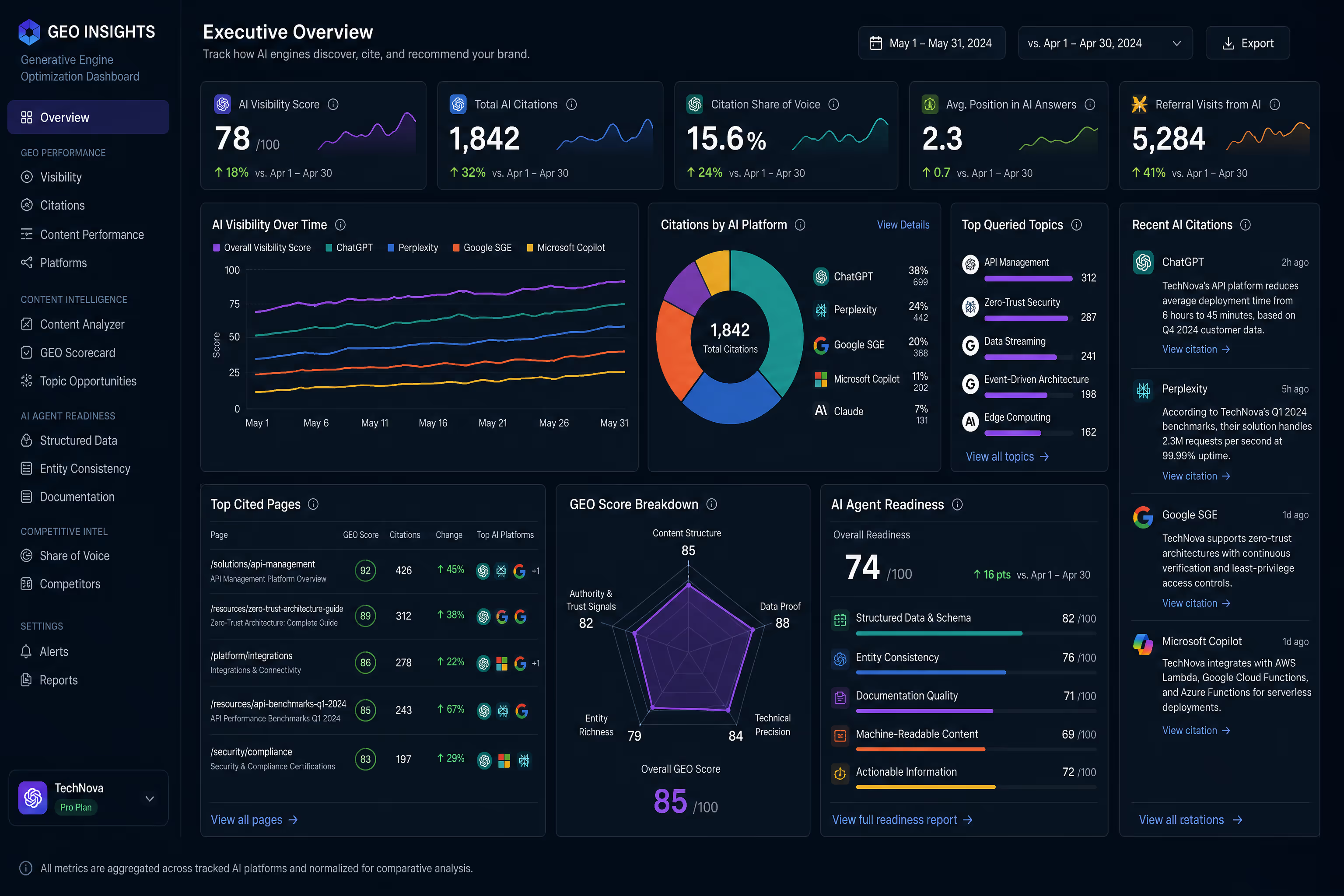
Monitor AI-Generated Mentions
Track when and how your brand appears in AI-generated responses. Several approaches work today:
Manual prompt testing: Regularly query ChatGPT, Perplexity, and Google's AI features with questions your buyers ask. Document whether your brand appears and in what context.
Emerging monitoring tools: Platforms like Profound (for Perplexity tracking) and various AI mention monitoring services are beginning to offer automated tracking.
Competitive comparison: Test how competitors appear in the same AI responses to benchmark your relative visibility.
Analyze Citation Patterns
When AI systems do cite your content, examine which pages and content types receive attention. Look for patterns:
Which topics generate citations?
Which content formats (guides, comparisons, technical docs) get referenced most?
Which structural elements seem to correlate with higher citation rates?
This reveals what's working, allowing you to double down on successful patterns.
Track Referral Traffic From AI Sources
As generative search interfaces mature, they increasingly provide attribution links. Configure your analytics to segment traffic from AI platforms:
Set up UTM parameters for any direct integrations
Monitor referral traffic from perplexity.ai, chat.openai.com, and similar domains
Track "AI-assisted" search traffic through Google Analytics 4's new traffic categorizations
Building Your GEO Foundation
Implementing GEO doesn't require abandoning your existing content strategy. It means systematically upgrading your content architecture to meet the requirements of AI-driven discovery.
Start with your highest-priority pages:
Product overviews
Key feature explanations
Cornerstone thought leadership content
Apply the H2-Summary-Data Proof hierarchy to these assets first. Add schema markup where appropriate. Ensure entity relationships are clearly established.
Then expand outward:
Audit your entire content library for citation worthiness
Identify pages with strong information value that lack the structural elements AI systems need
Prioritize updates based on business impact
The brands that begin this work now will compound their advantage over time. As AI becomes the primary discovery interface for technology buyers, early movers in GEO will own the conversations that matter most.
Ready to assess your brand's AI visibility? Understanding where you currently appear in AI-generated responses—and where you're missing—is the essential first step. Request a complimentary AI presence audit to see how generative engines perceive your brand today.

Frequently Asked Questions
How is GEO different from traditional SEO?
Traditional SEO focuses on ranking in search engine results pages through keyword optimization, backlinks, and technical factors. GEO optimizes content specifically for AI-generated responses, prioritizing structural clarity, factual density, and citation worthiness. While both disciplines overlap significantly, GEO emphasizes making content understandable and verifiable to language models that synthesize answers rather than simply rank pages.
How long does it take to see results from GEO efforts?
GEO improvements typically show measurable impact within three to six months, similar to traditional SEO timelines. However, AI systems update their knowledge bases at varying intervals, so monitoring multiple platforms provides the most accurate picture of progress. Consistent content optimization compounds over time, with early efforts providing foundation for ongoing visibility gains.
Can small technology companies compete with enterprise brands in AI search?
Absolutely. AI systems evaluate content quality and relevance independent of brand size. Smaller companies that produce highly specific, authoritative content within defined niches often outperform larger competitors who rely on generic messaging. The key is demonstrating genuine expertise through precise, well-structured content that addresses specific buyer questions.
What role does the Knowledge Graph play in generative search?
Google's Knowledge Graph and similar entity databases help AI systems understand relationships between companies, products, technologies, and concepts [4]. Brands that appear accurately within these knowledge systems enjoy higher confidence scores when AI generates responses. Ensuring consistent entity information across all digital touchpoints strengthens your Knowledge Graph presence and improves citation likelihood.
Should we create content specifically for AI consumption?
Content should serve human readers first—AI systems generally prefer content that humans find valuable. However, structural elements like clear headers, front-loaded summaries, and supporting data benefit both audiences. The goal is optimizing existing content practices for AI readability, not creating separate content streams for machine consumption.
Cited Works
[1] Aggarwal, P. et al. — "GEO: Generative Engine Optimization." https://arxiv.org/abs/2311.09735
[2] Google — "How AI Overviews Work in Search." https://blog.google/products/search/generative-ai-google-search-may-2024/
[3] Princeton University, Georgia Tech, The Allen Institute for AI, IIT Delhi — "Generative Engine Optimization Research." https://arxiv.org/abs/2311.09735
[4] Google — "Knowledge Graph Overview." https://developers.google/knowledge-graph
[5] Schema.org — "Technical Documentation for Structured Data." https://schema.org/docs/documents.html


