Most SaaS marketing teams have felt the pain: another quarter ends, the blog has three posts from six months ago, and organic leads remain flat. Meanwhile, competitors seem to publish endlessly—ranking for keywords you identified last year but never targeted.
The gap between "we have a blog" and "our blog drives pipeline" comes down to systems. Specifically, whether you've built one.
Automating blog posts for lead generation isn't about replacing humans with robots. It's about constructing a repeatable content engine—one that combines strategic planning, AI-assisted production, and human oversight to attract the right readers, earn their trust, and move them toward action.
Here's how SaaS companies are actually making this work.
Why Most SaaS Blogs Fail to Generate Leads
Most company blogs are graveyards. They start strong—a launch post, a product update, maybe a thought leadership piece from the founder. Then priorities shift. The blog sits idle for months while competitors capture the search traffic you wanted.
Even when teams do publish consistently, many make a critical mistake: they write for search engines without thinking about the sales funnel.
The result? Traffic that doesn't convert. Visitors who read, bounce, and never return.
According to HubSpot's research on inbound marketing, companies that publish blog content consistently generate significantly more leads than those that don't [1]. But consistency alone isn't enough. The content needs to meet readers where they are in their buying journey—and guide them somewhere useful.
The Connection Between Content and Your Sales Funnel
Think of your blog as the top of a funnel—not a megaphone broadcasting to nobody in particular.
Every piece of content should serve a purpose within your broader sales motion:
Awareness content attracts people who don't know they have a problem yet
Consideration content educates prospects evaluating solutions
Decision content helps buyers choose between options (ideally, choosing you)
When you automate blog production without this framework, you get volume without direction. When you build automation around funnel stages, you get a content engine that actually moves people toward conversion.
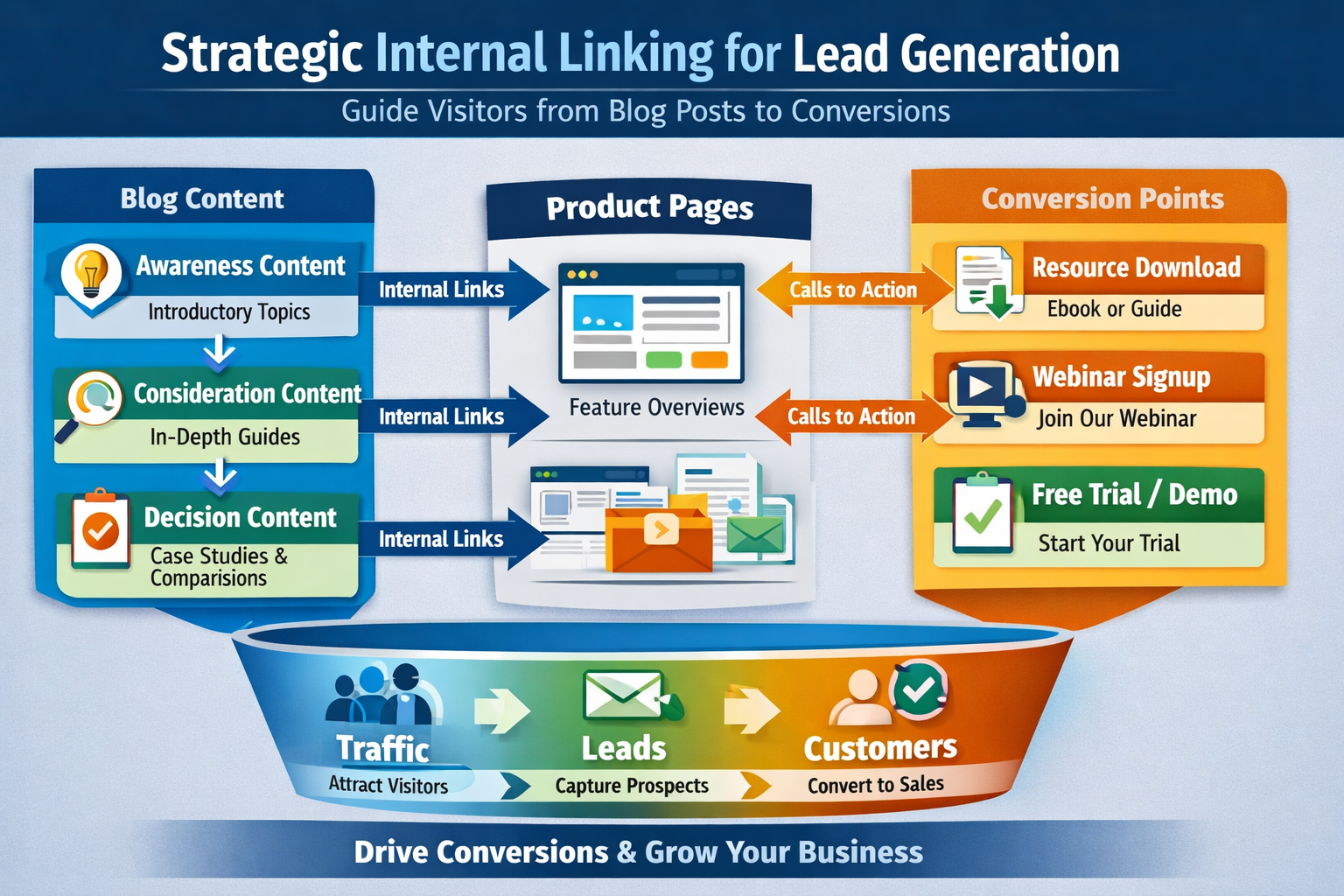
The key is internal linking—connecting each post to relevant resources, product pages, and conversion points throughout your site. A well-structured internal linking strategy doesn't just help SEO. It guides readers through a logical journey from curiosity to commitment [2].
What "Automating" Actually Means: The Tech Stack
Here's where most advice on content automation gets vague. Let's be specific about what automation actually involves—because it's more than "use AI to write stuff."
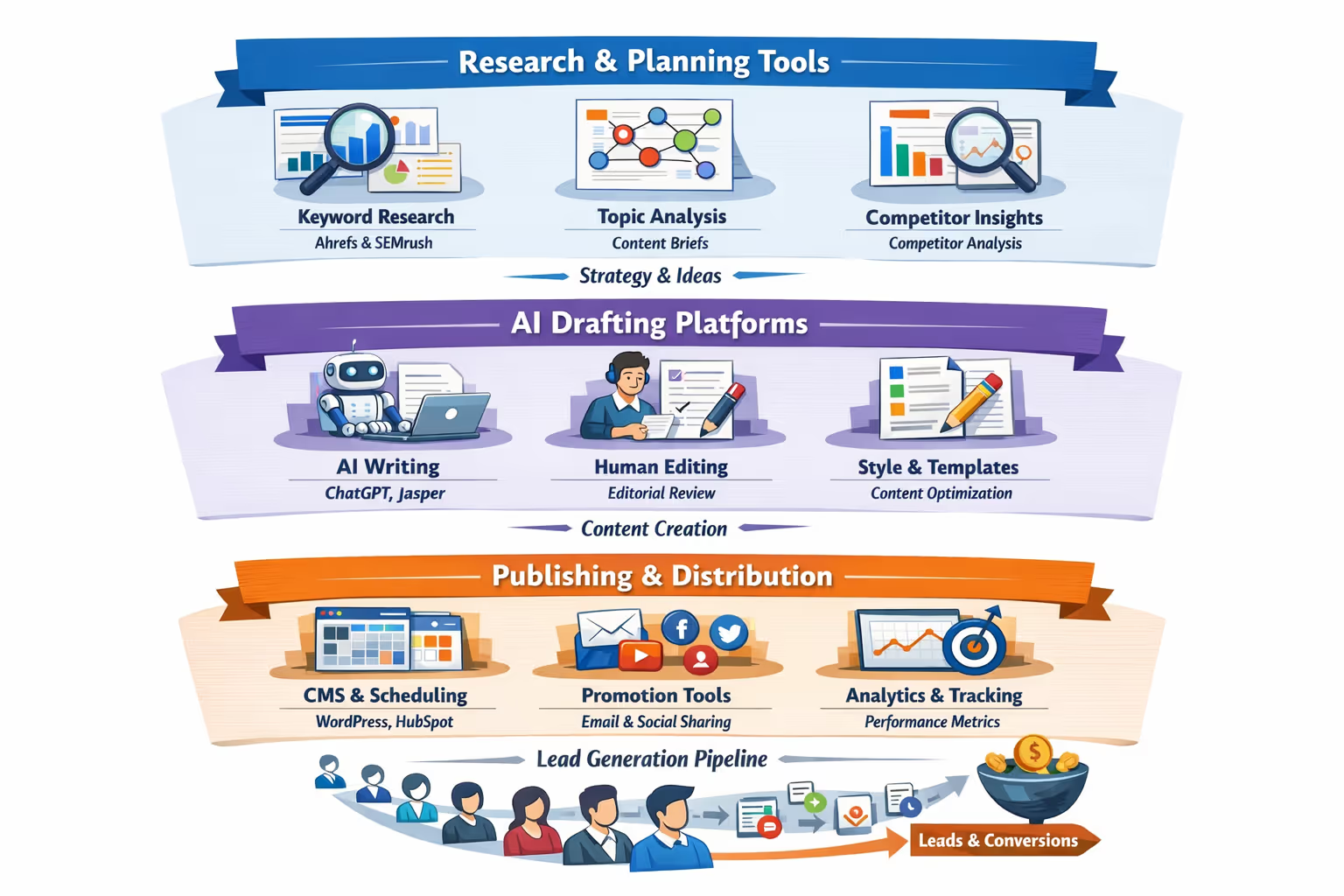
Real content automation for lead generation requires systematizing the repeatable parts of production while keeping humans in control of strategy and quality. This typically involves three layers:
Layer 1: Research and Planning Tools
Before a single word gets written, you need systems for identifying what to write about:
SEO platforms (Ahrefs, SEMrush, or similar) for keyword research and competitive analysis
Topic clustering tools to map content to funnel stages and identify gaps
Content brief generators that pull search intent data, competitor outlines, and related questions
This layer answers: "What should we write, and why will it rank?"
Layer 2: Production and Drafting
This is where AI enters the workflow:
AI writing assistants (ChatGPT, Claude, Jasper, or similar) generate first drafts based on structured briefs
Human editors refine those drafts for accuracy, voice, and strategic alignment
Style guides and templates ensure consistency across all content
The ratio matters here. Most successful automated systems run roughly 70-80% AI drafting with 20-30% human refinement. AI handles the heavy lifting; humans handle judgment.
Layer 3: Publishing and Distribution
The final layer removes friction from getting content live:
CMS integrations that handle formatting, internal links, and metadata
Workflow tools (project management platforms, approval systems) that keep content moving
Scheduling systems that maintain consistent publishing cadence
When these three layers work together, you get a content machine—not a content grind.
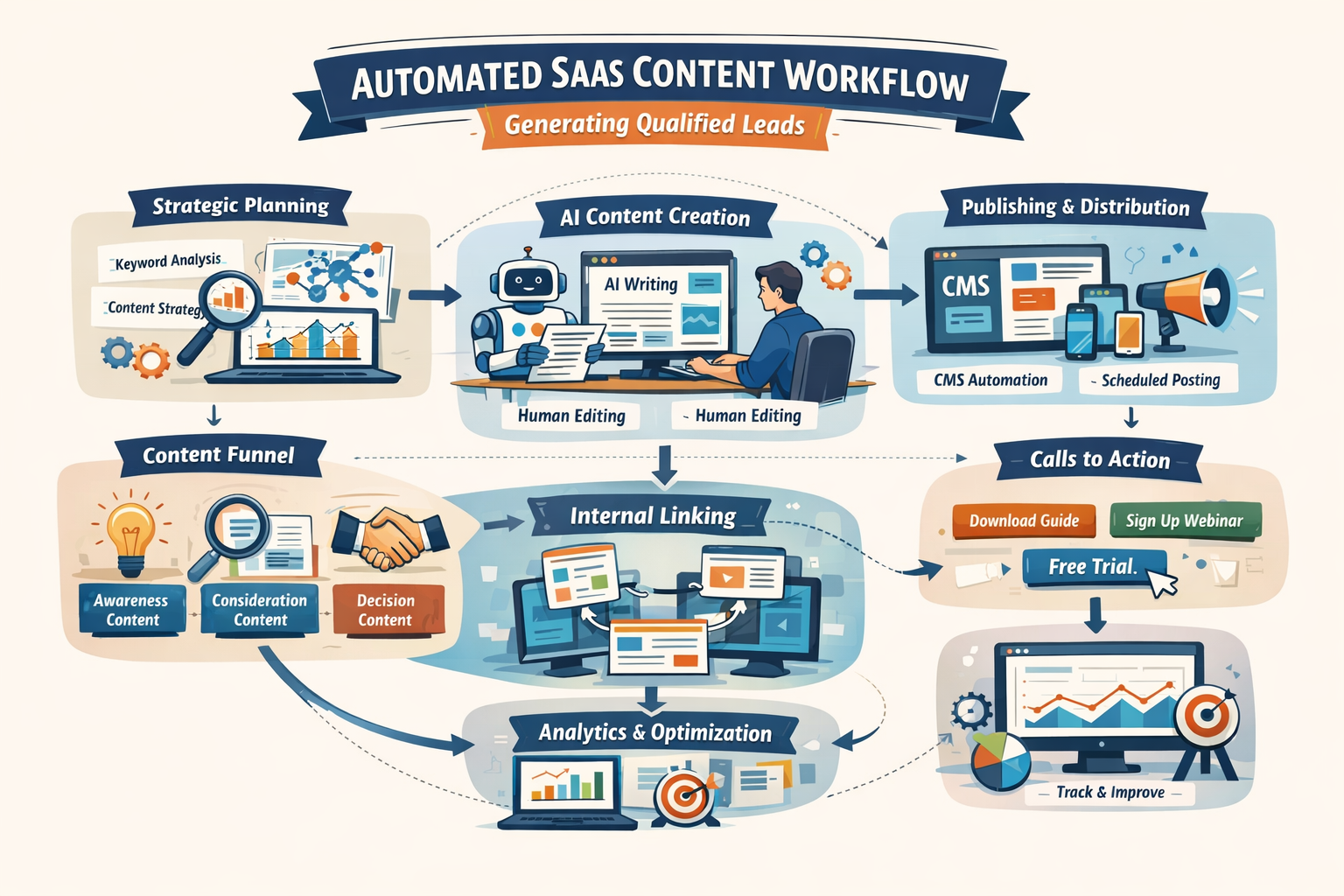
A Sample Automated Content Workflow
To make this concrete, here's what an automated workflow actually looks like in practice:
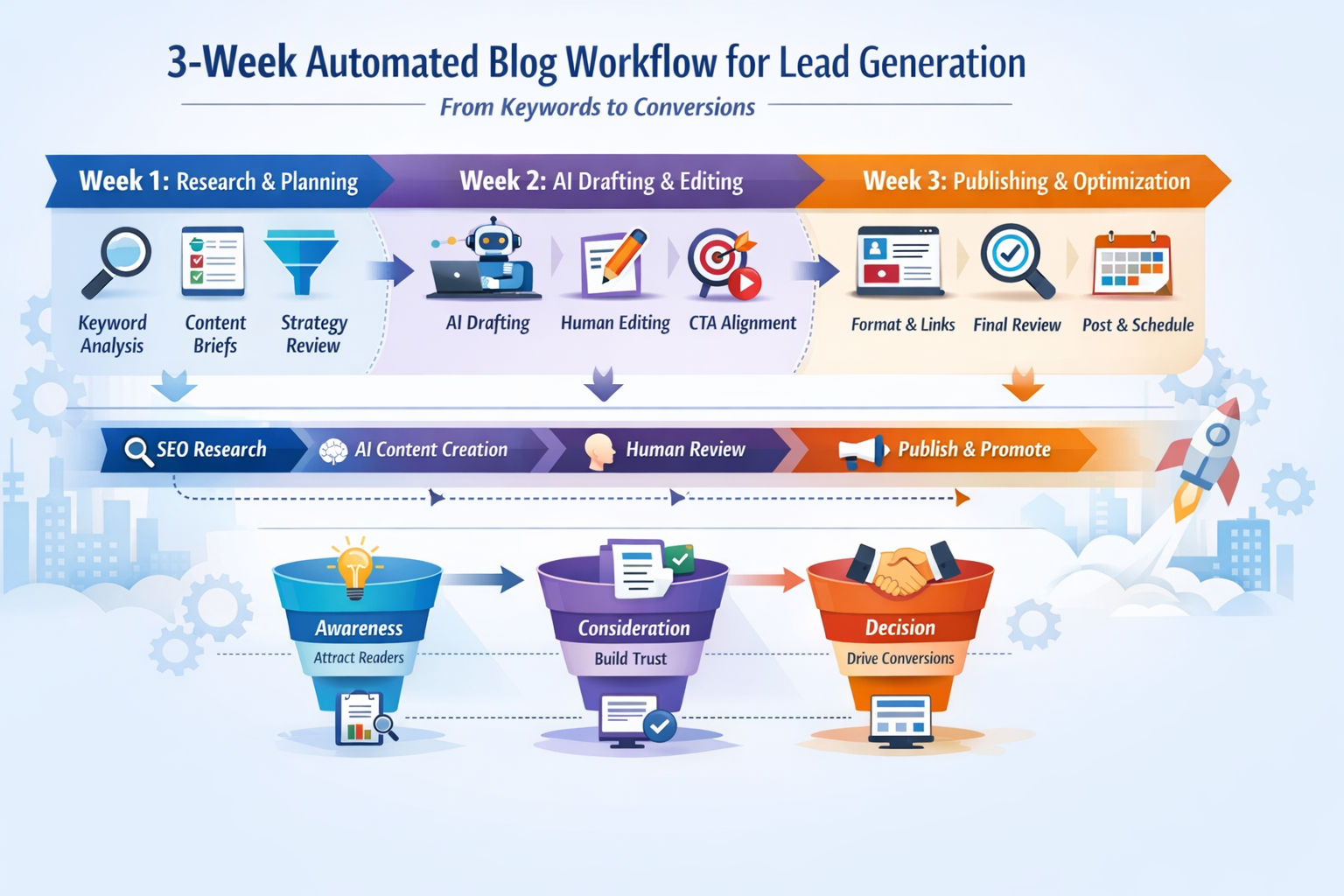
Week 1: Planning
SEO tool identifies high-intent keyword cluster
Brief generator creates outline with search intent, competitor analysis, and target structure
Human strategist reviews and adjusts for funnel alignment
Week 2: Production4. AI drafts article based on approved brief5. Editor reviews for accuracy, tone, and strategic fit6. Revisions completed and CTA matched to content stage
Week 3: Publishing7. CMS tool formats post with proper headers, schema, and internal links8. Final human review for quality assurance9. Post scheduled and published on cadence
This cycle repeats two to three times per week. The first few iterations require more human involvement; over time, the system becomes more efficient as templates and processes mature.
Building Your Automated Lead Generation Content System
Here's a practical framework for turning your blog into a lead generation engine:
Step 1: Map Content to Funnel Stages
Before you write anything, get clear on what content serves which purpose.
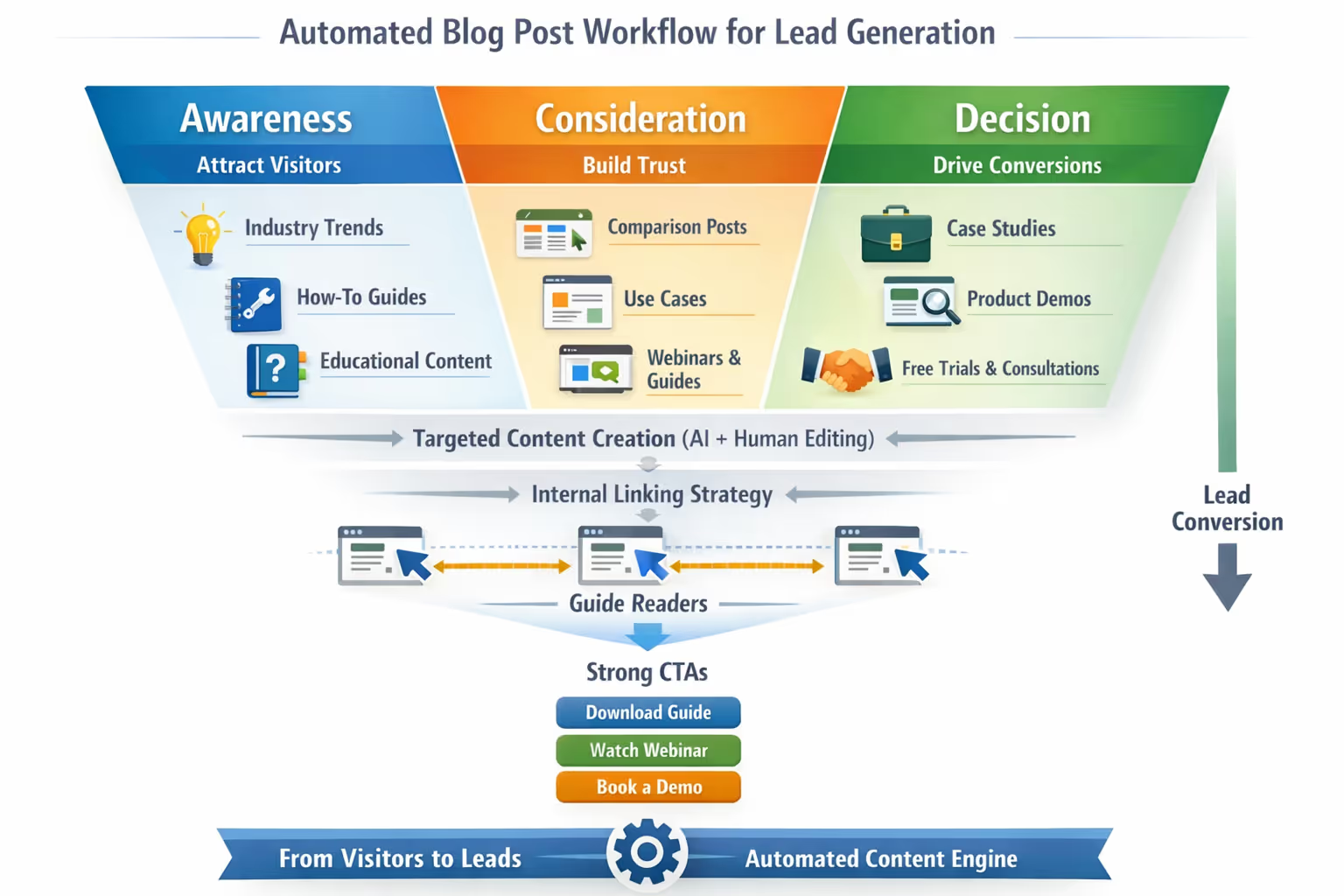
| Funnel Stage | Content Type | Goal | CTA Match |
| Awareness | Industry trends, how-to guides | Attract new visitors | Newsletter, resource download |
| Consideration | Comparison posts, use cases | Educate and build trust | Deeper guide, webinar |
| Decision | Case studies, product deep-dives | Drive conversions | Demo, trial, consultation |
This mapping becomes your editorial compass. Every automated workflow should reference it.
Step 2: Build a Keyword Bank with Intent in Mind
Not all keywords are equal.
Some attract tire-kickers. Others attract buyers. The difference often comes down to search intent.
For lead generation, prioritize high-intent keywords that signal problem-awareness or solution-seeking behavior. "How to reduce SaaS churn" indicates a different readiness level than "what is customer success."
Tools like Ahrefs, SEMrush, or even Google's own "People Also Ask" boxes can help you identify high-intent topics worth targeting [3].
Step 3: Create Templated Workflows
The fastest path to consistent publishing is templating the process.
This includes:
Standard content structures for each post type (listicles, how-tos, comparisons)
Consistent formatting for headers, CTAs, and internal links
Pre-defined processes for review and approval
Clear handoff points between AI drafting and human editing
When your workflow is templated, AI tools can handle the heavy lifting of first drafts while your team focuses on strategic refinement and quality assurance.
Step 4: Integrate CTAs Strategically
Every post needs a clear next step. But that doesn't mean slapping "Schedule a Demo" at the bottom of every article.
Match your CTA to the content's funnel stage:
Awareness posts → Offer a relevant resource or newsletter signup
Consideration posts → Suggest a deeper guide or webinar
Decision posts → Invite a trial, demo, or consultation
Readers who feel pushed too hard will bounce. Readers who find genuinely helpful next steps will convert.
Step 5: Use Internal Linking as a Conversion Lever
Internal linking is the unsung hero of content-driven lead generation.
Each post should connect to:
Related blog content (keeping readers engaged longer)
Relevant product or feature pages (moving them down-funnel)
Conversion pages when appropriate (capturing intent at the right moment)
Search engines use internal links to understand your site's structure and authority [4]. Readers use them to find what they need. When done well, internal linking transforms isolated posts into a cohesive content ecosystem that guides visitors toward action.
The Human in the Loop: Why It Matters
A common concern with automated content: "Won't it sound robotic?"
It can—if you skip the human layer.
The role of humans in an automated content system isn't to write everything from scratch. It's to provide:
Strategic direction: Deciding what topics align with business goals
Quality control: Catching errors, improving clarity, ensuring accuracy
Voice calibration: Making sure content sounds like your brand, not generic AI output
Judgment calls: Knowing when to break from templates or take a contrarian position
AI is remarkably good at generating coherent prose. It's less reliable at knowing whether that prose serves your specific business objectives. The best automated systems treat AI as a capable assistant, not an autonomous author.
Measuring What Matters: Beyond Vanity Metrics
Traffic feels good. But traffic without conversions is expensive entertainment.
To know if your automated content system is actually generating leads, track metrics that tie to business outcomes:
Organic traffic by funnel stage – Is awareness content attracting new visitors?
Conversion rate by content type – Which posts drive the most signups or demos?
Time on page and scroll depth – Are readers engaging or bouncing?
Assisted conversions – Which posts appear in the conversion path, even if they're not the last touch?
Lead quality from content – Are content-sourced leads converting to customers at a reasonable rate?
Google Analytics and most marketing automation platforms can surface these insights. The key is building the habit of reviewing them regularly and adjusting your content strategy based on what you learn [5].
One SaaS company using a structured content system saw organic impressions increase significantly within six months, with corresponding growth in qualified leads. The difference wasn't magic—it was measurement and iteration.
The Compounding Effect of Consistent Publishing
Here's the part most SaaS marketers underestimate: content compounds.
A single blog post might generate modest traffic in its first month. But if it's well-optimized and genuinely helpful, that post can continue attracting visitors for years. Multiply that by two or three posts per week, and you're building an asset that grows in value over time.
This is why automation matters so much. Not because it lets you publish garbage faster—but because it lets you publish quality content consistently enough to see compounding returns.
Companies that commit to this approach often see meaningful organic traffic growth within three to six months, with lead generation following as their content library matures [6].
Common Mistakes to Avoid
Automating content for lead generation works—when done thoughtfully. Here's what trips teams up:
Prioritizing volume over quality. Publishing thin, unhelpful content damages your brand and your search rankings. Every post should provide real value, even if that means publishing less frequently.
Ignoring search intent. Writing what you want to say instead of what your audience wants to know is a recipe for irrelevance. Start with the searcher's question, then deliver a genuinely useful answer.
Removing humans entirely. AI can accelerate drafting, but human judgment is essential for strategy, accuracy, and voice. The best systems combine AI efficiency with human oversight—not one or the other.
Forgetting the funnel. Content that doesn't connect to your sales motion is content that doesn't generate leads. Keep the funnel visible in every editorial decision.
Neglecting internal links. Orphan posts—content that doesn't link to or from anything else—waste potential. Build connections intentionally.
Skipping measurement. If you're not tracking which content generates leads, you're flying blind. Set up conversion tracking before you scale production.
Turning Content Into Pipeline
Automating blog posts for lead generation isn't about gaming the system. It's about building a system that works.
When you combine strategic topic selection, a real tech stack, consistent publishing, smart internal linking, and intentional CTAs—with humans maintaining quality control—your blog becomes more than a marketing checkbox. It becomes a reliable source of qualified leads, working for you around the clock.
The SaaS companies winning at organic growth aren't necessarily the ones with the biggest content budgets. They're the ones with the best systems.
Ready to see what an automated content engine can do for your lead generation? Try the Mighty Quill Blog Engine for free—get two custom, SEO-optimized posts delivered within 48 hours, no commitment required.
Frequently Asked Questions
How long does it take for automated blog content to generate leads?
Most SaaS companies see measurable organic traffic growth within three to six months of consistent publishing. Lead generation typically follows as your content library expands and builds authority. The timeline varies by competition level and domain strength, but content compounds over time—the key is maintaining consistency long enough to reach critical mass.
Can AI-generated content actually rank in search engines?
Yes, but quality and human oversight matter enormously. Search engines evaluate content based on helpfulness, accuracy, and user experience—not whether a human or machine wrote it. AI-assisted content that's strategically planned, well-edited, and genuinely useful can rank just as well as traditionally written content. The key is treating AI as a drafting tool, not a replacement for editorial judgment.
What's the ideal publishing frequency for SaaS lead generation?
Two to three high-quality posts per week is a strong target for most SaaS companies. This frequency is aggressive enough to build momentum without sacrificing quality. Consistency matters more than volume—publishing one excellent post weekly beats publishing five mediocre ones that damage your brand's credibility.
How do I know which blog posts are generating leads?
Use Google Analytics or your marketing automation platform to track assisted conversions and goal completions by landing page. Look at the full conversion path, not just the last touch. Many leads read multiple posts before converting, so understanding which content appears in those journeys helps you double down on what works and adjust what doesn't.
Should every blog post have a sales-focused CTA?
No. Match your CTA to the content's funnel stage. Awareness-level posts should offer educational resources or newsletter signups—pushing for a demo at this stage often backfires. Consideration posts can suggest deeper content or webinars. Save direct sales CTAs—like demo requests or trial signups—for decision-stage content where readers are already evaluating solutions.
About The Mighty Quill
The Mighty Quill helps growth-focused SaaS, e-commerce, and service companies build consistent organic traffic through AI-powered content systems. Founded by Mario, a digital marketing veteran with over 15 years of experience in SEO and content strategy, the company delivers done-for-you blog content that's researched, optimized, and ready to publish. Every post is built for both search engines and human readers—combining strategic keyword research with human editorial oversight to create content that ranks and converts.
Works Cited
[1] HubSpot — "The Ultimate Guide to Blogging." https://blog.hubspot.com/marketing/blogging
[2] Moz — "Internal Links for SEO: Best Practices."
https://moz.com/learn/seo/internal-link
[3] Ahrefs — "Keyword Research: The Beginner's Guide."
https://ahrefs.com/blog/keyword-research
[4] Google Search Central — "How Google Discovers, Crawls, and Serves Web Pages." https://developers.google.com/search/docs/fundamentals/how-search-works
[5] Google — "About Google Analytics." https://marketingplatform.google.com/about/analytics
[6] Semrush — "How Long Does SEO Take to Work?"
https://www.semrush.com/blog/how-long-does-seo-take