
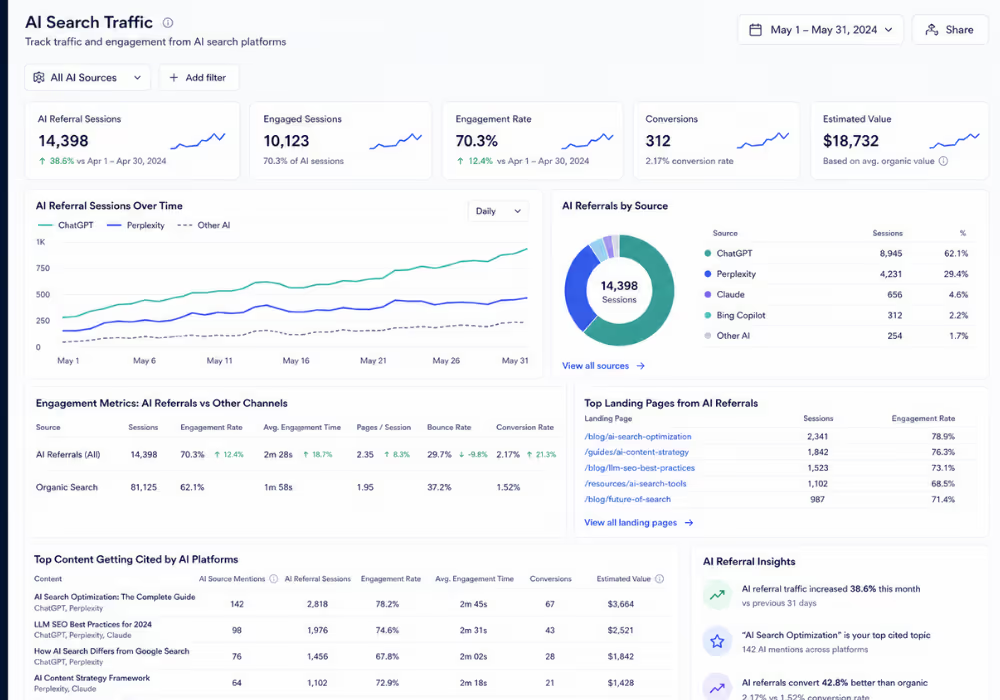
AI search tools are sending real visitors to websites. Not massive volumes—but enough to matter, enough to track, and enough to warrant a strategy.
ChatGPT, Perplexity, Microsoft Copilot, and Google's AI Overviews are citing sources and linking to content. When users click those citations, that's referral traffic. The problem is that most analytics setups weren't built to capture it, so this traffic gets buried in "direct" or "other" buckets—invisible and unmeasured.
Meanwhile, some marketers are already optimizing for AI citations and tracking the results. They're treating AI search as a distinct channel, instrumenting their analytics accordingly, and building content strategies around what these systems actually reward.
This guide covers how to set up proper tracking for AI referral traffic, what makes content citable to AI systems, and how to position your publishing strategy to capture this emerging channel.
Why AI Referrals Need Dedicated Tracking
Traditional SEO follows a familiar model: rank on Google, earn clicks, measure organic traffic. That model still works. But AI search operates differently—and the traffic it sends behaves differently too.
When ChatGPT includes a link to your site in a response, that's a referral. When Perplexity cites your blog post as a source, that's a referral. When a user clicks through from a Google AI Overview to read more, that's a referral.
These visitors arrive with different intent than standard organic traffic. They've already received a partial answer from the AI. They're clicking because they want depth, verification, or the complete picture. This potentially makes AI referral traffic higher-quality than visitors who clicked a traditional blue link [1].
The challenge is visibility. Standard analytics configurations treat AI referrers like any other traffic source—which means AI-driven sessions often blend into direct traffic or get miscategorized entirely. Without intentional setup, you can't see what's actually happening.

Setting Up Attribution for AI Traffic Sources
Before optimizing for AI referrals, you need to see them. Here's how to configure tracking that captures this channel accurately.
Step 1: Identify AI Referrer Domains
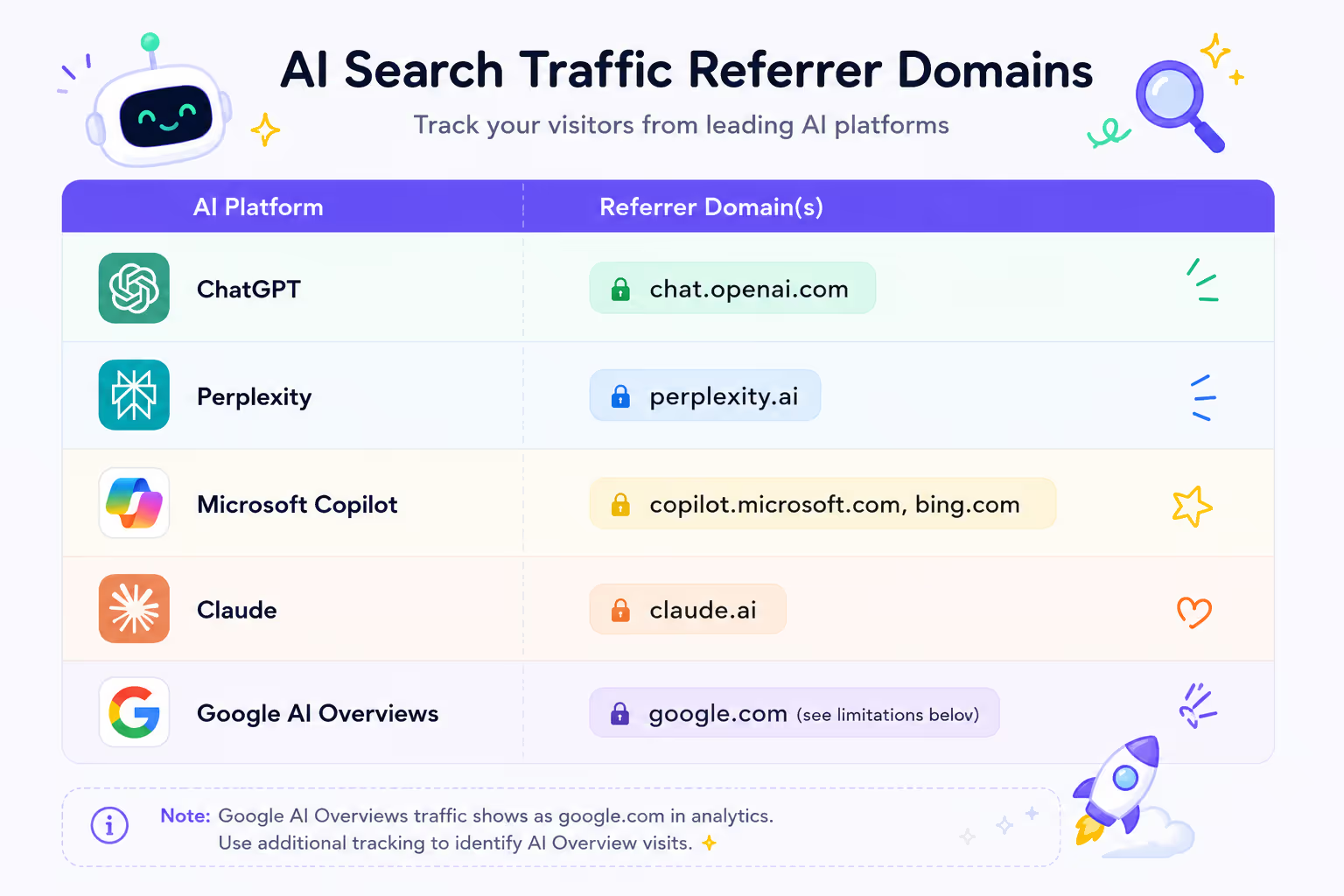
Start by knowing which domains to watch in your referral reports:
| AI Platform | Referrer Domain(s) |
| ChatGPT | chat.openai.com |
| Perplexity | perplexity.ai |
| Microsoft Copilot | copilot.microsoft.com, bing.com |
| Claude | claude.ai |
| Google AI Overviews | google.com (see limitations below) |
Important limitation: Google AI Overviews do not pass a unique referrer parameter that separates them from standard Google organic traffic. In GA4, clicks from AI Overviews currently appear within your overall Google organic sessions. There's no reliable way to isolate this traffic yet using standard analytics—though Google may introduce more granular referrer data in the future.
For other AI platforms, the referrer domains are distinct and trackable.
Step 2: Create a Custom Channel Grouping in GA4
To monitor AI referrals as a unified channel, create a custom channel grouping in GA4 that captures known AI referrer domains.
Here's how to set it up:
In GA4, navigate to Admin → Data Display → Channel Groups
Create a new channel group or modify an existing one
Add a new channel called "AI Search" or "AI Referrals"
Set the condition to match session source using regex:
chat\.openai\.com|perplexity\.ai|copilot\.microsoft\.com|claude\.ai
This groups sessions from these referrers into a single "AI Search" channel you can monitor alongside organic, paid, and direct traffic [2].
Note: You may need to expand this regex as new AI tools emerge or existing tools change their domain structures.
Step 3: Watch for "Dark AI Traffic" in Direct Sessions
Here's the frustrating reality: some AI-referred traffic arrives with no referrer data at all. This happens when AI applications strip referrer headers or when users copy-paste URLs from AI responses rather than clicking links.
This "dark" traffic lands in your direct bucket, making it invisible to standard channel reports.
How to spot potential dark AI traffic:
Monitor for unusual spikes in direct traffic to specific blog posts—especially posts that answer specific questions
Compare direct traffic patterns to your content publishing schedule
If a deep page suddenly receives direct traffic without internal linking changes or social shares, AI citation may be the source
Server log analysis can sometimes reveal more detail than GA4, but for most marketing teams, the practical approach is acknowledging this blind spot exists while tracking what is visible.
Step 4: Set Up Referral Path Reporting
In GA4, create an exploration report filtered for sessions where the session source matches known AI domains. Track:
Session volume by AI referrer
Engagement metrics (average engagement time, scroll depth if configured)
Conversion events for AI-referred visitors
Landing pages receiving AI referral traffic
This framework answers the question that matters: Is AI referral traffic converting, and which content is driving it?
What Makes Content Citable to AI Systems
AI search tools don't evaluate content the same way traditional search engines do. They're selecting sources to cite in real-time responses—looking for content that's authoritative, structured, and easy to excerpt.
Clear, Direct Statements Win Citations
AI systems need answers they can confidently surface. Content that hedges excessively or buries key information rarely gets cited.
Weak: "Some experts suggest that email marketing might potentially generate returns in certain situations, though results may vary considerably based on numerous factors."
Strong: "Email marketing generates an average ROI of $36 for every $1 spent, according to industry benchmark data."
The second version gives the AI something concrete to cite. It's direct, specific, and quotable.
Structure Your Content for Extraction
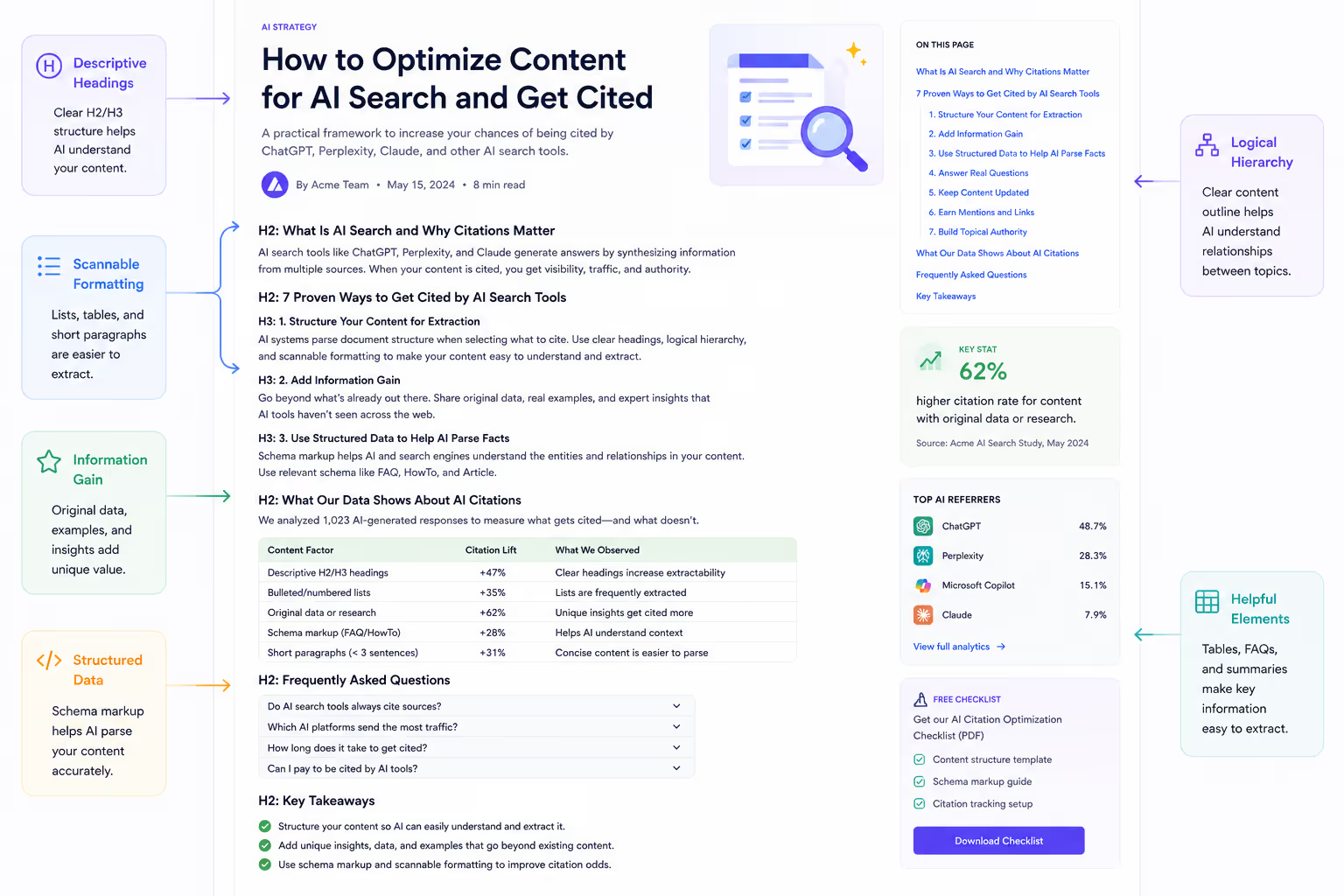
AI systems parse document structure when selecting what to cite. Clear headings, logical hierarchy, and scannable formatting help AI tools understand your content and extract relevant sections accurately.
Think of your H2s and H3s as semantic labels. Well-organized posts with descriptive headings are easier for AI to parse—which increases citation likelihood.
Structural elements that help:
Descriptive H2/H3 headings that summarize section content
Bulleted or numbered lists for multi-part answers
Tables for comparative information
Short paragraphs focused on single ideas
Add Information Gain
Here's where many AI-optimized content strategies fall short: they focus on answering questions but don't add anything the AI doesn't already know.
Information gain means providing insights, data, examples, or perspectives that aren't already saturated across the web. AI systems are increasingly sophisticated at identifying which sources add genuine value versus which ones simply repackage existing information.
Ways to add information gain:
Original data or statistics from your own research or client work
Specific examples with concrete details
Expert perspective that reflects real experience
Updated information on rapidly changing topics
Content that simply summarizes what AI already knows is less likely to be cited than content that extends the knowledge pool.
Use Structured Data to Help AI Parse Facts
Schema markup helps search engines—and increasingly AI systems—understand the entities and relationships in your content. While there's no "AI citation" schema, implementing relevant structured data (FAQ schema, HowTo schema, Article schema) makes your content more machine-readable [3].
This doesn't guarantee citations, but it reduces friction for AI systems attempting to extract accurate information from your pages.
Aligning Content Strategy with AI Answer Intent
Traditional keyword research asks: "What are people searching for?"
AI-optimized content strategy asks: "What questions are people asking conversational AI—and what does a complete, trustworthy answer look like?"
Target Question-Based Queries
AI search usage skews heavily toward natural language questions. Users don't type "best email marketing software" into ChatGPT. They ask, "What's the best email marketing tool for a small business with a tight budget?"
Structure your content to match this format:
Use question-based H2s
Answer directly in the first paragraph beneath each heading
Then expand with context, examples, and nuance
This mirrors how AI systems structure their responses—and makes your content easier to cite as a source.
Cover Topics Comprehensively
AI systems synthesize information from multiple sources. If your content only covers part of a topic, you might get cited for that fragment—or you might get passed over for a more comprehensive source.
Address related questions, common objections, and adjacent concepts. The goal is becoming the single best resource for a topic cluster, not just a surface-level answer to one query.
Include Verifiable Claims
AI systems are increasingly citation-conscious. They favor content that includes statistics, named sources, or verifiable facts—information they can reference with confidence.
This doesn't mean stuffing posts with random data points. It means supporting key claims with evidence. When AI systems can verify your information against other sources, they're more likely to cite you.
Building an AI Referral Measurement Dashboard
Once tracking is configured, establish a review cadence:
Weekly review:
Total sessions from AI referrers
Top landing pages receiving AI referral traffic
Engagement rate for AI-referred sessions versus other channels
Monthly analysis:
Trend lines: Is AI referral traffic growing?
Content performance: Which posts are getting cited most frequently?
Conversion comparison: How does AI referral traffic convert compared to organic search?
Quarterly strategy:
Which topics should you expand based on citation patterns?
Are competitors getting cited on topics where you're absent?
What's the estimated value of the AI referral channel?
This measurement cadence transforms AI referrals from an interesting trend into an actionable growth channel with clear performance data.
Why Consistent Publishing Fuels AI Visibility
There's a compounding effect here that mirrors traditional SEO but operates on different mechanics.
AI systems are continuously updated. Retrieval indexes get refreshed. Training data evolves. The sites that publish relevant, structured, authoritative content consistently stay visible in these systems.
Sporadic publishing creates gaps. When AI systems look for sources on your topics, they find fresher alternatives from competitors who kept publishing.
Freshness signals matter to AI systems for topics where recency is relevant—industry trends, software comparisons, regulatory changes. A blog that hasn't been updated in eighteen months signals abandonment, reducing citation likelihood for time-sensitive queries.
Consistency isn't just a content marketing best practice anymore. It's an AI visibility requirement.
Turn Your Blog Into an AI Citation Source
AI search isn't a future trend. It's a current reality with trackable traffic, measurable engagement, and conversion potential.
The businesses winning this channel are the ones instrumenting it now—setting up proper attribution, creating content structured for citation, and publishing consistently enough to stay in the AI source pool.
If you're ready to build a content engine that earns citations from both traditional search and AI platforms, the Mighty Quill Blog Engine delivers SEO-optimized, structured content weekly. No missed publishing windows. No scrambling for topics. Just consistent output that builds authority over time.

Frequently Asked Questions
How do I check if my site is receiving AI search traffic?
Open your GA4 referral report and look for domains like chat.openai.com, perplexity.ai, copilot.microsoft.com, and claude.ai. If these don't appear, create a custom channel grouping using the regex pattern provided earlier. This lets you monitor AI referrals as a distinct channel going forward. Note that some AI traffic may arrive without referrer data and appear as direct traffic.
Can I optimize content specifically for AI citations?
Yes. Focus on clear, direct statements that answer specific questions. Use structured formatting with descriptive headings. Include verifiable facts and statistics from credible sources. Add information gain—insights or data not already saturated across the web. AI systems cite content that's easy to excerpt and appears authoritative, so write with quotability in mind.
How much traffic should I expect from AI search referrals?
Currently, AI referral traffic represents a small percentage of total traffic for most sites—often under five percent of overall sessions. However, this share appears to be growing as AI search adoption increases. Early instrumentation helps you track growth trends and establish benchmarks before the channel becomes more competitive.
Does publishing frequency affect whether AI systems cite my content?
Evidence suggests it does, particularly for topics where freshness matters. AI retrieval systems favor recently updated sources for time-sensitive queries. Sites that publish consistently stay in active retrieval indexes, while dormant blogs gradually lose visibility. Weekly publishing helps maintain relevance with AI systems that factor recency into source selection.
What's the difference between Google AI Overviews and regular organic search traffic?
Google AI Overviews synthesize information and display answers directly in search results, sometimes with source citations. Users may click through for deeper information, but the initial answer appears without requiring a site visit. Currently, clicks from AI Overviews appear in GA4 as standard Google organic traffic—there's no separate referrer tag to distinguish them from traditional blue-link clicks.
Works Cited
[1] SparkToro — "Zero-Click Searches and the Changing Landscape of Search Traffic." https://sparktoro.com/blog/zero-click-searches/
[2] Google — "Set Up and Edit Channel Groups in GA4." https://support.google.com/analytics/answer/9756891
[3] Schema.org — "Getting Started with Schema.org Structured Data." https://schema.org/docs/gs.html


