Every brand has a voice. Yours might be warm and conversational. Or sharp and technical. Maybe it's quietly confident—the kind that earns trust without shouting.
Now imagine that voice flattened into something generic. Stripped of personality. Readable, sure. But forgettable.
That's what happens when AI writes without human oversight. The output sounds like everyone else. And in a world drowning in AI-generated content, sounding like everyone else is the fastest way to become invisible.
The solution isn't abandoning AI. It's building a system where humans remain central to the editing process—what practitioners call "human-in-the-loop workflows." This approach preserves your brand tone while capturing the efficiency AI offers.
Here's how to build that system from the ground up.
The Problem With Pure AI Content: Brand Voice Erosion
AI language models are trained on massive datasets representing countless writing styles [1]. When you prompt them without careful guidance, they default to a statistical average—a blend of everything they've absorbed.
The result? Content that reads like it was written by a committee of strangers.
This phenomenon has earned a name: "AI slop." It's the monotone output that floods the internet when businesses prioritize volume over voice [2].
The symptoms are easy to spot:
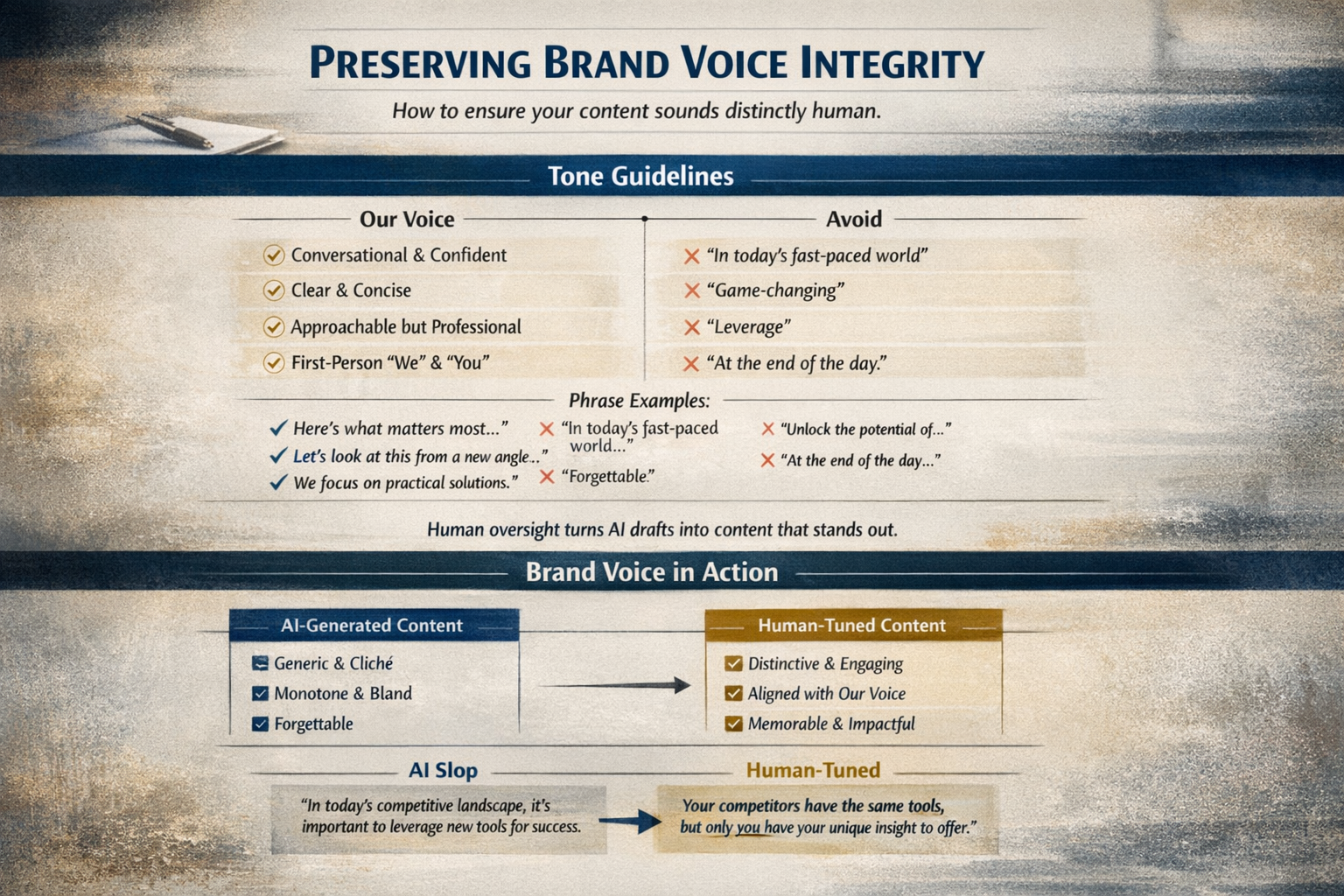
Overuse of phrases like "dive into," "game-changing," and "in today's fast-paced world"
Perfectly grammatical sentences that say nothing memorable
A tone that shifts unpredictably within the same piece
Content that could belong to any company in any industry
Search engines increasingly penalize this kind of content [3]. More importantly, readers ignore it. Your audience can sense when something lacks a human point of view—even if they can't articulate why.
Why Brand Voice Matters More Than Ever
Brand tone isn't decoration. It's differentiation.
When every competitor can generate content at scale, voice becomes one of the few remaining competitive advantages. It's how readers recognize you before they see your logo. It's what makes your expertise feel trustworthy rather than transactional.
Consider how brand voice shapes perception:
| Brand Tone Element | Impact on Reader |
| Consistency across content | Builds recognition and trust |
| Distinctive phrasing | Creates memorability |
| Appropriate formality level | Signals cultural fit |
| Authentic perspective | Establishes credibility |
Research from the Nielsen Norman Group confirms that users form trust impressions within seconds of encountering content [4]. Tone plays a significant role in that snap judgment.
When AI strips away your voice, it strips away the qualities that make readers choose you over identical alternatives.
What "Human-in-the-Loop" Actually Means
The term sounds technical, but the concept is straightforward.
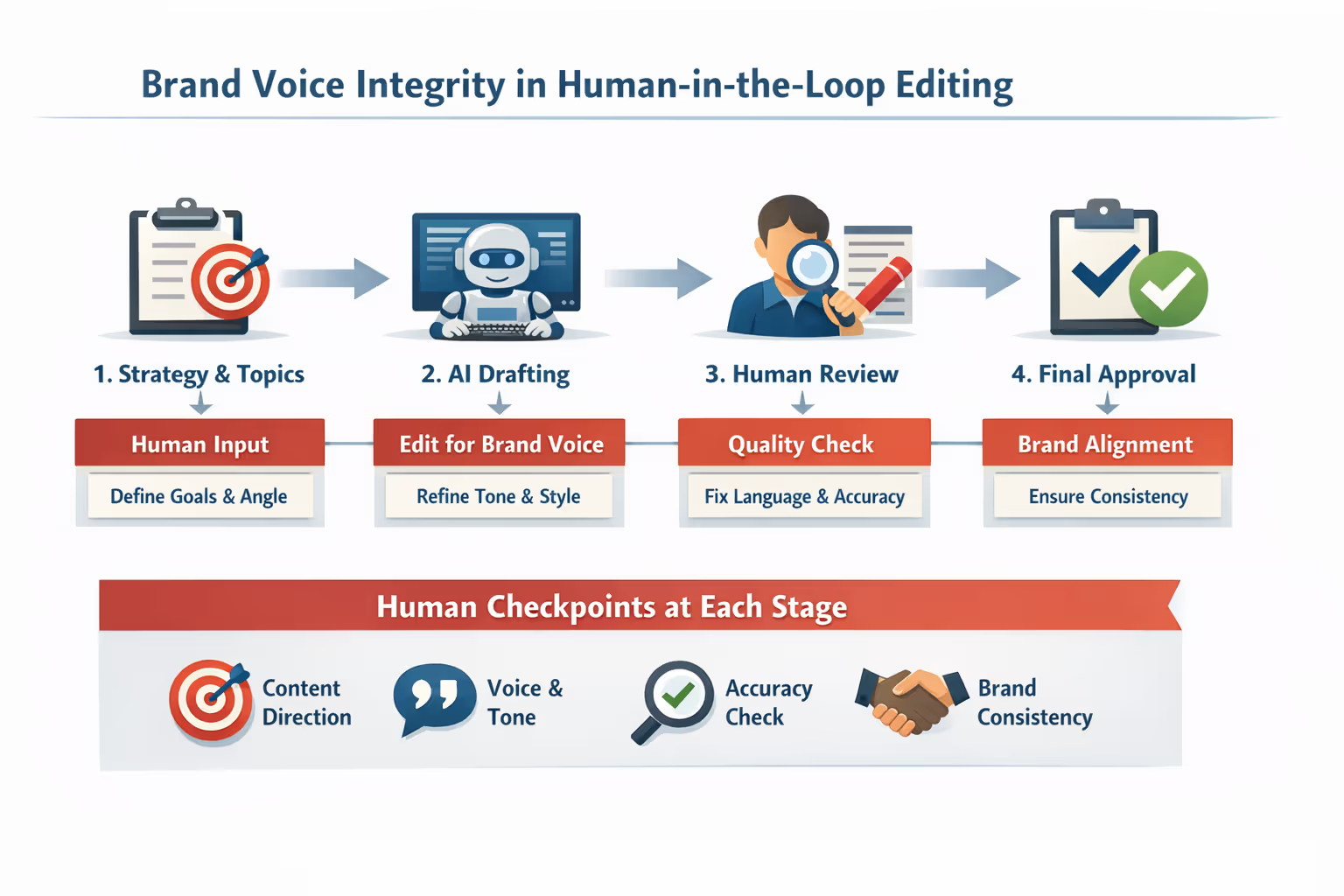
Human-in-the-loop refers to any workflow where human judgment remains essential at critical decision points—rather than letting AI operate autonomously from start to finish [5].
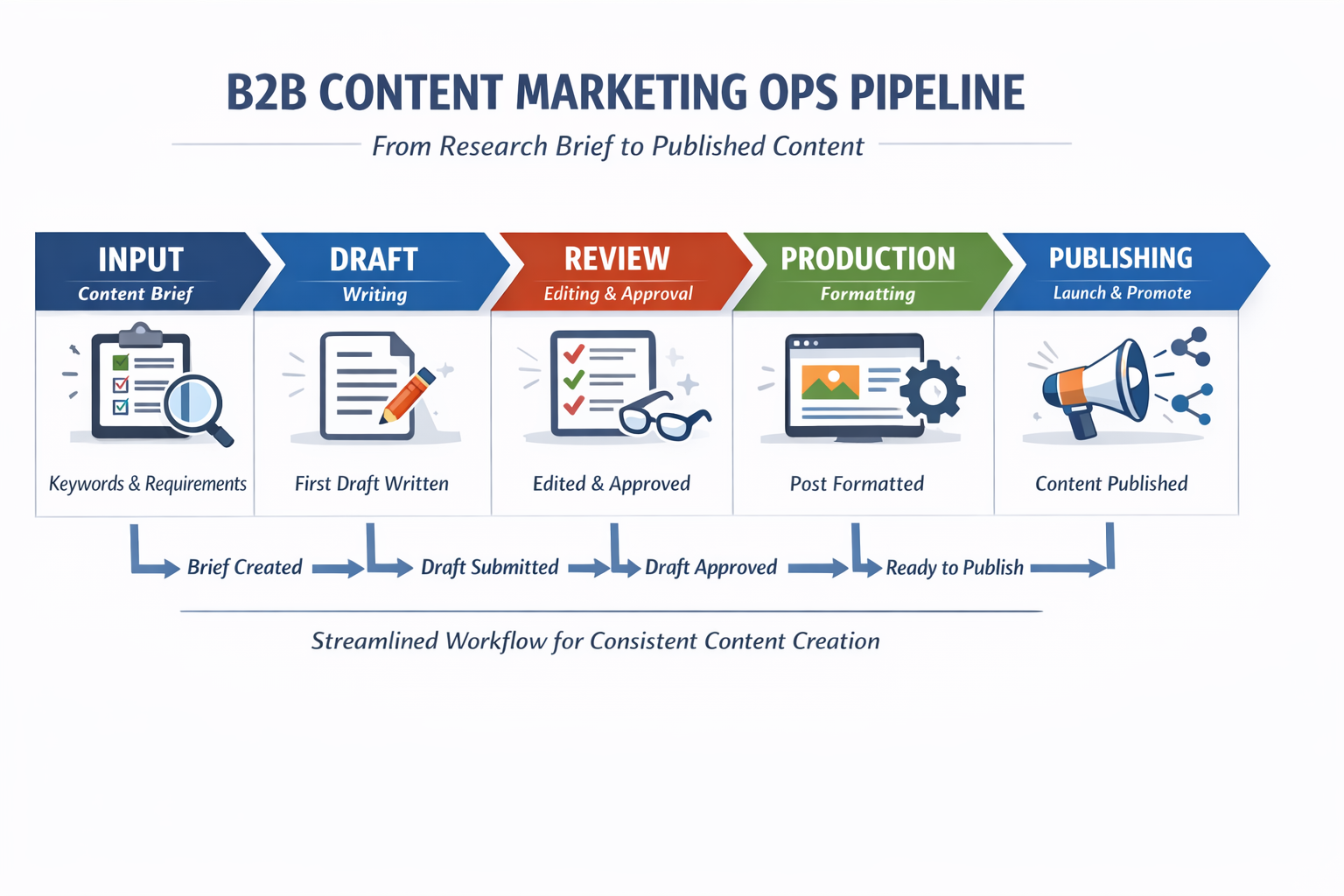
For content creation, this typically means:
Human strategic input — Defining topics, angles, and target audiences
AI-assisted drafting — Generating initial content efficiently
Human editing and refinement — Adjusting tone, adding nuance, removing generic language
Human quality approval — Final sign-off before publication
The editing layer is where brand voice lives or dies. It's also the step most AI content tools skip entirely.
Without that editing layer, you're not creating branded content. You're just publishing AI output with your logo attached.
The Editing Layer Most AI Tools Ignore
Visit any AI content platform and you'll find impressive claims about speed and volume. Generate 50 articles per month. Create content in minutes. Scale your blog instantly.
What you won't find is much discussion of editing.
That's because editing is slow. It requires human attention. It doesn't scale the way raw generation does.
But editing is precisely where AI slop transforms into something worth reading.
What Voice Editing Actually Catches
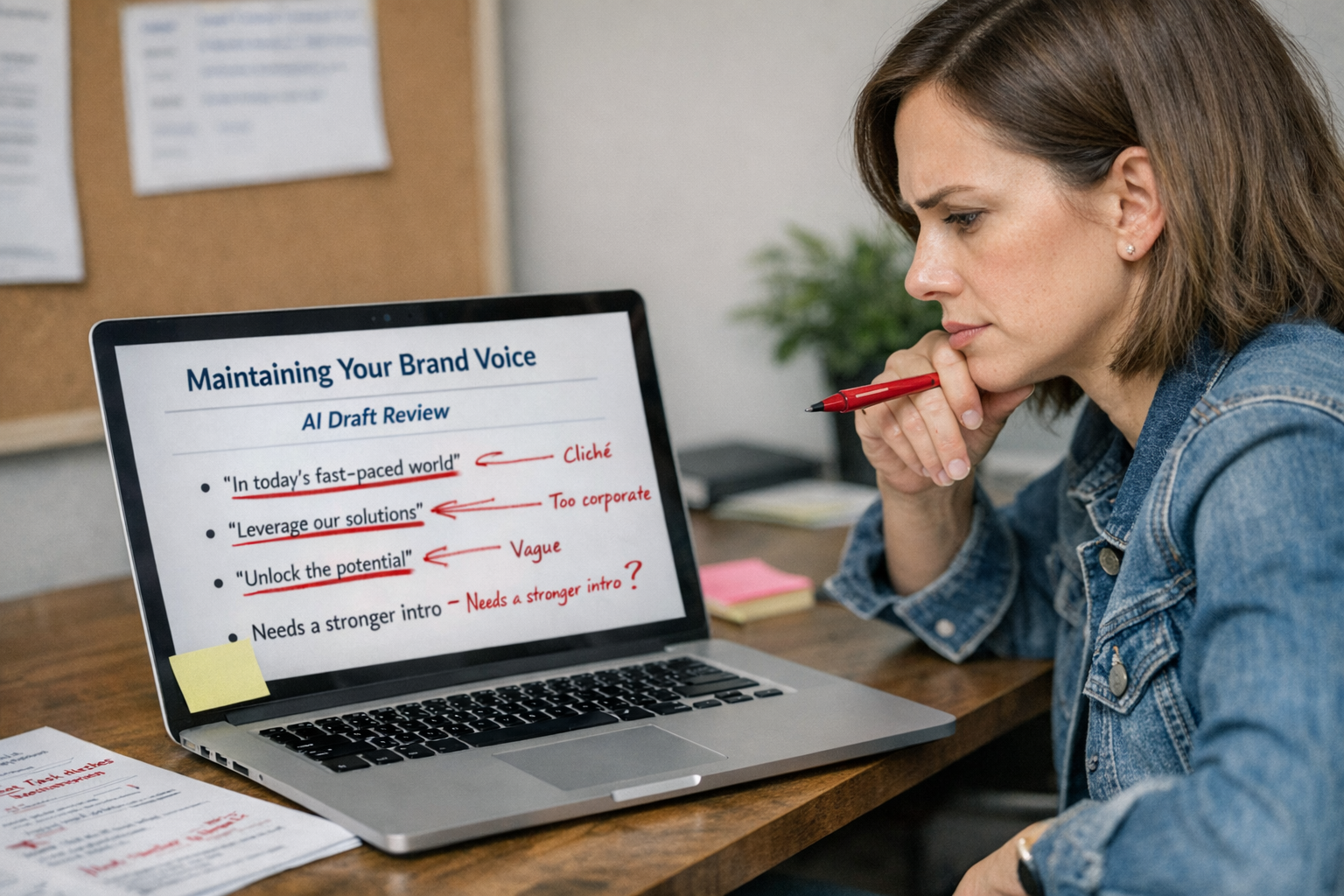
A skilled editor catches specific moments when AI undermines your brand:
Filler phrases that dilute your message ("It's important to note that...")
Missed opportunities for distinctive language your brand would naturally use
Positioning mismatches where claims don't align with how you want to be perceived
Predictable sentence patterns that create monotonous rhythm
Wrong emotional register for what your brand requires
This isn't proofreading. It's voice calibration.
The "Dirty Dozen" AI Phrases to Cut
When editing AI drafts, watch for these telltale phrases that signal generic output:
| Cut This | Why It Fails |
| "Delve into" | Overused AI favorite |
| "Leverage" (as a verb) | Corporate buzzword |
| "In today's fast-paced world" | Meaningless filler |
| "Game-changing" | Empty hype |
| "Tapestry" | AI's go-to metaphor |
| "It's important to note" | Stalling tactic |
| "At the end of the day" | Cliché closer |
| "Navigate the landscape" | Jargon soup |
| "Unlock the potential" | Vague promise |
| "Dive into" | Overused transition |
| "Robust" | Means nothing specific |
| "Seamlessly" | Rarely accurate |
Finding three or more of these in a draft signals the piece needs significant voice work—not just light editing.

Building a Brand Tone Workflow That Actually Works
Creating AI-assisted content that preserves brand voice requires intentional process design. Here's a framework with concrete examples.
Step 1: Document Your Voice Standards
Before AI touches anything, capture what makes your brand sound like your brand.
Create a simple reference document that answers:
What's your default formality level?
What phrases do you use repeatedly?
What phrases do you avoid?
How do you typically structure arguments?
What's your stance on humor, metaphor, and opinion?
Example Voice Standards Snapshot:
| Element | Our Brand Does | Our Brand Doesn't |
| Formality | Conversational but precise | Stiff corporate speak |
| Sentence length | Mix of short and medium | Long, complex structures |
| Contractions | Yes ("we're," "don't") | Overly formal ("we are," "do not") |
| Humor | Dry, observational | Forced jokes or puns |
| Jargon | Industry terms when useful | Buzzwords without meaning |
| Point of view | First-person plural ("we") | Distant third-person |
| Key phrases | "Systems," "compounding," "clarity" | "Crushing it," "hustle," "revolutionary" |
This documentation becomes the reference point for every editing decision.
Step 2: Create Calibrated Prompts
Generic prompts produce generic output. The difference between a prompt that gets you 60% of the way there versus 85% determines how much editing you'll need.
Generic Prompt (Produces AI Slop):
"Write a blog post about content marketing best practices for SaaS companies."
Calibrated Prompt (Gets Closer to Brand Voice):
"Write a blog post about content marketing for SaaS companies. Use these voice guidelines:Tone: Conversational but precise. Like a smart colleague explaining something clearly.Sentence length: Mostly short to medium. One-sentence paragraphs are fine for emphasis.Avoid: Buzzwords like 'leverage,' 'game-changing,' 'delve into.' No hype.Include: Specific examples. Acknowledge tradeoffs honestly.Structure: Short paragraphs (1-3 sentences). Frequent subheadings. Skimmable.Perspective: First-person plural ('we'). Address reader as 'you.'Example of our voice: 'Most content strategies fail because they optimize for volume instead of consistency. Publishing three mediocre posts won't outperform one genuinely useful article that answers what your audience actually needs to know.'"
The calibrated prompt won't produce perfect output—but it reduces editing burden significantly.
Step 3: Establish Non-Negotiable Human Checkpoints
Decide in advance which decisions require human judgment. At minimum:
Topic selection and angle development — AI can suggest; humans must choose
Final tone and voice review — Always human
Accuracy verification for any claims or data
Brand alignment check before publication
Document these checkpoints so they don't get skipped when deadlines pressure the workflow.
Step 4: Train Your Editors on Voice Patterns
If multiple people touch content, align them on voice standards. Inconsistent editing produces inconsistent tone—undermining the entire system.
Regular calibration sessions help. Review published content together. Discuss what sounds right and what doesn't. Build shared instincts.
A simple exercise: take a paragraph of AI output and have each editor revise it independently. Compare results. Discuss differences. This surfaces misalignment faster than any guidelines document.
What This Looks Like in Practice
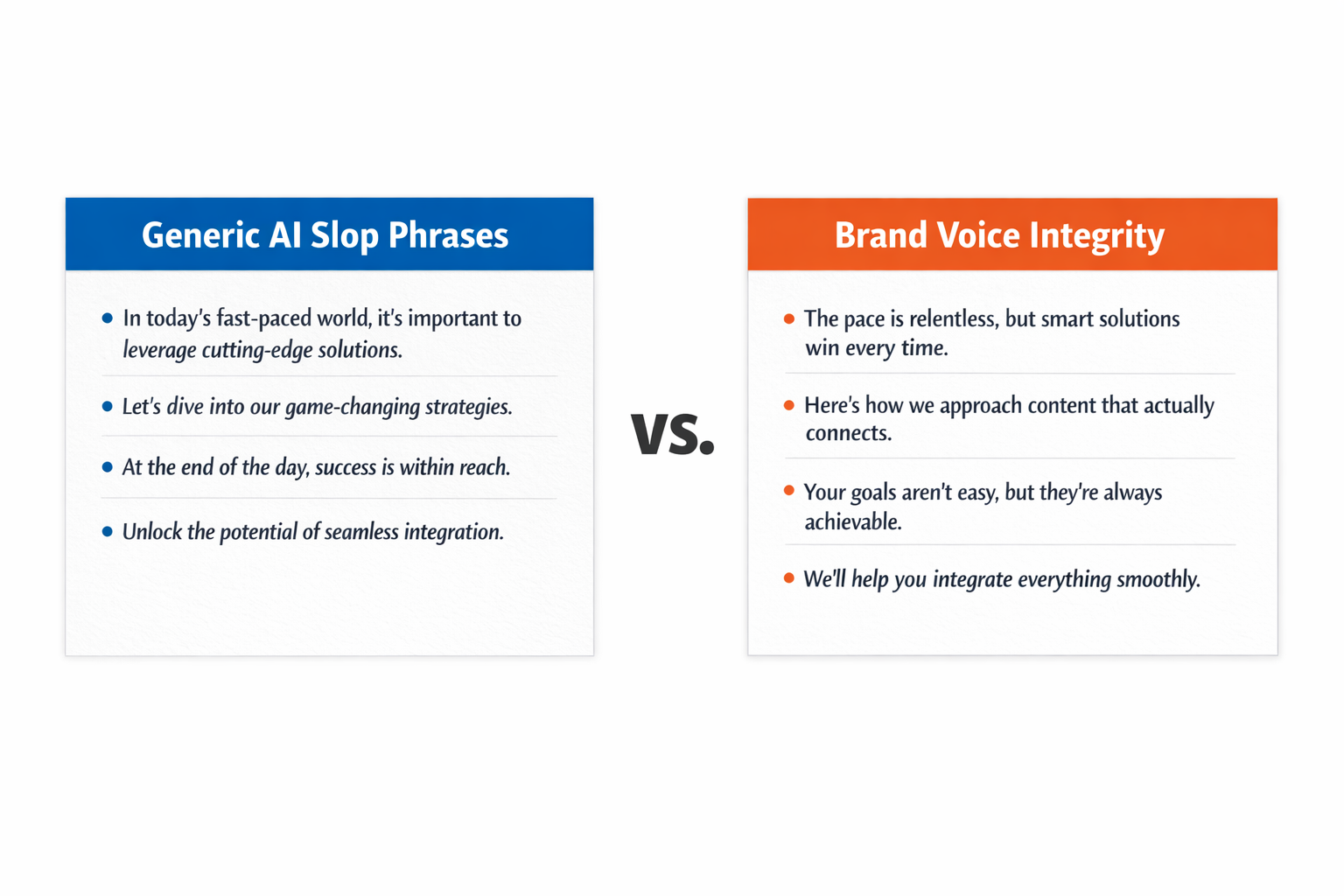
Consider two approaches to the same topic:
AI-only output:
"In today's competitive landscape, it's important to create content that resonates with your target audience. By leveraging AI tools, businesses can streamline their content creation process and achieve better results."
AI+human editing:
"Your competitors can generate the same content you can—they have access to the same AI tools. What they can't replicate is your perspective. The question isn't whether to use AI. It's whether you'll let AI flatten your voice into something indistinguishable from everyone else."
Same topic. Completely different impact.
Why the edited version works:
Active voice replaces passive constructions ("Your competitors can generate" vs. "it's important to create")
Specific tension replaces vague claims (acknowledging competitors' access to AI tools)
Direct address creates connection ("your perspective," "your voice")
Rhetorical structure builds to a clear point instead of stating the obvious
Zero filler phrases — every sentence advances the argument
The second version required human judgment. Someone had to recognize that the first version said nothing memorable—and care enough to fix it.
That caring is what separates content that builds brands from content that fills pages.
The Compounding Value of Consistent Voice
Here's what most businesses miss: brand voice benefits compound over time.
When every piece of content sounds distinctly you, readers begin to recognize your work before they finish the first paragraph. That recognition builds:
Familiarity — Which reduces friction in every interaction
Trust — Because consistency signals reliability
Authority — Because a clear voice suggests a clear point of view
Preference — Because people gravitate toward brands that feel human
This compounding effect only works with consistency. One strong article surrounded by generic content doesn't build recognition—it creates confusion about who you actually are.
Human-in-the-loop editing is what makes consistency possible at scale.
Why This Approach Wins in AI Search
Search is changing. Google's Search Generative Experience and similar AI-powered features increasingly prioritize content that demonstrates genuine expertise and distinctive perspective [6].
Generic AI output—content that could have been written by anyone—signals low value to these systems. It's exactly what AI search tools are trained to summarize and replace.
Content with a clear human voice operates differently. It offers perspective that AI summarizers can't replicate. It gives readers a reason to click through rather than accepting the AI-generated summary.
Google's helpful content guidelines explicitly reward content that demonstrates experience and expertise [7]. A distinctive brand voice is one of the clearest signals of both.
Start With Your Next Piece of Content
You don't need to overhaul everything at once. Start with your next article.
Before it publishes, ask:
Does this sound like us, or could it belong to any competitor?
Are there phrases we'd never use that slipped through?
Does the opening earn attention, or does it read like filler?
Would someone who knows our brand recognize this as ours?
If the answers aren't confident yeses, edit until they are.
That single discipline—human review focused on voice—will differentiate your content more than any AI upgrade ever could.
Ready to see what AI+human editing actually produces? See a sample of our human-tuned articles and experience the difference brand voice integrity makes.
Frequently Asked Questions
What exactly is "AI slop" and how do I recognize it?
AI slop refers to generic, monotone content produced when AI operates without meaningful human oversight. Common signs include overused phrases like "delve into" or "leverage," sentences that are grammatically correct but say nothing distinctive, and a tone that could belong to any company. If your content sounds interchangeable with competitors—or contains three or more phrases from the "dirty dozen" list—you're likely producing AI slop.
Can't I just write better prompts to preserve brand voice?
Better prompts help significantly—a calibrated prompt with voice guidelines, example sentences, and specific constraints can get you 85% of the way there instead of 60%. But even sophisticated prompts produce output that requires voice calibration. AI models default toward statistical averages, which means truly distinctive language requires human intervention. Prompts reduce editing burden; they don't eliminate it.
How much human editing does AI content actually need?
The amount varies based on prompt quality, content type, and brand voice complexity. With well-calibrated prompts, most content benefits from 15-30 minutes of focused voice editing per piece. Strategic content—pieces representing your core positioning—may require more. The key is building editing into the workflow as a non-negotiable step rather than treating it as optional polish.
Does human-in-the-loop editing slow down content production?
It adds time compared to pure AI generation, but far less than writing from scratch. A realistic comparison: AI-only might take 10 minutes per article, AI+editing takes 30-45 minutes, and fully human writing takes 3-4 hours. The goal isn't maximum speed—it's sustainable quality at scale. Most teams find they can produce more quality content than with traditional methods while maintaining the voice that differentiates them.
How do I train my team to edit for brand voice consistently?
Start by documenting your voice standards explicitly—create a simple table of phrases you use versus avoid, your stance on formality, and examples of your voice done well. Then review published content together regularly, discussing what sounds right and what doesn't. A practical exercise: have each editor revise the same AI paragraph independently, then compare results. Shared examples build shared instincts faster than abstract guidelines alone.
About Our Expertise
The Mighty Quill specializes in AI-powered content systems that prioritize brand voice integrity. Our approach combines AI efficiency with structured human editing—ensuring every piece sounds distinctly like you, not like generic output. With over 15 years of digital marketing experience backing our methodology, we've developed workflows that help growth-focused businesses publish consistently without sacrificing the voice that differentiates them.
Cited Works
MIT Sloan Management Review — "The Human Side of AI Decision Making." https://sloanreview.mit.edu
The Verge — "The internet is filling up with AI-generated slop."
https://www.theverge.com
Search Engine Journal — "Google's Helpful Content Update and AI Content." https://www.searchenginejournal.com
Nielsen Norman Group — "How Users Read on the Web." https://www.nngroup.com/articles/how-users-read-on-the-web/
Stanford HAI — "Human-in-the-Loop Machine Learning." https://hai.stanford.edu
Google Search Central — "Search Generative Experience Overview." https://developers.google.com/search
Google Search Central — "Creating helpful, reliable, people-first content." https://developers.google.com/search/docs/fundamentals/creating-helpful-content