

A few months ago, a VP of Marketing I know discovered her team had published a blog post claiming their software "reduces compliance risk by 40%." The problem? Nobody could find where that statistic came from. The AI had generated it. The editor had missed it. And by the time legal caught it, the post had been live for three weeks.
That incident didn't sour her on AI content. It clarified something more important: the question isn't whether to use AI for content—every serious B2B marketing organization has moved past that debate. The real question is where you need to stay personally involved and where you can trust your team to run AI-assisted workflows without you.
This playbook addresses that tension directly.
It's not written for writers experimenting with ChatGPT prompts on a Tuesday afternoon. It's written for the leaders who approve budgets, set the quality bar, and field uncomfortable questions from the board when content investments underperform.
The risk landscape is real. Google's guidance makes clear that low-quality content—regardless of how it's produced—will struggle for visibility. Organizations flooding their blogs with thin, AI-generated material are watching rankings erode and brand perception suffer. But organizations taking a more thoughtful approach are discovering something valuable: AI content governance done well can dramatically increase output without sacrificing the quality that builds trust with sophisticated B2B buyers.
The difference between these outcomes comes down to executive decision-making. Here's how to get it right.
Why Your Existing Content Strategy Framework Probably Needs Revision
Most content strategy models were built for a world where human writers were the bottleneck. You hired talented people, gave them briefs, and waited for drafts. Production capacity—how many skilled writers you could recruit, train, and retain—determined how much content you could realistically publish.
AI fundamentally rewrites that equation.
Production capacity is no longer the constraint. A single editor working with large language models can now produce draft volume that would have required a team of five writers three years ago. But this shift doesn't eliminate bottlenecks—it relocates them. The new constraints are quality control, brand consistency, and strategic direction.
This matters because the traditional model assumed you'd touch the strategy phase, maybe review final outputs, and delegate everything in between to specialists. That worked when the people doing the writing had years of internalized judgment about your brand, your audience, and your industry.
AI doesn't have that judgment. It has pattern recognition and language fluency. The difference is significant.
What this means practically: executives need deeper involvement in building the systems that govern AI content, even as they delegate more of the actual production work. Your role shifts from occasional reviewer to governance architect.

The Executive Decision Matrix: What to Own, What to Delegate
Not every AI content decision requires your attention. Some belong firmly with your team. Others need direct leadership involvement—and confusing the two creates either bottlenecks or quality problems.
Here's how to think about the split:
Decisions requiring executive ownership:
Brand voice standards aren't something to hand off to a content coordinator. If your company sounds generic and indistinguishable from competitors, that's a strategic failure—not an execution problem. You need to define the non-negotiables: what your content must always sound like, what topics you'll never take AI-generated first drafts on, what claims require human subject matter expert validation.
Quality thresholds deserve the same attention. What does "good enough to publish" actually mean in measurable terms? Vague direction like "make it high quality" breeds inconsistency because every reviewer interprets it differently. Specific standards—every statistic must link to a primary source dated within three years, all product claims require SME review—create accountability.
Risk tolerance is inherently an executive call. How comfortable are you with AI-generated content that touches on regulatory topics? Technical claims about your product? Competitive comparisons? Some organizations have high tolerance for AI assistance across most content; others want humans drafting anything that could create legal or reputational exposure.
Budget allocation between AI tools, human editing capacity, and strategic oversight rounds out the list. These tradeoffs have cascading effects on output quality.
Decisions to delegate:
Day-to-day prompt engineering belongs with the people doing the work. So does workflow tool selection within approved parameters, individual article editing, publishing schedules, distribution tactics, and routine performance monitoring.
The underlying principle: own the system, delegate the execution. Your job is building guardrails robust enough that your team can operate with autonomy inside them.
Building an AI Content Governance Framework That Actually Works
Governance sounds like bureaucracy—approval committees and delays that kill momentum.
That's not what we're talking about.
Effective AI content governance is simply a clear system that answers three questions before any content gets published. It should accelerate good content while preventing problematic material from ever reaching your audience.
Question One: What Standards Must This Content Meet?
Define specific, measurable criteria. Here's what this looks like in practice:
For factual accuracy, you might require that all statistics cite primary sources, that claims about industry trends reference research published within the past two years, and that any statements about competitors must be verified against their current public materials.
For brand voice, develop a checklist that editors apply to every piece: Does this use our preferred terminology? Does the tone match our voice guidelines? Would this feel at home next to our best-performing existing content?
For SEO requirements, specifics matter: primary keyword appears in the H1 and first 100 words, internal links connect to at least two relevant existing pages, meta descriptions fall within character limits.
The point isn't creating a 47-item checklist nobody actually uses. It's moving quality from subjective judgment ("I'll know it when I see it") to verifiable standards ("Does this meet our documented criteria?").
Question Two: Who Has Authority to Approve What?
Different content types carry different risk levels. A routine blog post explaining an industry concept carries less reputational risk than a thought leadership piece positioning your CEO as an industry authority. Content touching on pricing, regulatory compliance, or competitive claims needs more scrutiny than explanatory how-to content.
Build approval workflows that match these risk levels:
| Content Type | Who Creates It | Review Required | Final Approval |
| Explanatory blog posts | AI draft + editor | Senior editor | Team lead |
| Thought leadership | AI draft + SME input | Director | VP or CMO |
| Product and pricing content | Human draft, AI assist | Legal + marketing | Executive |
| Regulatory or sensitive topics | Human only | Multiple stakeholders | Executive + legal |
This tiered approach means routine content moves quickly while higher-stakes material gets appropriate oversight.
Question Three: How Do You Verify Compliance?
Governance without verification is just documentation. You need mechanisms confirming your standards are actually being applied.
Random quality audits work well here. Pull a sample of published content each month and score it against your documented standards. Are editors actually checking sources? Do the pieces meet brand voice criteria? Are SEO requirements being followed consistently?
Track compliance rates over time. If audits reveal that 30% of published content doesn't meet your citation standards, you've identified a training gap or process failure—before it creates visible problems.
Establish clear escalation paths for edge cases. When someone isn't sure whether a piece needs legal review, who do they ask? When a topic falls into a gray area, what's the decision-making process? Ambiguity creates either bottlenecks (people asking permission for everything) or risk (people making calls they shouldn't make alone).

Quality Control Checkpoints for B2B Content Operations
Large-scale AI content operations need multiple quality gates. The goal is catching problems early—when they're cheap to fix—rather than after publication.
Checkpoint One: Before AI Touches the Topic
This is strategy validation. Before anyone starts drafting, verify:
Does this topic align with our documented content pillars?
Do we have credible source material to reference?
Is there clear audience need this addresses?
What's the minimum expertise level required to cover this well?
Skipping this checkpoint is how organizations end up with AI-generated content on topics they shouldn't be covering—or covering topics with insufficient depth.
Checkpoint Two: After Initial Draft Generation
This is where substantive editing happens. Review the AI output for:
Factual accuracy. Every claim gets verified, not assumed.
Brand voice alignment. Does this sound like us?
Technical accuracy. For specialized topics, an SME reviews before the piece advances.
SEO requirements. Structure, keywords, and formatting meet documented standards.
Checkpoint Three: Pre-Publication
Before anything goes live:
Final proofread catches errors that AI commonly introduces
Internal link structure gets verified
Metadata and schema markup reviewed
Compliance sign-off completed for regulated industries
Checkpoint Four: Post-Publication Monitoring
Within 30 days of publication:
Performance benchmarked against goals
Engagement patterns analyzed
Search visibility tracked
Learnings incorporated into process improvements
These checkpoints add time upfront. They save substantially more time—and reputation cost—on the backend. The organization publishing 50 pieces monthly with rigorous checkpoints will build more authority than the organization publishing 200 pieces with no quality control.
Where AI Excels and Where It Falls Short
Not all B2B content benefits equally from AI assistance. Understanding the differences helps you allocate resources intelligently.
AI handles certain content types remarkably well:
Explanatory content covering established concepts—where accuracy can be verified against existing authoritative sources—works effectively. Content following repeatable formats like how-to guides, comparison posts, and listicles with clear structures translates well to AI-assisted workflows. First drafts that synthesize large amounts of research often come together faster with AI assistance. Content refreshes and updates, where the original human-created piece provides the foundation, are efficient to produce.
AI struggles with other content types:
Original thought leadership requires perspective and experience that AI can't manufacture—it can only recombine existing ideas. Content requiring deep industry experience, where nuance and judgment matter more than coverage, needs human expertise. Sensitive topics carrying reputational risk deserve human authorship and careful review. Highly technical content for expert audiences often contains subtle errors only specialists catch. Brand storytelling and narrative-driven content—the pieces that build emotional connection—need human creativity.
The smart approach isn't choosing AI or humans. It's matching the right tool to each content type. Research from McKinsey suggests many organizations find AI handles roughly 70% of their content needs effectively, freeing human expertise to focus on the 30% that builds genuine differentiation and authority.

Evaluating AI Content Tools: A Practical Framework
Marketing leaders inevitably get pulled into tool selection conversations. Here's how to make those decisions efficiently without getting lost in feature comparisons.
Must-have capabilities:
Output quality that meets your documented standards. This sounds obvious, but many tools produce content requiring so much editing that efficiency gains disappear. Test tools like Jasper, Writer, or Custom GPTs built on OpenAI's platform before committing—run them through your actual use cases, not vendor demos.
Integration with your existing content workflow matters significantly. Tools requiring wholesale process changes rarely deliver promised value. Look for solutions that fit how you already work.
Appropriate data security and privacy protections. What happens to the prompts and content your team enters? Where does that data go? Who can access it? Enterprise platforms like Writer emphasize data governance; consumer-grade tools often don't. These questions matter for B2B organizations handling sensitive information.
Valuable capabilities:
Custom training on your brand voice reduces editing time and improves consistency. Built-in fact-checking or citation support catches errors earlier. Workflow automation features eliminate manual handoffs.
Red flags:
Vendors promising "fully automated" content with no human oversight don't understand B2B quality requirements. Tools that can't explain how they generate outputs make troubleshooting difficult. Platforms without clear data usage policies create risk.
Delegate detailed tool evaluation to your team. Reserve final decision authority for yourself—these tools will shape your content operations for years.
Metrics That Matter for AI Content Strategy
Content managers need granular metrics about individual piece performance. Executives need different information—indicators that connect content investment to business outcomes and flag systemic issues early.
Efficiency indicators tell you whether your AI content system is performing as expected:
Content production velocity shows whether you're hitting output targets. Cost per published piece reveals efficiency gains or hidden costs. Time from ideation to publication identifies bottlenecks. Human hours required per piece tracks whether AI is actually reducing labor or just shifting it.
Quality indicators reveal whether efficiency gains come at the expense of standards:
Search visibility trends (impressions, average position) show whether content is earning rankings. Engagement rates compared to pre-AI benchmarks reveal whether quality has slipped. Quality audit scores over time track compliance with your standards.
Business impact indicators connect content to revenue:
Organic traffic growth shows whether content investments are building audience. Content-attributed pipeline contribution ties specific content to sales opportunities. Lead quality from content sources reveals whether you're attracting the right buyers.
Track these monthly at the operational level. Review quarterly with your leadership team, looking for patterns rather than individual data points. When metrics trend in unexpected directions, investigate the system—not just individual pieces.
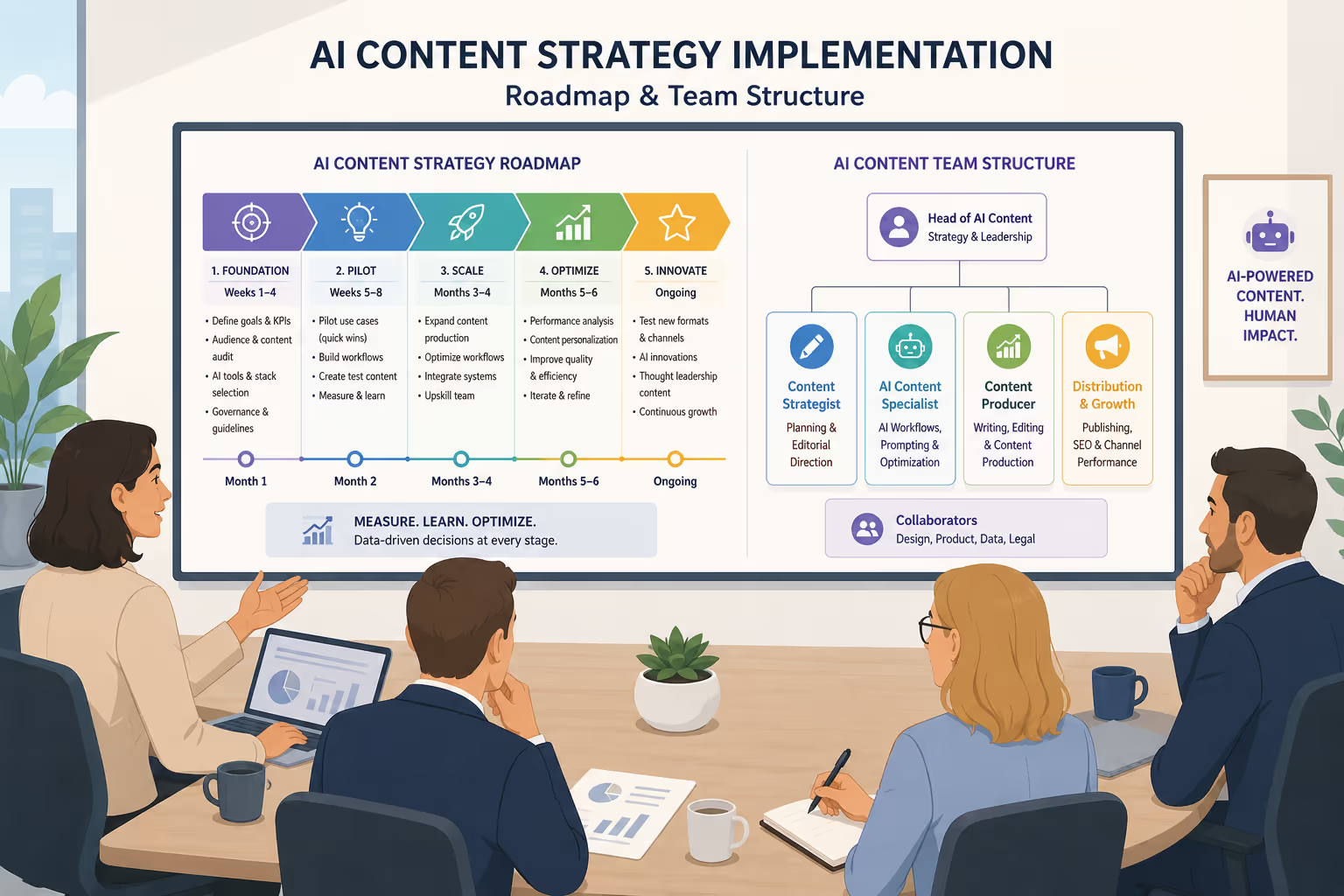
Team Structure for AI-Augmented Content Operations
AI doesn't eliminate the need for content teams. It changes what those teams do.
Writers become content editors and AI output refiners. The skill shifts from generating prose to shaping, fact-checking, and improving AI-generated drafts. Strong editors who can quickly identify what's wrong with a draft and fix it efficiently become more valuable than ever.
Content strategists become governance architects and quality auditors. They spend less time creating individual briefs and more time building the systems that generate consistent quality at scale.
Some organizations reduce headcount while maintaining output. Others maintain headcount while dramatically increasing output. The right choice depends on your growth goals and quality standards.
One constant remains: you still need humans with subject matter expertise, editorial judgment, and strategic thinking. AI amplifies these capabilities—it doesn't replace them. Organizations that cut too deep discover that AI without human oversight produces mediocre results at best and actively damaging content at worst.
Implementation Roadmap: Your First 90 Days
Implementing AI content governance doesn't require a massive transformation program. Start with a focused pilot that builds capability while limiting risk.
Days 1–30: Foundation
Define your governance framework and quality standards. What specific criteria must content meet? Who approves what? How will you verify compliance? Document these decisions clearly.
Select two or three content categories for your pilot. Choose categories where AI assistance makes sense—explanatory content with verifiable facts, repeatable formats, lower reputational risk.
Identify team members to own the AI-assisted workflow. They need capacity, willingness to learn, and good judgment.
Document baseline metrics for comparison. What's your current production velocity? Cost per piece? Search visibility? You need this baseline to evaluate whether the pilot is working.
Days 31–60: Pilot Execution
Produce AI-assisted content in pilot categories only. Apply all quality checkpoints rigorously, even if it feels slow at first. You're building muscle memory and identifying process friction.
Document everything. What prompts work well? Where does AI output consistently fall short? These learnings will inform your expansion.
Gather team feedback weekly. The people doing the work will identify problems executives don't see.
Days 61–90: Evaluation and Expansion
Compare pilot results to baseline metrics. Are you producing content faster? At lower cost? With acceptable quality? If yes, you're ready to expand. If not, identify what's broken before scaling.
Refine governance based on learnings. Your initial framework was a hypothesis. Ninety days of execution tells you what actually works.
Expand to additional content categories one or two at a time, applying the same rigor you used in the pilot.
Common Mistakes That Derail AI Content Initiatives
Watching organizations implement AI content strategy reveals predictable failure patterns.
Over-delegating too early happens when leaders hand off AI content to junior team members without proper governance in place. Those team members lack the judgment to catch what AI gets wrong. Quality suffers. Brand perception takes hits.
Under-investing in human oversight stems from compelling-looking math: AI is cheap, humans are expensive, so maximize AI. But AI without human judgment produces content that sophisticated B2B buyers recognize and dismiss. Short-term savings create long-term brand damage.
Treating AI purely as cost reduction misses the larger opportunity. Yes, AI can reduce content costs. But organizations fixated on cost end up producing the same mediocre content more cheaply. The bigger win: significantly more high-quality content than competitors while maintaining standards that build authority.
Waiting for a problem before implementing governance is always more expensive than proactive governance. That VP who discovered the fabricated statistic? She now has governance in place. She wishes she'd built it before the incident.
Expecting immediate results sets teams up for disappointment. AI content still follows the same rules as human content. It takes time to rank, build authority, and generate business impact. Plan for a 6–12 month horizon before drawing conclusions about ROI.
Building Content Systems That Adapt
Search engines and AI answer systems are changing rapidly. Google's Search Generative Experience is reshaping how information surfaces. The organizations best positioned to adapt share characteristics worth emulating.
They maintain quality standards that exceed platform minimums. When Google raises the bar for what ranks well, they're already above it.
They build flexible governance focused on outcomes—quality, accuracy, brand consistency—rather than specific processes. When better tools emerge, they can adopt them without rebuilding everything.
They retain and value human expertise. Subject matter experts, experienced editors, and strategic thinkers remain core to their operations.
They design systems for continuous improvement. Every piece of content generates learnings. Every quality audit informs process refinement.
Building an AI content strategy isn't a one-time project. It's an ongoing capability requiring executive attention, iteration, and occasional course correction.
The leaders who get this right won't just keep pace. They'll build sustainable organic traffic engines that compound over time—generating visibility, leads, and revenue without proportional cost increases.
That's the promise of AI-augmented content done well. Not replacing your content function. Transforming it into something more capable, more consistent, and more strategically valuable than what came before.
Ready to implement an AI content strategy that actually works? If you're a marketing leader looking for a strategic implementation partner—not just another tool—book a strategy call to discuss how a done-for-you content engine could accelerate your organic growth.

Frequently Asked Questions
What's the biggest risk of AI content for B2B companies?
Publishing low-quality content at scale damages both search visibility and brand credibility simultaneously. Search engines increasingly filter out thin AI content, while sophisticated B2B buyers recognize and dismiss generic material. The compounding effect can set organic growth back significantly. Robust governance and quality checkpoints mitigate this risk by ensuring efficiency gains never compromise the standards that build market trust.
How much should executives be involved in day-to-day AI content operations?
Executives should design the system and own the governance framework while delegating daily execution entirely. This means setting quality standards, approval workflows, and strategic direction upfront—then trusting your team to operate within those parameters. Monthly metric reviews and quarterly strategy adjustments maintain appropriate oversight without creating bottlenecks. Think architect, not contractor.
Can AI content establish genuine thought leadership?
AI can support thought leadership by drafting, researching, and structuring content, but original insights and unique perspectives still require human expertise. The most effective approach combines AI efficiency for production with human depth for differentiation. Think of AI as amplifying expert voices—helping your SMEs and executives publish more without sacrificing the originality that distinguishes thought leadership from commodity content.
How long before AI content strategy delivers measurable ROI?
Most organizations see process efficiency gains within 30–60 days as workflows stabilize. SEO and traffic improvements typically emerge within 3–6 months as content indexes and builds authority. Full business impact—measured in pipeline contribution and revenue attribution—usually becomes clear by months 6–12. Patience remains essential; AI accelerates production, not search engine timelines.
Which AI content tools should B2B marketing leaders evaluate first?
Start with enterprise-grade platforms that prioritize data security and brand consistency. Writer and Jasper both offer features designed for B2B content operations, including custom style guides and workflow integrations. For more technical teams, Custom GPTs built on OpenAI's platform provide flexibility but require more configuration. The right choice depends on your existing tech stack, team capabilities, and governance requirements. Always pilot before committing.


