The AI content platform market looks dramatically different than it did even twelve months ago. What started as basic text generators has evolved into sophisticated systems capable of autonomous research, real-time SEO optimization, and end-to-end publishing workflows that require almost no human intervention.
But here's the challenge most buyers face: with dozens of platforms competing for your budget, the marketing claims all start blending together. Everyone promises "high-quality content" and "SEO optimization." Few explain what that actually means for your bottom line in 2026's search landscape.
Having watched this market evolve—and having helped businesses navigate these decisions—I can tell you the difference between platforms that deliver compounding returns and those that just burn budget comes down to a handful of specific capabilities most comparison guides overlook.
This guide breaks down the essential features, pricing structures, and ROI considerations you need to evaluate AI content solutions effectively. We'll move beyond surface-level feature lists to examine what actually drives organic growth over six, twelve, and twenty-four months—including the agentic AI capabilities that now separate leading platforms from legacy tools.
Why Feature Comparison Matters More Than Ever in 2026
The gap between AI content tools has widened dramatically. Entry-level platforms still produce generic text that search engines increasingly filter out of meaningful rankings. Meanwhile, enterprise-grade solutions now deploy autonomous AI agents capable of conducting multi-source research, analyzing competitor content in real-time, and optimizing for both traditional search and AI-powered answer engines simultaneously.
Understanding this spectrum prevents two costly mistakes:
Overpaying for features you won't use. Enterprise dashboards and unlimited word counts sound impressive until you realize you're paying for capacity that sits idle.
Underpaying for capabilities that would generate real returns. The $50/month tool that requires three hours of editing per article often costs more than the $300/month service that delivers publication-ready content.
The platforms delivering compounding results in 2026 share common characteristics: deep keyword research integration, human editorial oversight, agentic research capabilities, and consistent publishing infrastructure. Tools that simply generate words—without strategic context or autonomous optimization—tend to produce content that sits idle, ranking for nothing and converting no one.
Core Features to Evaluate in AI Content Platforms
Keyword Research and Topic Intelligence
The foundation of effective AI content isn't the writing—it's the targeting. This is where most buyers underweight their evaluation.
Platforms worth considering in 2026 offer:
Integrated keyword discovery that identifies opportunities based on search volume, competition, and intent—not just popular terms, but winnable ones given your current domain authority.
Topic clustering that maps semantic relationships between concepts. Search engines evaluate topical authority, not just individual articles. Platforms that help you build interconnected content clusters outperform those optimizing posts in isolation.
Content gap analysis showing what competitors cover that you don't. This feature alone can justify a platform's cost by preventing months of publishing content that targets already-saturated queries.
AI Overview optimization that analyzes which content formats and structures appear in Google's AI-generated summaries. According to Search Engine Land's 2025 analysis, content optimized for AI Overviews sees 40-60% higher visibility in zero-click search results.
Without robust keyword research depth, even well-written content targets the wrong queries. Look for platforms that build topic banks rather than just responding to one-off prompts.
Agentic AI and Autonomous Research
The defining feature separating 2026 platforms from their predecessors is autonomous agent capability. Traditional AI tools wait for prompts. Modern platforms deploy agents that independently:
Conduct multi-source research across databases, competitor sites, and authoritative publications—synthesizing information rather than simply generating text from training data.
Verify facts and citations by cross-referencing claims against authoritative sources, reducing the hallucination problem that plagued earlier AI content tools.
Adapt to algorithm changes by monitoring SERP fluctuations and automatically adjusting content recommendations based on what's currently ranking.
Personalize content at scale by analyzing audience segments and adjusting tone, examples, and depth based on reader behavior data.
According to Gartner's 2025 AI Hype Cycle, agentic AI has moved from "innovation trigger" to "peak of inflated expectations"—meaning real capabilities exist, but buyer discernment matters more than ever.
Platforms lacking autonomous research capabilities require you to provide all the strategic inputs. You're paying for execution without intelligence.
Content Quality and Editorial Workflow
Raw AI output quality varies enormously, but here's what most comparison guides miss: the critical differentiator isn't which foundation model a platform uses. It's whether the workflow includes quality controls that catch what AI consistently misses.
Human editing layers that catch factual errors, awkward phrasing, and tone mismatches. Every major language model hallucinates occasionally. Every model struggles with nuanced brand voice. Human review isn't a nice-to-have—it's essential for content you're willing to attach your brand name to.
Brand voice customization that adapts output to your specific style. Generic "professional" or "friendly" toggles rarely produce content that sounds like your company. Look for platforms that ingest your existing content or style guides to train output—including fine-tuned models built on your historical content.
Approval workflows that give you control before publishing. The best platforms make review efficient (one-click approvals, inline editing) rather than creating bottlenecks.
Platforms relying purely on AI without editorial oversight tend to produce content that reads generically—technically correct but lacking the specificity and voice that builds reader trust. The combination of AI speed with human judgment consistently outperforms either approach alone.
The research on why hybrid content strategy outperforms pure AI tools is worth reading before finalizing any platform decision — it explains specifically how the human editorial layer produces the E-E-A-T signals that both readers and AI search systems reward.

SEO Optimization Capabilities
Basic SEO features have become table stakes. Keyword insertion and meta description generation no longer differentiate platforms. The meaningful differences now appear in technical implementation:
| Feature | Basic Platforms | Advanced Platforms (2026) |
| Keyword placement | Manual recommendations | Dynamic optimization based on real-time SERP analysis |
| Internal linking | Suggestions only | Auto-implementation with contextual relevance scoring |
| Schema markup | Not included | Auto-generated structured data for articles, FAQs, how-tos, products |
| Meta optimization | Template-based | AI-generated based on click-through rate prediction |
| Content structure | Generic headers | Intent-matched hierarchy analyzing top 20 ranking pages |
| AI Overview targeting | Not addressed | Structured for featured snippet and AI summary inclusion |
Schema markup deserves particular attention. Structured data increasingly influences how content appears in search results—featured snippets, FAQ dropdowns, how-to panels, and AI Overview citations. Platforms that generate and implement schema automatically save significant technical overhead.
Internal linking automation compounds over time. Each new article that properly links to existing content strengthens your entire site's topical authority. Manual internal linking rarely happens consistently; automated systems maintain the discipline.
Publishing and Distribution
The operational burden of content marketing often kills consistency. I've seen countless content strategies die not from poor quality but from publishing friction—drafts sitting in review queues, formatting headaches with CMS integrations, broken schedules when team members get busy.
Evaluate whether platforms offer:
Direct CMS integration with your existing systems (WordPress, Shopify, HubSpot, Webflow). API-based connections that auto-publish or stage content eliminate the copy-paste-format-publish cycle that burns hours weekly.
Scheduling automation that maintains publishing cadence regardless of internal capacity constraints. The value of consistent publishing—two to three quality pieces weekly—compounds dramatically over sporadic bursts of activity.
Performance tracking connected to your analytics. Platforms that report traffic, rankings, and engagement data per article enable optimization. Platforms that end at "published" leave you guessing.
Multi-channel distribution that adapts core content for email newsletters, social posts, and syndication partners automatically.
Manual publishing creates friction. Friction kills consistency. And inconsistency undermines the compounding effect that makes content marketing worthwhile in the first place.
Platform Categories Compared
Understanding platform categories helps narrow your evaluation before diving into specific tools.
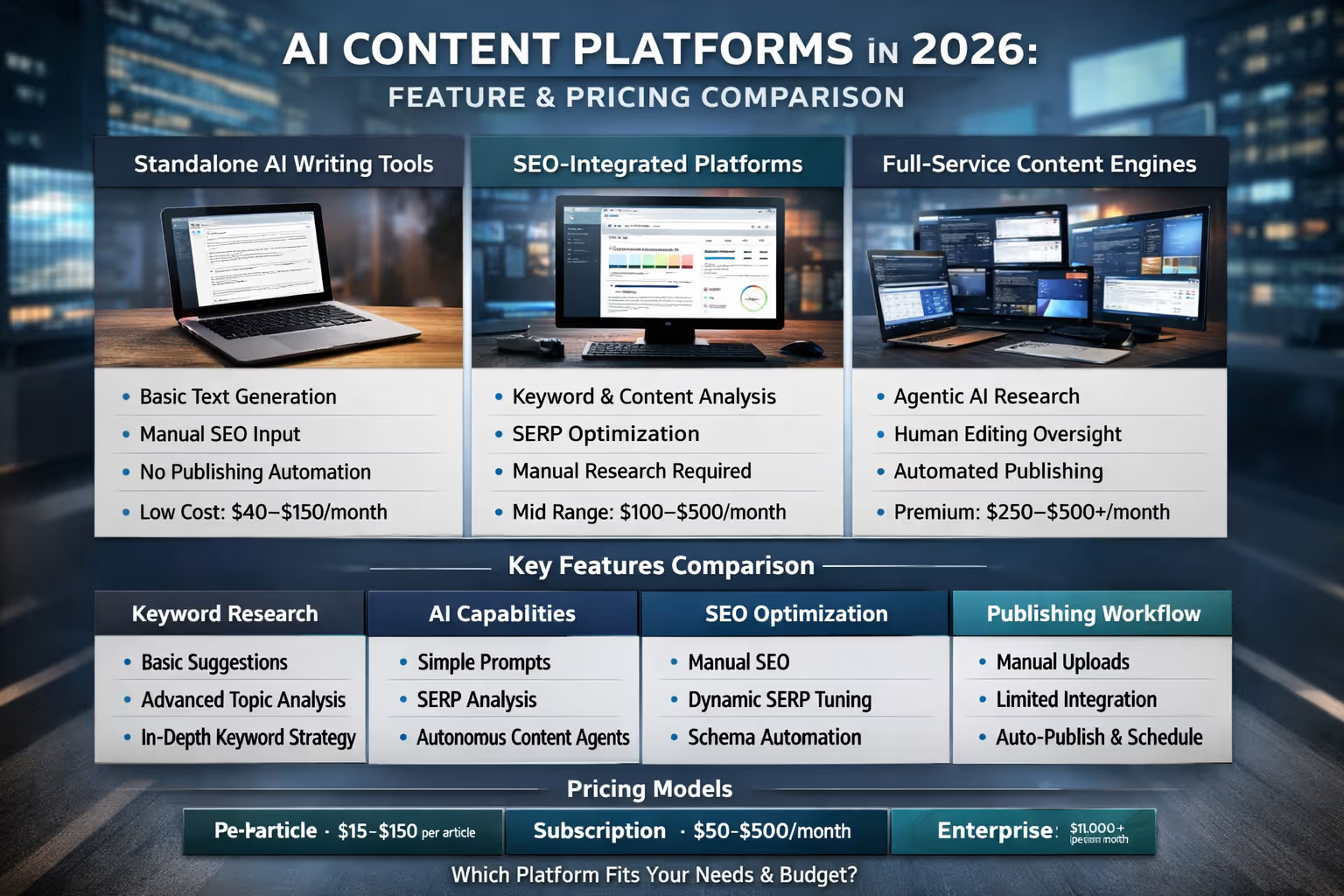
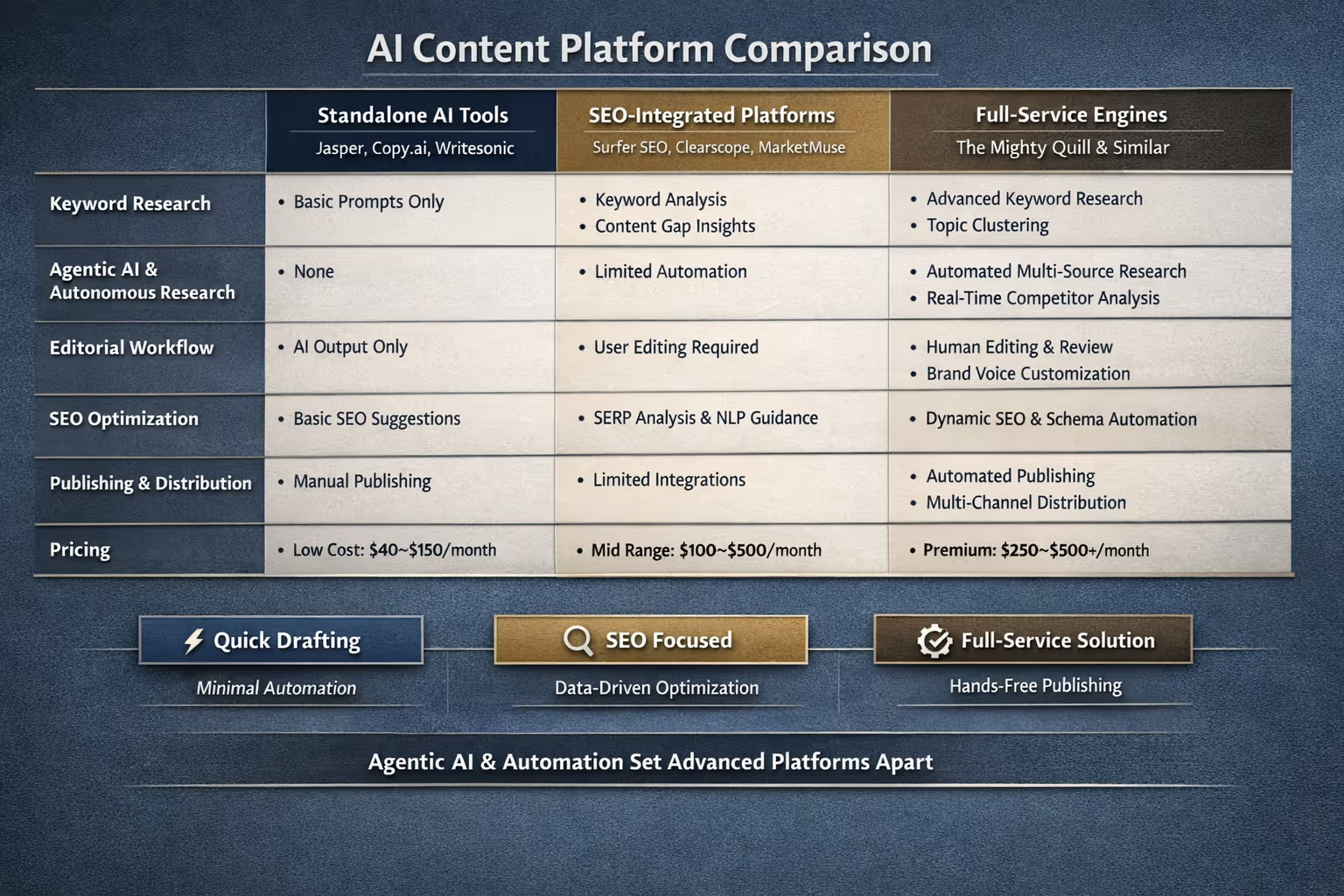
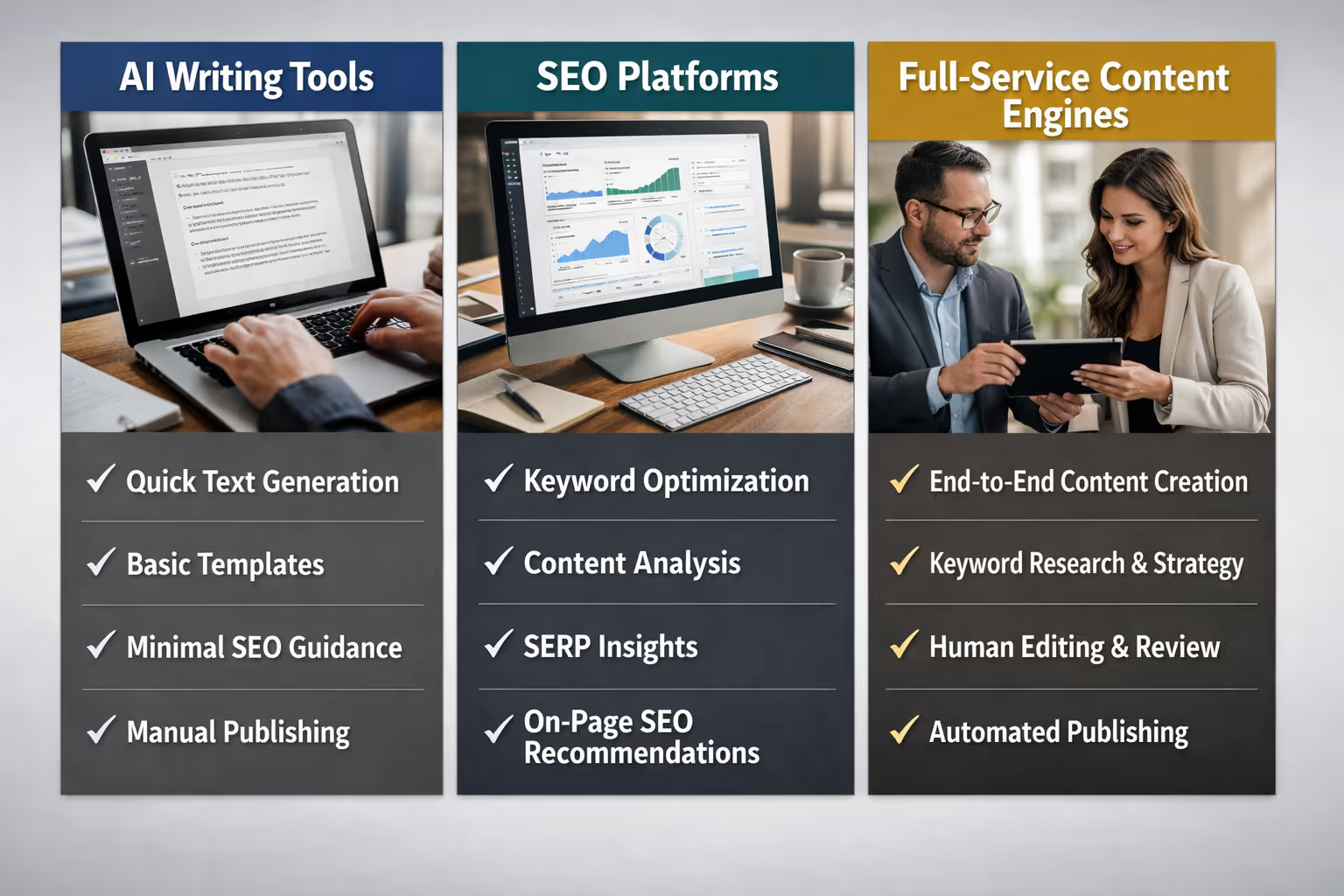
Standalone AI Writing Tools
Examples: Jasper, Copy.ai, Writesonic, Rytr
These tools focus primarily on content generation. You provide prompts; they produce text.
Strengths:
Fast output for ad copy, social posts, and short-form content
Flexible templates for various formats
Generally lower price points ($40–$150/month for most use cases)
Useful for teams with existing SEO and editorial capabilities
Limitations:
Minimal strategic guidance—you choose topics, they generate words
No publishing automation—output lands in your lap
Quality varies significantly, requiring substantial editing
No keyword research or competitive intelligence built in
Limited or no agentic capabilities
Best for: Marketing teams with existing SEO strategists and editors who need to accelerate drafting, not replace their content process.
For teams actively choosing between this model and a service-based approach, the AI blog writing services vs AI writing tools ROI comparison puts both options side-by-side on the metrics that matter — staff time, true monthly cost, and publishing consistency.
SEO-Integrated Content Platforms
Examples: Surfer SEO, Clearscope, MarketMuse, Frase
These platforms combine writing assistance with optimization intelligence, scoring your content against what currently ranks.
Strengths:
Content scoring against top-ranking competitors
Real-time optimization recommendations as you write
Keyword and entity coverage analysis
NLP-based guidance on topics to cover
Pricing typically $100–$500/month depending on volume
Limitations:
Still require significant human effort for research, writing, and publishing
Optimization guidance without generation means you're still drafting
No publishing automation
Learning curve for effective use
Best for: In-house content teams or agencies who want data-driven optimization but have writers capable of producing drafts.
Full-Service Content Engines
Examples: The Mighty Quill, Scale-type agency models, enterprise content operations platforms
Done-for-you services combine AI generation with human oversight, strategic planning, and publishing automation.
Strengths:
Minimal internal time investment—review and approve rather than create
Consistent publishing schedules maintained automatically
End-to-end workflow from keyword research to live content
Human editing ensures quality control
Agentic research capabilities for comprehensive topic coverage
Pricing typically $250–$500/month for small-to-mid-volume needs
Limitations:
Less direct control over each piece than writing yourself
Requires trust in the provider's strategic judgment
May need onboarding time to calibrate brand voice
Best for: Growth-focused businesses that need consistent output but lack bandwidth to run content operations internally.
The Mighty Quill operates in this category—delivering keyword-researched, human-edited content published on schedule without requiring clients to manage the process. Two to three SEO-optimized articles weekly, with topic banks built from competitive research and approval workflows that take minutes rather than hours.
For a deeper look at how AI content subscription services work at this level — including what the onboarding process looks like, how topic calendars get built, and what quality controls are in place — the complete guide covers the full picture before you commit to a service.
Pricing Models and What They Actually Mean
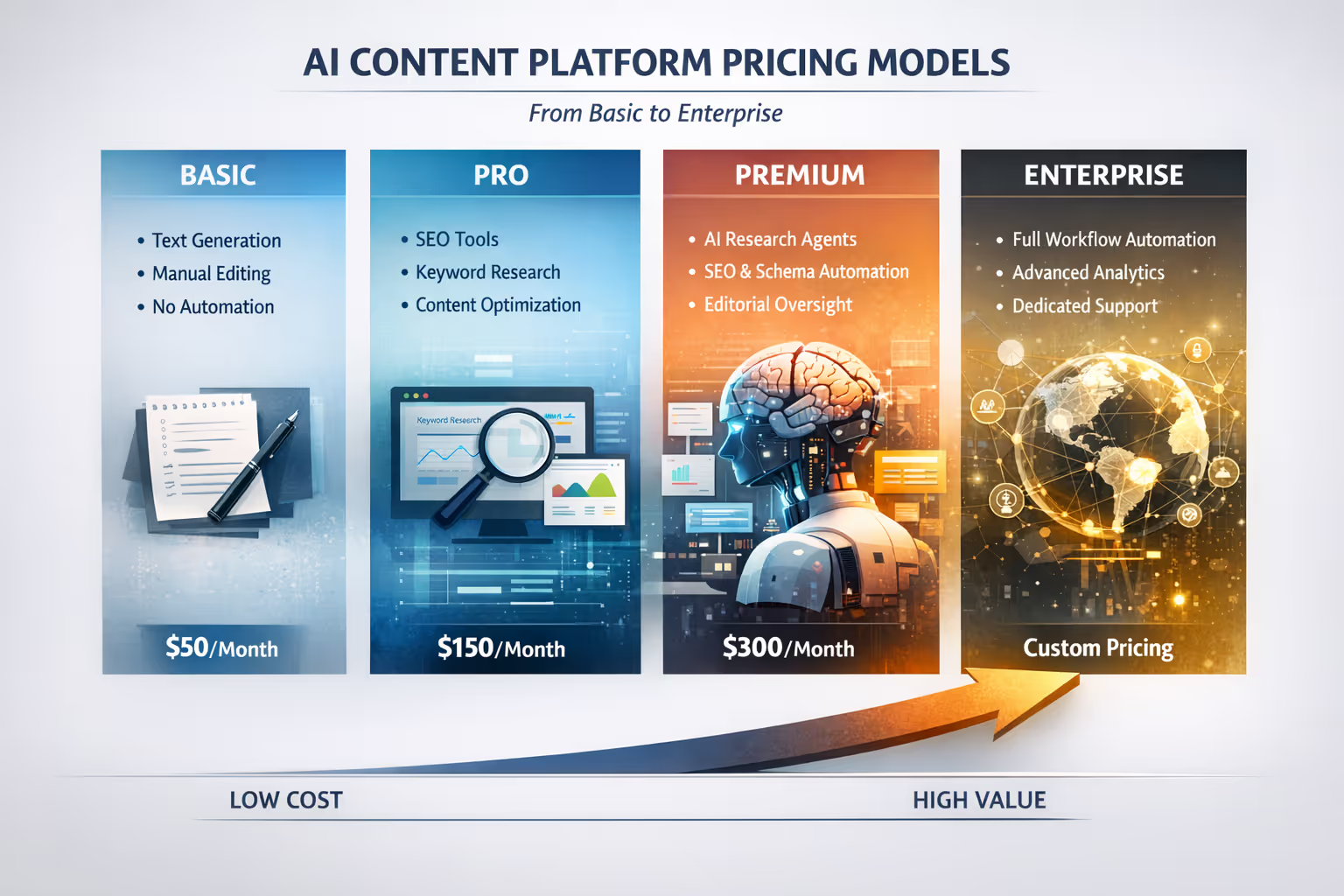
AI content platform pricing falls into several distinct models, each with different implications for ROI and operational burden.
Per-Article Pricing
Typical range: $15–$150 per article (quality varies dramatically across this range)
Per-article models work for occasional content needs but create budgeting unpredictability. They also incentivize platforms to maximize volume rather than quality—more articles sold means more revenue regardless of results.
Watch for: Significant quality variance at lower price points. A $25 article requiring two hours of editing costs more than a $75 article that's publication-ready.
Best for: Businesses publishing fewer than four articles monthly with highly variable content needs.
Monthly Subscription Tiers
Typical range: $50–$500 per month
Subscription models align platform incentives with consistent output. Higher tiers typically unlock:
Increased article volume or word limits
Advanced SEO features and integrations
Publishing automation
Dedicated support or account management
Agentic research and autonomous optimization
Watch for: Artificial word limits that force upgrades, "unlimited" plans with practical usage caps buried in terms, and feature gating that puts essential capabilities in expensive tiers.
Best for: Organizations committed to regular publishing schedules who want predictable costs and consistent quality.
Enterprise and Custom Pricing
Typical range: $1,000–$5,000+ per month
Enterprise tiers add account management, custom integrations, white-label capabilities, advanced analytics, and dedicated fine-tuned models trained on your content. The ROI case depends heavily on content volume—these make sense when publishing ten or more pieces weekly or managing content for multiple brands.
Watch for: Long contract commitments before you've validated the platform works for your use case.
Best for: Agencies, multi-brand companies, or high-volume publishers with specific integration requirements.
Hidden Costs to Calculate
Pricing pages rarely tell the complete story. Factor in:
Editing time if output requires significant revision. Track how many hours per article your team spends polishing AI-generated drafts. At $75/hour fully-loaded labor cost, two hours of editing adds $150 to each "cheap" article.
Publishing labor if automation isn't included. Formatting, uploading, configuring SEO settings, adding images—this typically runs 30–60 minutes per article.
Integration costs for connecting to existing systems. Some platforms charge extra for API access or premium CMS integrations.
Overage charges for exceeding usage limits. Understand what happens when you hit caps.
The true cost of a platform equals subscription price plus internal labor required to make content publication-ready. A $400/month full-service platform often costs less than a $150/month tool requiring five hours of weekly internal work.
Calculating Real ROI on AI Content Investment
Raw pricing comparisons miss the point. What matters is return on content investment, which compounds over time when done correctly.
The Compounding Effect of Consistent Publishing
Content ROI rarely appears in month one. The mathematics favor consistency over intensity:
Fresh content signals activity to search engines. Sites that publish regularly get crawled more frequently, with new content indexed faster.
Each piece creates additional ranking opportunities. Twenty well-targeted articles means twenty chances to capture search traffic—but only if you actually publish them.
Internal linking between posts strengthens domain authority. A content library where articles reference each other builds topical authority that isolated posts cannot.
Accumulated content builds topical authority. Search engines increasingly evaluate whether a site demonstrates expertise across a topic area, not just on individual queries.
AI answer engines favor comprehensive sources. Platforms like ChatGPT, Perplexity, and Google's AI Overviews preferentially cite sites demonstrating broad, deep coverage of topics.
Platforms that ensure consistent output—two to three quality pieces weekly—create compounding returns that sporadic publishing cannot match. The difference between publishing eight articles monthly versus two isn't 4x results; over a year, it's often 10x+ due to compounding.
Time-to-Value Considerations
Calculate the full cost of content production under each model:
DIY with basic AI tools:
Research time: 2–3 hours per article
Writing and editing time: 3–4 hours per article
Optimization and formatting: 1–2 hours per article
Publishing and configuration: 30–60 minutes per article
Total: 7–10 hours per article
Full-service platforms:
Review and approval: 15–30 minutes per article
Publishing: automated
Total: Under 30 minutes per article
At $75/hour fully-loaded labor cost, the DIY approach costs $525–$750 per article in time alone—before any tool subscriptions. The "expensive" full-service platform at $100–$150 per article equivalent often represents massive savings.
For a direct hiring comparison on the same cost model, the AI content service vs junior writer cost-benefit analysis walks through the math when the alternative is bringing someone in-house — including ramp time, benefits overhead, and what happens when your content needs grow.
If the ROI math points toward outsourcing but you want to understand what the managed experience actually looks like day-to-day, managed blog services as an alternative to DIY platforms covers the full operational model — who does what, how approvals work, and what quality controls exist.
Measuring Content Performance
Effective platforms should enable tracking:
Organic traffic growth month over month—the baseline metric that indicates whether content is being found.
Keyword ranking improvements for target terms—movement from page three to page one matters more than raw traffic numbers early on.
AI citation frequency—how often your content appears in AI-generated answers across platforms like ChatGPT, Perplexity, and Google AI Overviews.
Conversion rates from content-driven visitors—ultimately, traffic that doesn't convert isn't valuable traffic.
Domain authority progression over time—a lagging indicator that signals compounding effects.
Platforms lacking performance visibility make ROI calculation guesswork. If a platform can't show you what your content achieves, you can't optimize or justify continued investment.
What to Prioritize Based on Your Situation
For Resource-Constrained Teams
If your content bottleneck is time rather than budget, prioritize platforms that minimize internal involvement. The best option delivers publication-ready content requiring only approval—not extensive revision.
Prioritize:
Human editing included in the workflow
Publishing automation
Managed topic calendars and keyword research
One-click approval processes
Deprioritize: Advanced customization features you won't have time to configure.
For SEO-Focused Organizations
If you have content creation capacity but need strategic direction, prioritize keyword research depth and optimization capabilities. Surface-level keyword suggestions won't differentiate your content from competitors.
Prioritize:
Competitive gap analysis
Entity and semantic coverage guidance
SERP analysis for target queries
Schema and technical SEO automation
AI Overview optimization features
Deprioritize: Publishing automation if you have reliable internal processes.
For Agencies and Multi-Brand Operations
If you're managing content across multiple clients or brands, prioritize scalability and workflow efficiency. Managing multiple content streams requires systematization.
Prioritize:
Multi-brand workspace support
Bulk content scheduling
White-label capabilities
Consolidated reporting across accounts
API access for custom workflows
Deprioritize: Features designed for single-brand optimization.
Red Flags When Evaluating Platforms
Certain characteristics suggest a platform won't deliver sustainable results:
No human oversight option. Pure AI output quality remains inconsistent across all models. Platforms without editing layers are betting you'll accept mediocre content—or invest your own time fixing it.
Vague pricing. If you can't get a clear answer on total cost before signing, hidden charges typically emerge later. Transparent platforms publish pricing publicly.
No keyword research integration. Writing without targeting wastes effort. If a platform expects you to provide all topic direction, you're paying for execution without strategy.
Volume-focused messaging. "Unlimited content" and "10,000 words per month" often mean unlimited mediocrity. Platforms emphasizing volume over quality typically deliver content that fails to rank or convert.
No performance tracking. Platforms confident in results provide visibility into what content achieves. Those that end at "delivery" are often hiding poor outcomes.
Unrealistic timeline promises. SEO content typically takes three to six months to show meaningful results. Platforms promising "immediate rankings" are either lying or gaming low-competition queries that won't drive business results.
No AI answer engine strategy. Platforms ignoring optimization for ChatGPT, Perplexity, and Google AI Overviews are optimizing for yesterday's search landscape.
Making Your Decision
The AI content platform landscape in 2026 offers genuine solutions at every price point—but the capabilities gap between tiers has never been wider. The right choice depends on honest assessment of:
Your publishing volume goals. Are you filling an occasional content gap, or building an ongoing traffic engine? Sporadic needs point toward per-article models; consistent growth requires subscription platforms.
Available internal resources. How much time can your team realistically dedicate to content operations? Be honest—ambitious plans often collide with operational reality.
Strategic sophistication needed. Do you have SEO expertise to guide topic selection, or do you need a platform that handles strategy? This determines whether writing tools or full-service engines fit better.
Budget constraints—including hidden costs. Both subscription fees and internal labor costs matter. A cheaper tool requiring more labor often costs more in practice.
AI search readiness. Is your content strategy prepared for a world where 40%+ of searches may receive AI-generated answers? Platforms with AI Overview optimization will outperform those stuck in traditional SEO.
For organizations serious about organic growth, the platforms delivering compounding returns share common traits: strategic keyword research, quality-controlled output, agentic research capabilities, and consistent publishing infrastructure. The tools that generate words without these foundations tend to produce content that sits idle.
The question isn't just what a platform costs—it's what it produces over six, twelve, and twenty-four months of consistent use. Content marketing compounds. The platform that helps you publish consistently and strategically will outperform the "better" tool that creates friction.
Ready to stop comparing platforms and start publishing content that compounds? Try The Mighty Quill's Blog Engine free—get two publication-ready articles within 48 hours and see what strategic, consistent content production looks like in practice.
Frequently Asked Questions
How much should I budget for an AI content platform in 2026?
Budget depends on publishing volume and internal resources. Basic AI writing tools range from $50–$150 monthly, suitable for teams with existing editorial and SEO capabilities. Full-service platforms with agentic research and human editing typically run $250–$500 monthly. Calculate total cost by adding subscription fees to internal time required—a $150 tool requiring five hours of weekly editing often costs more than a $400 full-service solution that delivers publication-ready content.
What features matter most for SEO-focused content in 2026?
Keyword research depth, AI Overview optimization, and autonomous content optimization drive results more than writing quality alone. Prioritize platforms offering competitive gap analysis, semantic entity coverage, internal linking automation, and schema markup generation. The ability to identify winnable queries—and optimize for both traditional search and AI answer engines—separates platforms that drive rankings from those producing content that ranks for nothing.
Can AI content platforms replace human writers entirely?
Not effectively—and the best platforms don't try. Platforms combining AI generation with human editorial oversight consistently outperform pure AI solutions. Human judgment catches factual errors, ensures brand voice consistency, and adds the specificity current AI models miss. The optimal 2026 approach uses agentic AI for research and efficiency while maintaining human quality control on everything published under your brand.
How do agentic AI capabilities change content platform evaluation?
Agentic AI represents the biggest capability gap in the 2026 market. Platforms with autonomous agents can conduct independent research, verify facts across multiple sources, monitor SERP changes, and adapt content strategies without constant human direction. Traditional prompt-response tools require you to provide all strategic inputs. For buyers evaluating platforms, ask specifically: "Does your AI conduct independent research, or does it only respond to prompts?"
How long before AI-generated content shows ROI?
Expect three to six months for measurable organic traffic improvements from consistent content publishing. SEO compounds over time—individual articles rarely produce immediate results, but accumulated content builds domain authority and ranking momentum. Platforms ensuring consistent weekly output accelerate this timeline significantly. In 2026's landscape, content optimized for AI Overviews may show visibility gains faster, as these features appear on an estimated 30% of informational queries.
About This Guide
This comparison reflects current AI content platform capabilities and content marketing industry patterns as of 2026. The Mighty Quill operates as an AI-powered blog engine combining strategic keyword research, AI-assisted drafting, human editorial oversight, and publishing automation—delivering two to three SEO-optimized articles weekly for businesses focused on sustainable organic growth. Our perspective draws from watching what actually drives results across different platform approaches.