The way people find information has fundamentally changed, and the shift happened faster than most marketers anticipated. AI-powered search experiences now summarize, synthesize, and serve answers before users ever click a link—which means content marketers need to rethink what "visibility" actually means.
If your content strategy still relies on tactics designed for ten blue links, you're competing in a game that's already evolved. The brands earning visibility in 2026 aren't choosing between AI efficiency and human expertise; they're building systems that combine both, because that's what AI search engines are learning to reward.
This guide breaks down exactly how AI is reshaping content marketing strategies, what the data shows about these changes, and the practical steps you can take to stay visible when search engines increasingly answer questions themselves.
The AI Search Revolution: What Actually Changed
Google's Search Generative Experience (SGE) marked a turning point in how search works. Instead of returning a list of links and letting users piece together answers, search engines now generate synthesized responses directly in the results [1]. Users often get what they need without clicking through to any website.
This shift fundamentally changes the content marketing equation in ways that go beyond simple traffic metrics.
Traditional SEO focused on ranking for keywords and capturing clicks, and while that still matters, it's no longer sufficient on its own. Your content now needs to be the source that AI systems pull from when generating answers—not just a page that ranks well, but a resource that AI deems authoritative enough to cite.
The implications ripple across every content decision:
Zero-click searches continue to grow. Industry research indicates that a significant percentage of searches now end without a click to any website, as AI-generated summaries provide the information users need directly in the search results. For informational queries especially, the first "result" is often an AI-synthesized answer rather than a traditional link [6].
Source authority has become a ranking signal in itself. AI systems don't just evaluate keyword relevance—they assess whether a source demonstrates genuine expertise. Content from recognized authorities gets cited more frequently in AI overviews, creating a compounding advantage for established, trustworthy publishers.
Content structure directly affects whether you get cited. Well-organized content with clear hierarchies, direct answers, and verifiable claims is easier for AI to parse, understand, and reference. Poorly structured content—even if accurate—often gets overlooked.
The brands that understand this shift are adapting their strategies to optimize for citation, not just ranking. Those that don't are watching their organic visibility erode even as their "rankings" technically remain stable.
Why AI-Only Content Falls Short
Here's where many marketers make a critical mistake: they see AI transforming search and assume the solution is AI-generated content at scale. The logic seems straightforward—pump out more articles, faster, cheaper, and capture more keyword territory.
This approach is backfiring for most teams that try it.
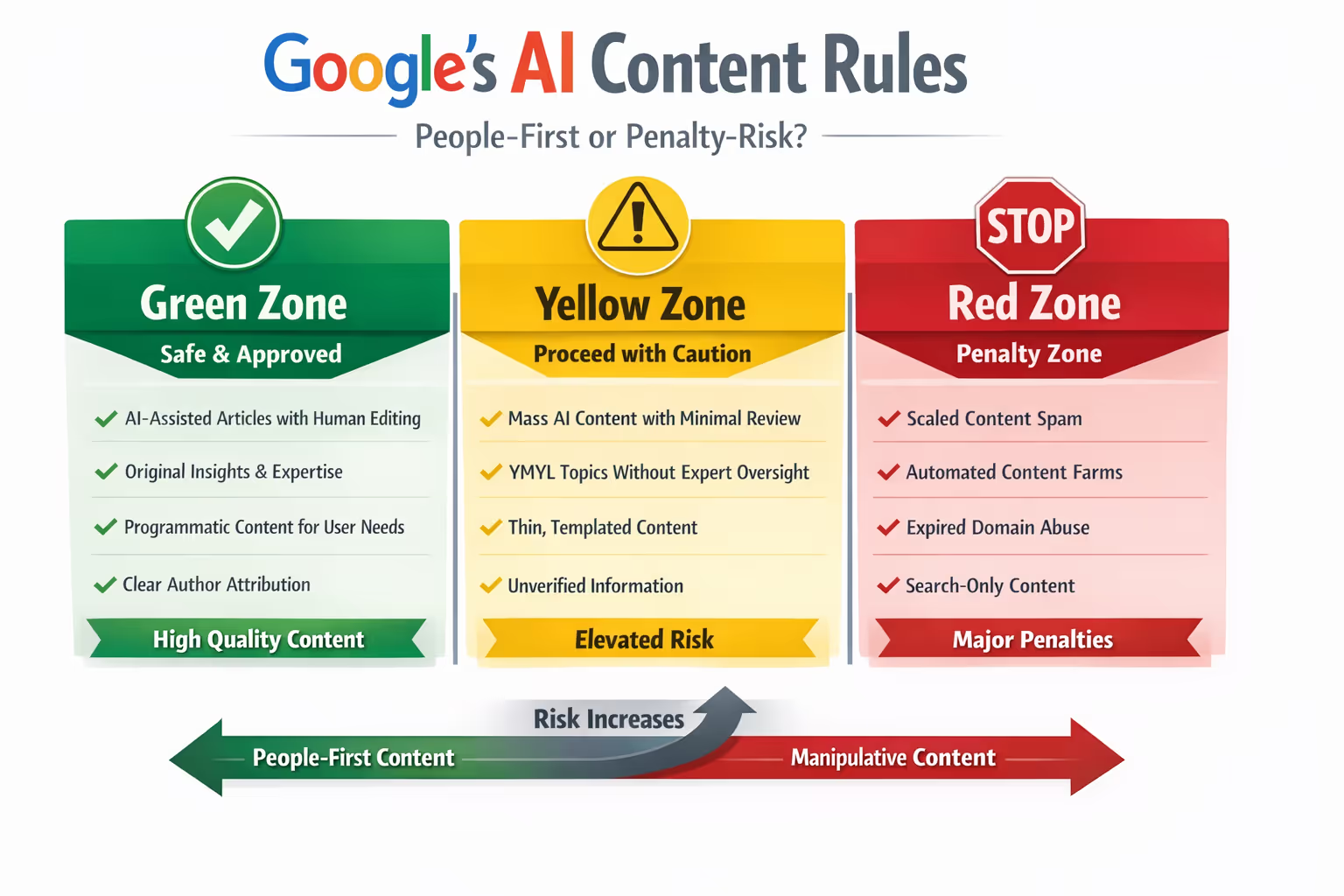
Search engines have become increasingly sophisticated at identifying thin, generic content—regardless of how it was produced [2]. Google's helpful content updates specifically target material that prioritizes search engine optimization over genuine user value, and AI-generated content that lacks depth or originality tends to trigger exactly the signals these algorithms are designed to catch.
The math seems simple at first glance: AI can generate content for a fraction of traditional costs. But content that reads like it was assembled by a machine often performs like it was assembled by a machine—high volume, low impact, diminishing returns.
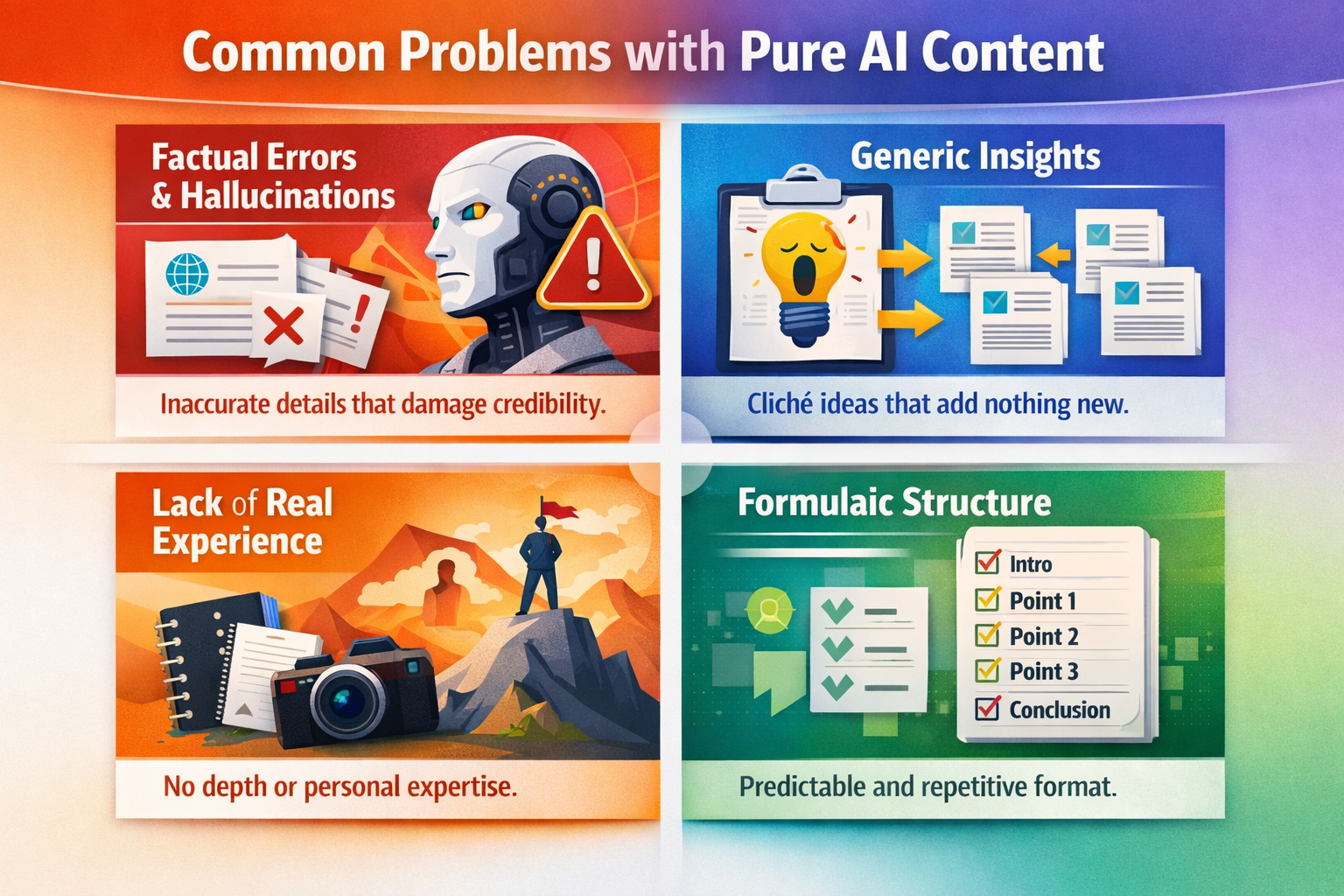
Common problems with pure AI content include:
Generic insights that add nothing new. When AI tools draw from the same training data, they tend to produce similar outputs. The result is content that covers topics adequately but offers no original perspective, analysis, or insight that would make it worth citing.
Factual errors and hallucinations that damage credibility. AI models can confidently present incorrect information, and publishing these errors erodes reader trust and signals to search engines that a source isn't reliable.
Missing the experiential depth that demonstrates authority. AI can summarize what others have said, but it can't draw on real-world experience, tested methodologies, or lessons learned from actual implementation. This gap becomes obvious to both sophisticated readers and the algorithms evaluating E-E-A-T signals.
Formulaic structure that readers recognize instantly. After encountering enough AI-generated content, both human readers and search evaluators learn to spot the patterns—predictable transitions, surface-level analysis, and lack of genuine voice.
Volume without quality doesn't compound. It dilutes your brand's authority and trains search engines to view your site as a source of filler rather than expertise.
The Hybrid Approach: AI Efficiency Meets Human Expertise
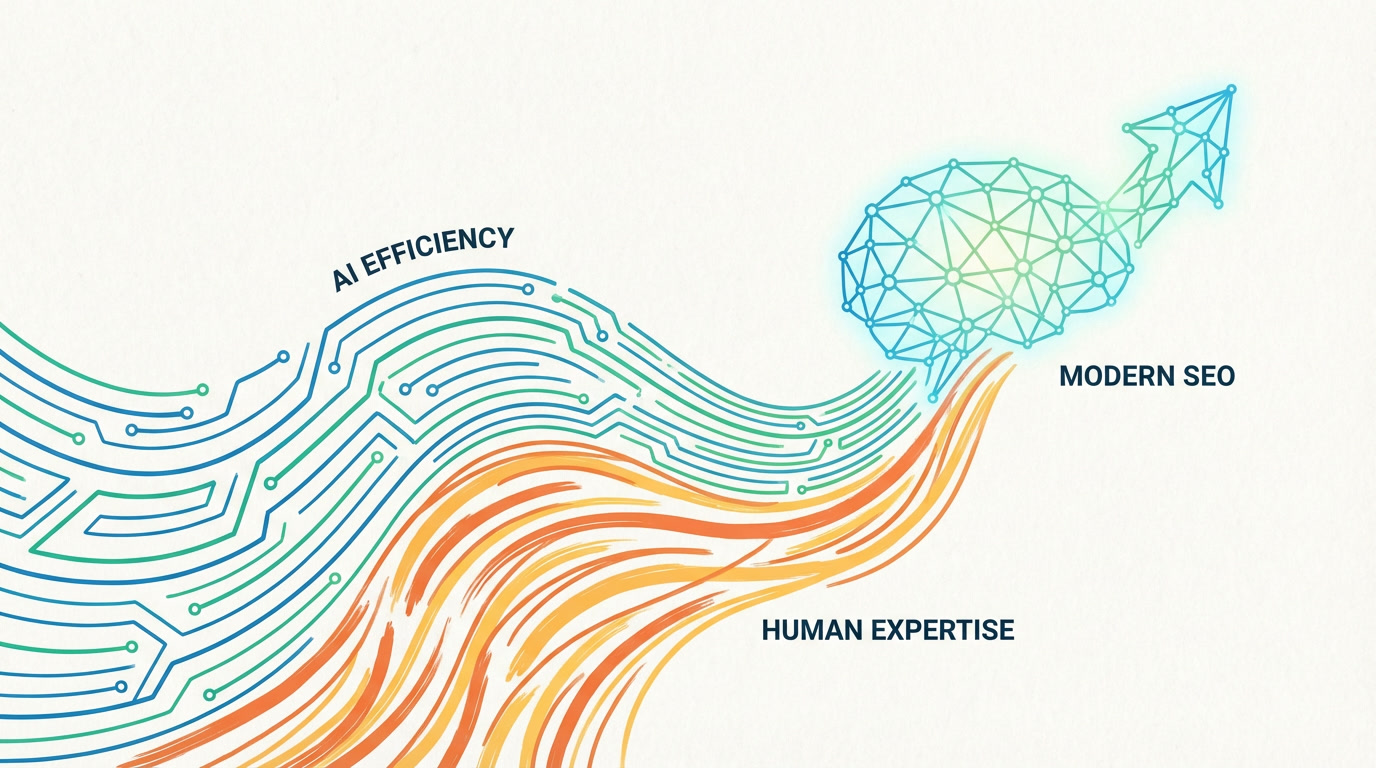
The most effective content marketing strategies in 2026 combine AI capabilities with human judgment. This isn't a compromise between speed and quality—it's an optimization that leverages what each does best.
AI excels at specific tasks that would otherwise consume enormous amounts of human time:
Research acceleration. AI can synthesize information across dozens of sources in minutes, identifying relevant data points, statistics, and expert opinions that would take hours to compile manually.
Pattern recognition at scale. Identifying content gaps, analyzing keyword opportunities, and spotting trending topics across large datasets happens much faster with AI assistance than with manual analysis.
Draft generation. Creating initial frameworks, outlines, and rough drafts gives human writers a starting point rather than a blank page, reducing the activation energy required to produce content consistently.
Consistency maintenance. Ensuring regular publishing cadences without burning out writers becomes manageable when AI handles the structural groundwork.
Humans excel at different tasks that AI genuinely cannot replicate:
Original insight and perspective. Drawing on real experience to provide genuine expertise—the kind that comes from having actually implemented strategies, faced challenges, and learned from outcomes.
Quality judgment. Recognizing when content actually adds value versus just filling space, and knowing when to cut sections that don't serve the reader.
Voice authenticity. Writing in ways that connect with specific audiences, reflecting brand personality, and building the kind of trust that makes readers return.
E-E-A-T demonstration. Showing experience, expertise, authoritativeness, and trustworthiness in ways that AI cannot fabricate, because these qualities require real human involvement.
The hybrid model uses AI for what it genuinely does well while preserving the human elements that both search engines and readers increasingly value.
How E-E-A-T Compliance Drives AI-Era Visibility
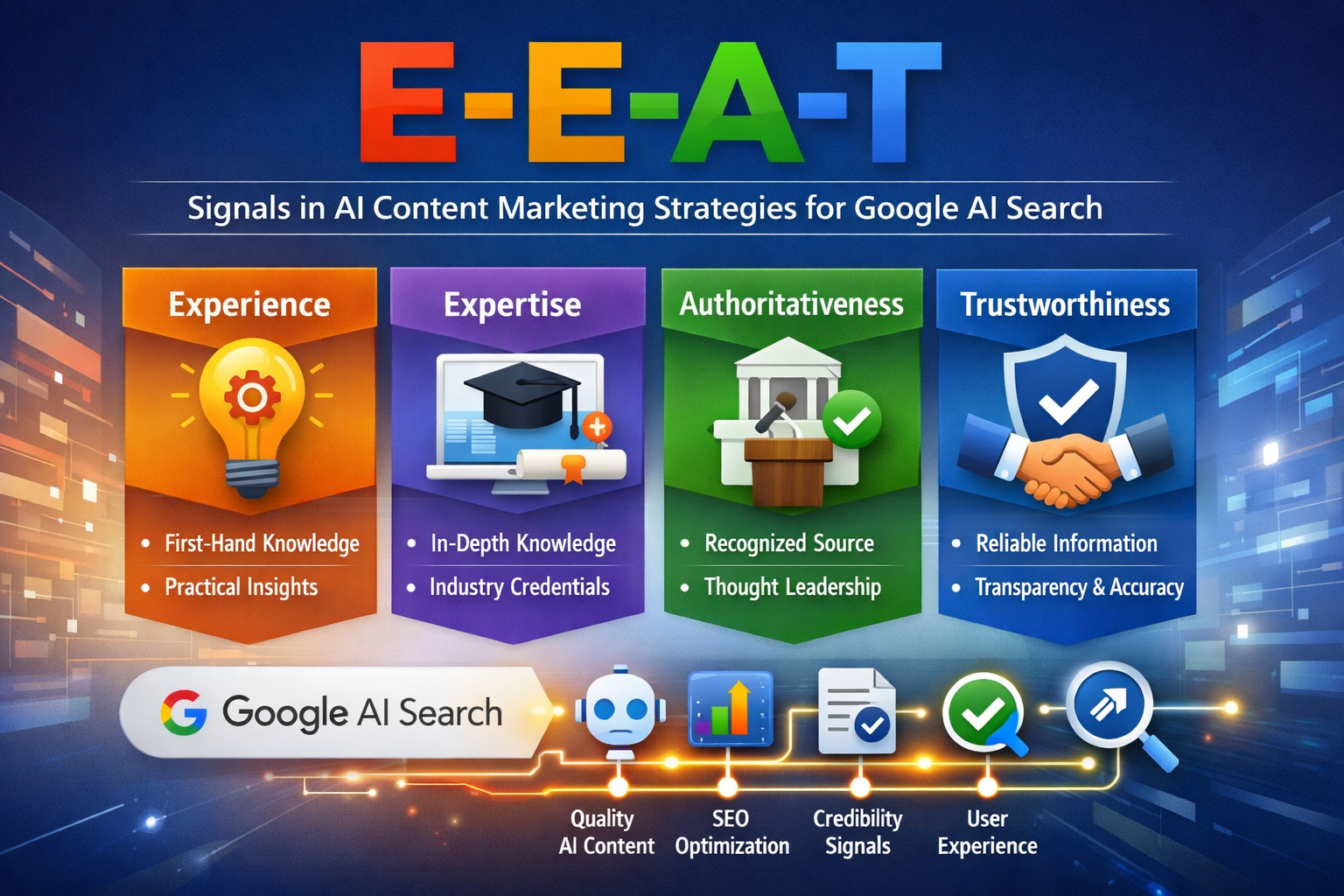
Google's E-E-A-T framework (Experience, Expertise, Authoritativeness, Trustworthiness) has become central to how content gets evaluated for quality [3]. AI-generated content struggles with the first element especially: genuine experience.
When AI search systems synthesize answers, they evaluate the credibility of potential sources before deciding what to cite. Content that demonstrates real-world experience—specific examples from actual implementations, tested methodologies with documented results, lessons learned from challenges faced—signals authority that AI systems can recognize and prioritize.
This is precisely why hybrid content tends to perform better than either pure AI output or traditional content produced at a slower pace. AI handles the research and structural heavy lifting, freeing human experts to add the experiential layer that builds trust with both readers and algorithms.
Consider the difference between these two approaches to the same topic:
Pure AI approach: "Content marketing strategies should include regular publishing, keyword research, and quality content creation."
Hybrid approach: "After testing publishing frequencies across dozens of client accounts, we found that consistency matters more than volume—sites publishing two quality posts per week outperformed those publishing daily with thinner content, both in rankings and conversion rates."
The second version demonstrates experience that AI cannot fabricate, and that's exactly what modern search evaluation is designed to reward.
Practical Strategies for AI-Era Content Marketing
Understanding these shifts is one thing; implementing them consistently is harder. Here's what's working for content marketers who are successfully adapting to the AI-powered search landscape.
Optimize for AI Answer Selection
Your content needs to be structured so AI systems can easily extract and cite key information. This goes beyond traditional on-page SEO—it's about making your content usable as a source for AI synthesis.
Build clear hierarchical organization. Use descriptive headings that directly address user questions. AI systems parse heading structures to understand content relevance and topic coverage. Instead of clever or vague headers, write headings that a user might actually search for.
Provide direct answers early. Don't bury the key insight at the end of a long preamble. State clear, concise answers in your opening sections, then expand with supporting detail, context, and nuance. AI overviews often pull from the first clear answer they find.
Ensure factual accuracy with citations. AI systems cross-reference information across sources. Content with verifiable claims from authoritative sources builds the credibility signals that AI systems use when deciding which sources to cite.
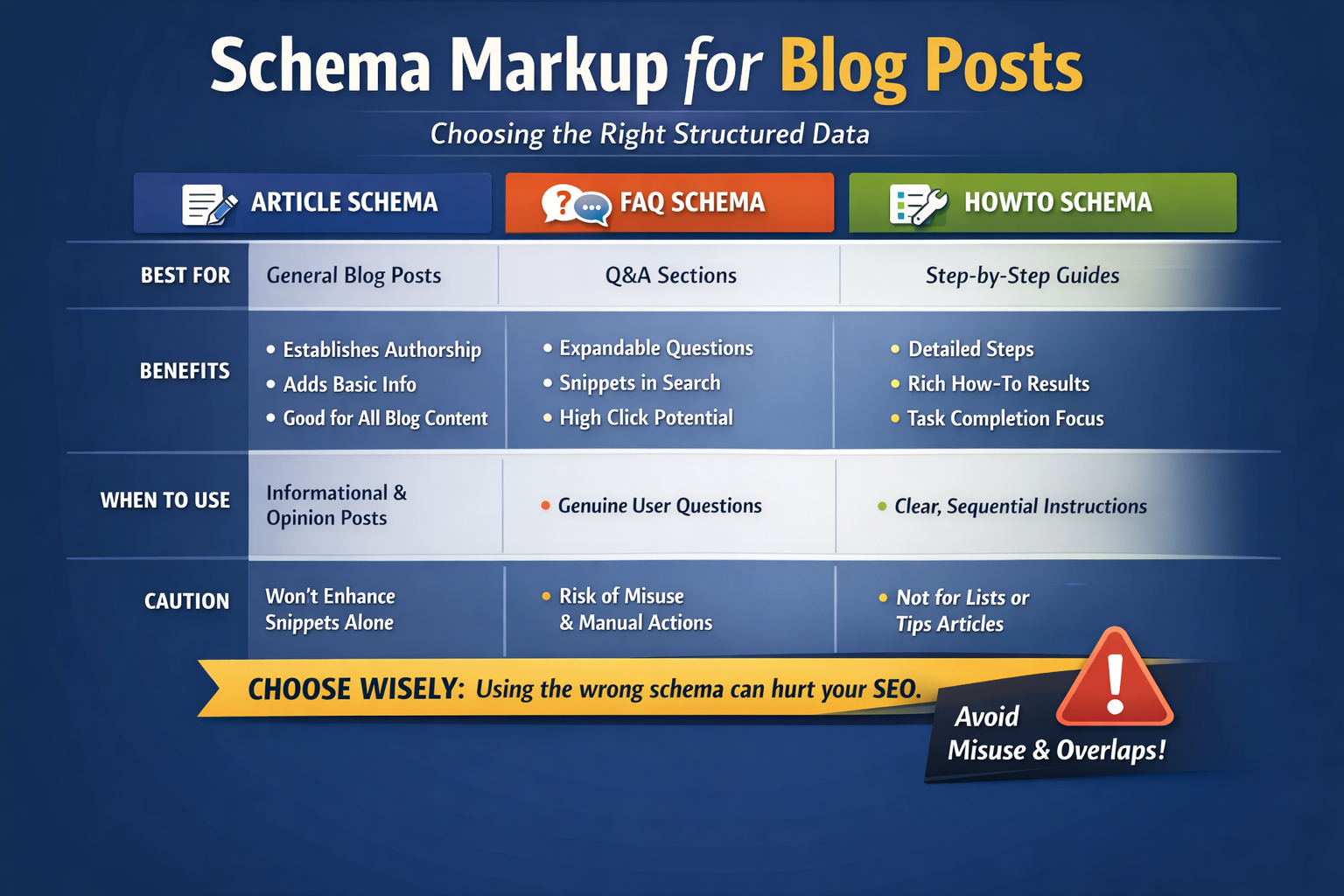
Implement structured data strategically. Schema markup helps search engines understand your content's context and purpose [4]. For content marketing specifically, three schema types matter most:
Article schema for blog posts (helps AI understand content type and structure)
FAQPage schema for frequently asked questions (often directly sourced for AI answers)
HowTo schema for instructional content (provides clear step-by-step information AI can extract)
These aren't just technical SEO checkboxes—they're signals that help AI systems understand exactly what your content offers and when it's relevant to cite.

Build Topical Authority Systematically
Single articles rarely establish authority, no matter how well-written they are. Comprehensive coverage of related topics signals expertise to both AI systems and human readers.
This means developing content clusters—interconnected articles that thoroughly address a subject area from multiple angles. When AI systems evaluate sources, sites with depth across related topics appear more authoritative than those with scattered, superficial coverage.
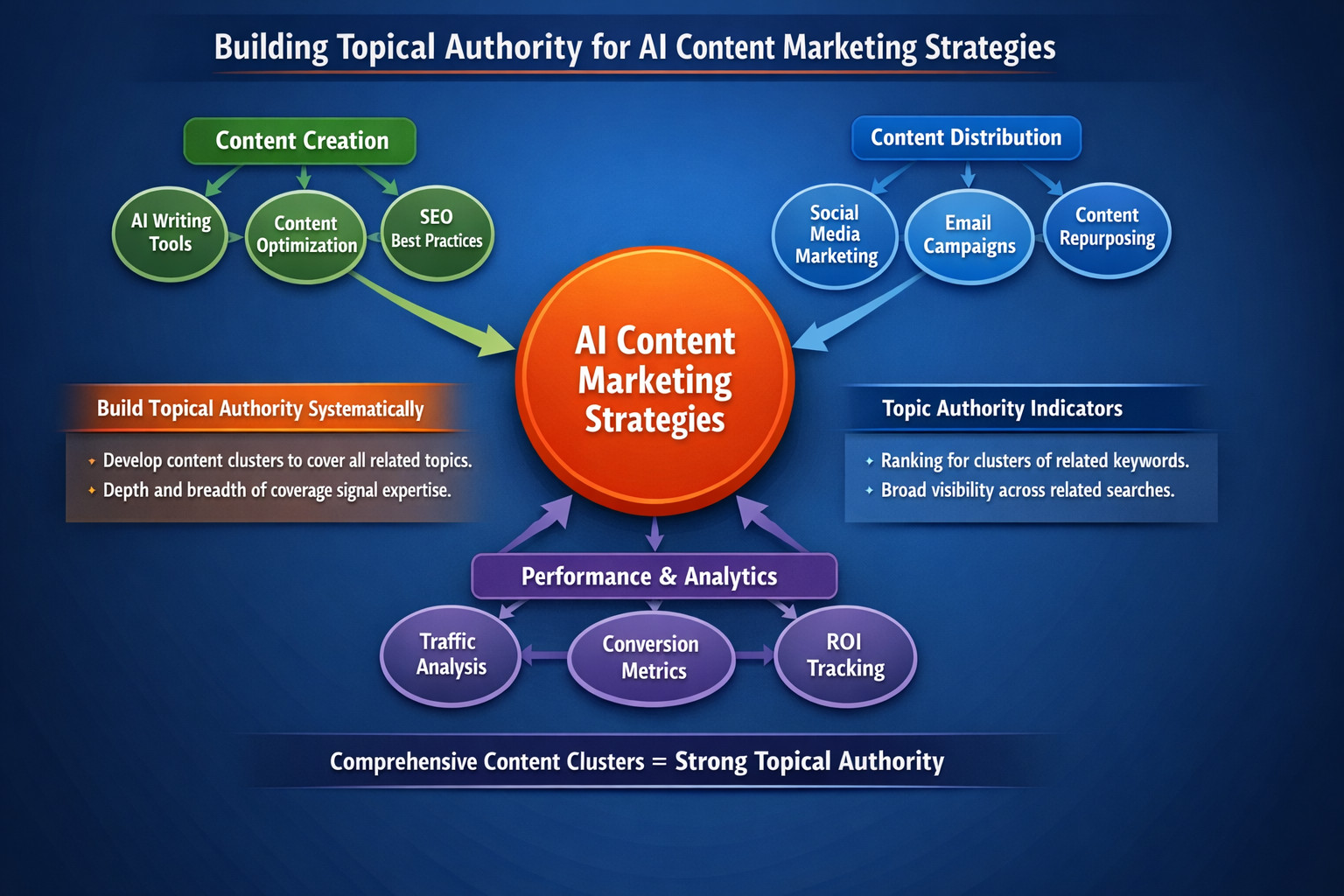
Here's what a content cluster looks like in practice:
Instead of publishing one article on "SEO strategy," build a pillar page on "Modern SEO Fundamentals" that links to five to eight supporting articles covering specific subtopics:
Technical SEO fundamentals (site speed, crawlability, structure)
On-page optimization tactics (headings, internal linking, content formatting)
Content strategy for search visibility (topic selection, publishing cadence)
Schema markup implementation (specific types, validation, testing)
Link building in the AI era (quality signals, outreach approaches)
Measuring SEO success (metrics that matter, tools for tracking)
Each supporting article links back to the pillar and cross-links to related pieces. This structure signals to AI that you've covered the topic comprehensively—and gives the AI multiple opportunities to cite your content for different query variations.
The key is strategic planning rather than random content production. Map your topic territories deliberately, identify gaps in your coverage, and fill them systematically.
Maintain Publishing Consistency
Content marketing in the AI era rewards consistency more than occasional brilliance. Search engines and AI systems favor sources that regularly publish fresh, relevant content [5], and inconsistent publishing can erode authority gains you've built.
This is where AI-assisted workflows become essential rather than optional. Few teams can maintain high-quality publishing cadences manually without burning out writers or sacrificing quality. The operational burden of research, drafting, editing, formatting, and publishing adds up quickly.
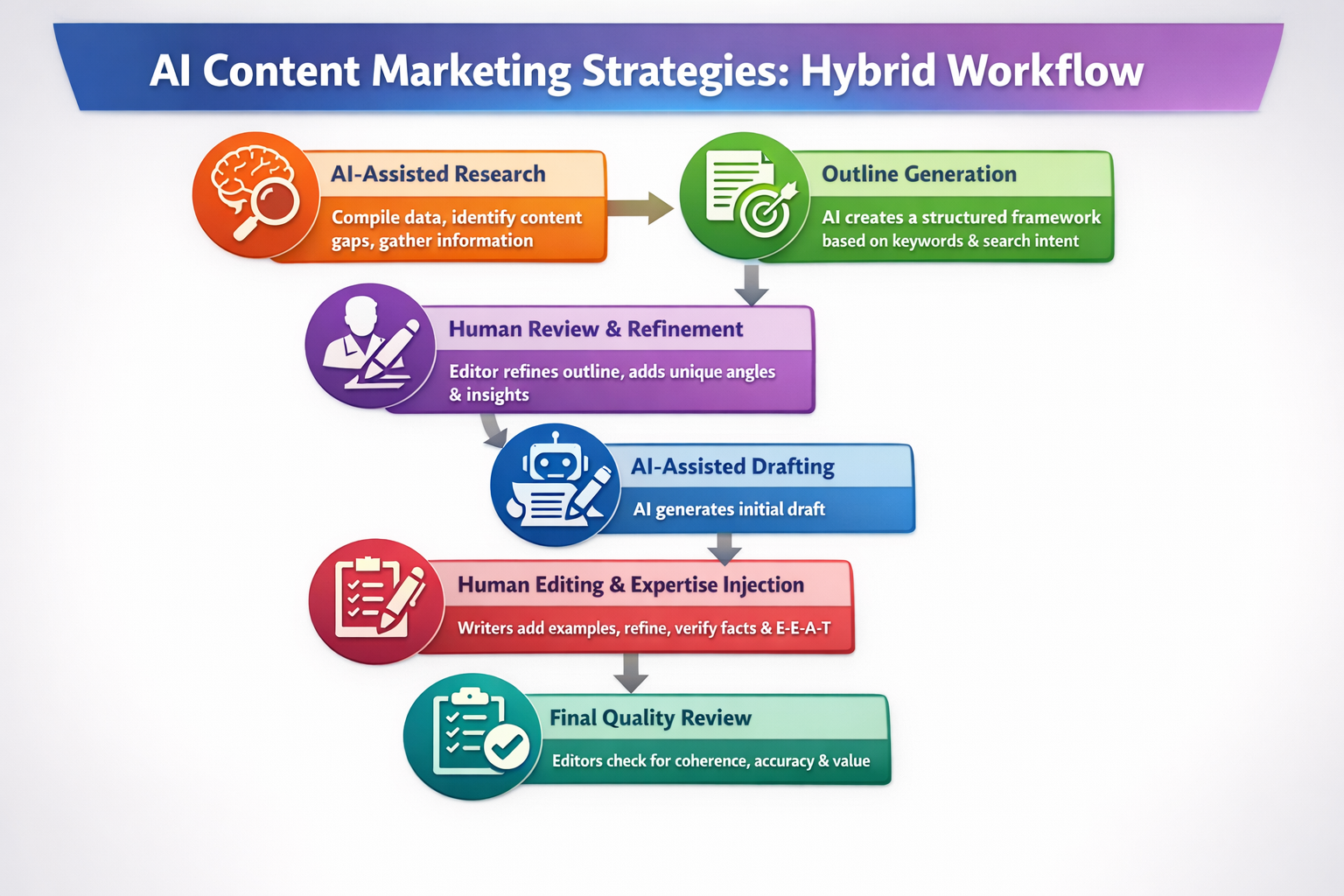
A practical hybrid workflow looks like this:
AI-assisted research: Use AI to compile relevant data, identify content gaps, and gather supporting information
Outline generation: AI creates a structured framework based on target keywords and search intent
Human review and refinement: An editor or subject expert adjusts the outline, adds unique angles, and identifies where original insight is needed
AI-assisted drafting: AI produces a first draft following the refined outline
Human editing and expertise injection: Writers add original examples, refine voice, verify facts, and ensure E-E-A-T signals are present
Final quality review: Human editors check for coherence, accuracy, and value before publishing
This approach lets you maintain consistent publishing—whether that's two articles per week or more—without requiring your team to start from scratch every time.
What AI Overviews Actually Mean for Traffic
Let's address the uncomfortable question directly: do AI overviews reduce traffic?
The honest answer is nuanced. For certain query types—particularly simple informational questions with straightforward answers—AI overviews do reduce click-through rates [6]. When users get what they need directly in the search results, many won't click through to any website.
But this isn't the whole story, and treating it as a simple "traffic is declining" narrative misses important dynamics.
Brand visibility persists even without clicks. Being cited in AI-generated answers exposes your brand to users repeatedly, even if they don't visit your site immediately. This visibility builds recognition and trust over time, which compounds into direct traffic, brand searches, and conversions when users are ready to act.
High-intent queries still drive meaningful traffic. Users researching complex decisions, comparing options, seeking in-depth understanding, or looking to make purchases still click through to authoritative sources. AI overviews don't satisfy every search need—they work best for quick informational queries.
Traffic quality often improves. When the casual, low-intent visitors stop clicking through (because AI answered their simple question), the visitors who do arrive tend to be more engaged, more qualified, and more likely to convert. Many sites see declining overall traffic but stable or improved conversion metrics.
Citation authority compounds. Consistent presence as a cited source builds the credibility that influences AI systems to cite you more frequently, creating a positive feedback loop for authoritative publishers.
The brands panicking about declining traffic often had content that wasn't providing genuine value anyway—AI simply made that problem visible. The brands adapting successfully are finding that quality content, optimized for how AI systems evaluate and cite sources, still drives meaningful business outcomes.
Measuring Success in the AI Era
Traditional content marketing metrics need recalibration when AI-generated answers change how users interact with search results. Pageviews and sessions tell an incomplete story when measuring content effectiveness.
Consider tracking these metrics alongside conventional traffic measurements:
Impression trends. Are you appearing in search results (including AI overviews), even if clicks are lower? Growing impressions with stable or declining clicks might indicate visibility in AI answers.
Brand search volume. Are more people searching for your brand directly? This signals that your content visibility is building brand recognition, even without direct clicks from informational queries.
Citation appearances. Is your content being referenced in AI-generated answers? While harder to track systematically, monitoring your brand mentions in search results provides insight into your authority status.
Conversion rates. Are the visitors you do get converting at higher rates? Higher-quality traffic often converts better, offsetting some volume decline.
Topic authority indicators. Are you ranking for clusters of related keywords rather than isolated terms? Topical authority shows in breadth of visibility across related searches.
A strategy that generates fewer total visits but higher-quality engagement often outperforms one optimizing purely for traffic volume—especially when measuring actual business outcomes rather than vanity metrics.
Building Your AI-Era Content Engine
The practical challenge for most teams is implementation. Understanding these principles is straightforward; executing them consistently while managing everything else on your plate is hard.
Most marketing teams face a familiar constraint: they know content matters, and they understand the shifts happening in search, but production consistently falls behind other priorities. Blogs go weeks without updates. Quality suffers when deadlines create pressure. The gap between strategy and execution widens.
This is where systematic approaches become essential rather than optional. The most effective content marketing operations in 2026 combine:
Strategic keyword and topic research that identifies opportunities AI systems are likely to surface, rather than just traditional ranking opportunities.
Consistent publishing cadences that build authority signals over time through reliable output rather than sporadic bursts of activity.
Quality standards that ensure every piece demonstrates genuine expertise and provides value readers can't find synthesized elsewhere.
AI efficiency that makes sustainable production actually possible without burning out writers or sacrificing the human elements that matter.
The goal isn't content for content's sake. It's building an organic visibility engine that compounds—traffic, authority, and conversions that grow through consistent, authoritative publishing rather than depleting when your attention shifts elsewhere.
The Competitive Reality
Here's the situation many brands face right now: competitors are already adapting.
The companies investing in AI-assisted content production—done well, with genuine human oversight and expertise—are publishing more frequently, covering topics more thoroughly, and building the authority signals that AI search systems reward. They're accumulating advantages that compound over time.
Waiting to see how the AI search landscape develops means falling further behind while others establish authority. The compounding nature of content marketing means gaps widen over time—catching up becomes progressively harder.
This doesn't require massive budgets or enterprise-scale resources. It requires a systematic approach that balances AI efficiency with human quality standards, and the discipline to execute consistently rather than sporadically.
The brands building sustainable organic traffic engines now will have significant advantages as AI search continues to evolve. The question isn't whether to adapt—it's how quickly you can implement an approach that works.
Ready to build an organic traffic engine that works in the AI era? The Mighty Quill combines AI-powered research and drafting with human editorial oversight—delivering SEO-optimized content that demonstrates the expertise AI search systems reward. Try the Blog Engine free and receive two custom articles within 48 hours.
Frequently Asked Questions
How does AI search affect content marketing ROI?
AI search changes which metrics matter most, but it doesn't eliminate content marketing value. While direct click-through rates may decline for simple informational queries, brand visibility, authority building, and high-intent traffic remain strong channels for ROI. The key is optimizing for AI citation rather than purely traditional rankings, and measuring success through conversion rates and qualified traffic rather than raw pageviews.
What's the difference between AI-generated content and AI-assisted content?
AI-generated content is produced entirely by artificial intelligence with minimal human input—essentially publishing what the AI creates. AI-assisted content uses AI for research, drafting, and efficiency gains while humans provide editorial oversight, expertise validation, voice refinement, and the experiential depth that builds authority. The distinction matters because search engines increasingly recognize and discount purely machine-generated material lacking genuine expertise signals.
How do I optimize content for Google's AI Overviews?
Structure content with clear, descriptive headings that directly address user questions. Provide concise, accurate answers early in your content rather than burying key insights. Use authoritative sources with proper citations. Implement schema markup—particularly Article, FAQPage, and HowTo types. Most importantly, demonstrate genuine expertise through specific examples, original insights, and verifiable claims that AI systems recognize as valuable source material worth citing.
Is traditional SEO still relevant with AI search?
Traditional SEO fundamentals—keyword research, technical optimization, quality backlinks, site structure—remain foundational but are no longer sufficient alone. AI search adds requirements around content authority, topical depth, E-E-A-T signals, and source credibility that go beyond conventional ranking factors. The most effective strategies layer AI-era optimizations onto solid SEO foundations rather than abandoning proven practices entirely.
How often should I publish content for AI-era SEO?
Consistency matters more than hitting a specific frequency target. Publishing high-quality content regularly—whether that's weekly, twice weekly, or more—signals active authority to search systems and keeps your content fresh. The sustainable cadence depends on your resources and quality standards, but gaps in publishing can erode authority gains that consistent content builds over time. Most successful content operations aim for at least two quality pieces per week.
About This Content
This article was produced by The Mighty Quill, combining AI-assisted research and drafting with human editorial oversight. Our team brings over 15 years of digital marketing experience, specializing in SEO and content strategy for growth-focused businesses. We help companies build sustainable organic traffic through consistent, authoritative content publishing that performs in both traditional search and AI-powered experiences.
Works Cited
[1] Google — "Search Generative Experience Overview." https://blog.google/products/search/generative-ai-search/
[2] Google Search Central — "Creating helpful, reliable, people-first content." https://developers.google.com/search/docs/fundamentals/creating-helpful-content
[3] Google Search Central — "E-E-A-T and Quality Rater Guidelines." https://developers.google.com/search/docs/fundamentals/creating-helpful-content
[4] Schema.org — "Getting Started with Schema Markup." https://schema.org/docs/gs.html
[5] Search Engine Journal — "Why Fresh Content Matters for SEO." https://www.searchenginejournal.com/ranking-factors/content-freshness/
[6] Search Engine Land — "How AI Overviews Impact Click-Through Rates." https://searchengineland.com/google-ai-overviews-impact-seo-traffic-443298