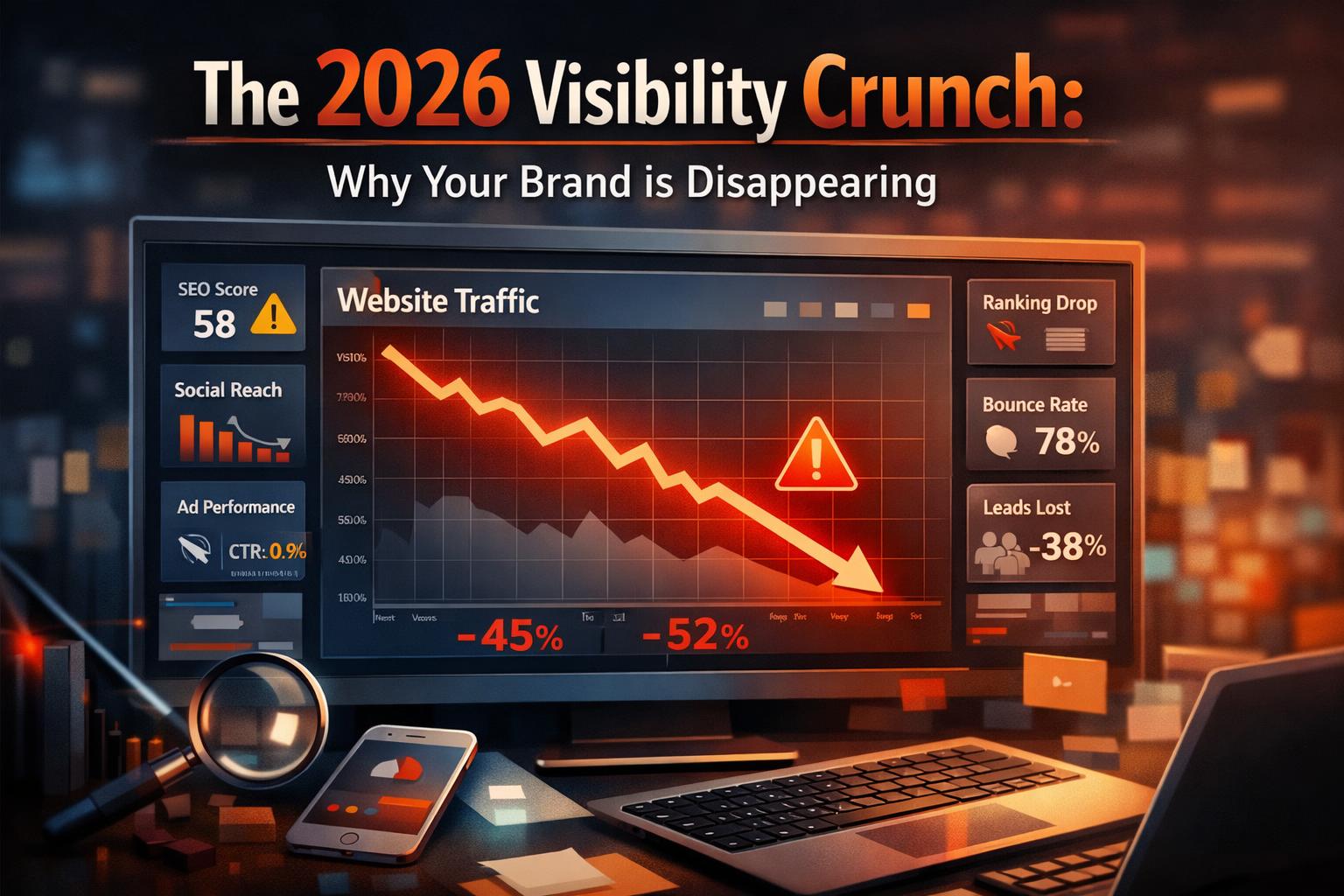
Your website traffic is declining, and you're not imagining it.
For years, the playbook was simple: publish blog posts, optimize for keywords, watch the traffic roll in. That playbook is broken. The 2026 visibility crunch is already underway, and most brands haven't noticed they're disappearing from the places their customers actually look.
Here's what's happening: Google's search results now answer questions directly. AI assistants summarize content instead of linking to it. Social platforms keep users inside their walled gardens. The channels that once delivered reliable traffic are collapsing into a single, brutal competition—one where only the most visible brands survive.
This isn't speculation. It's already reshaping how businesses grow online.
What Is the 2026 Visibility Crunch?
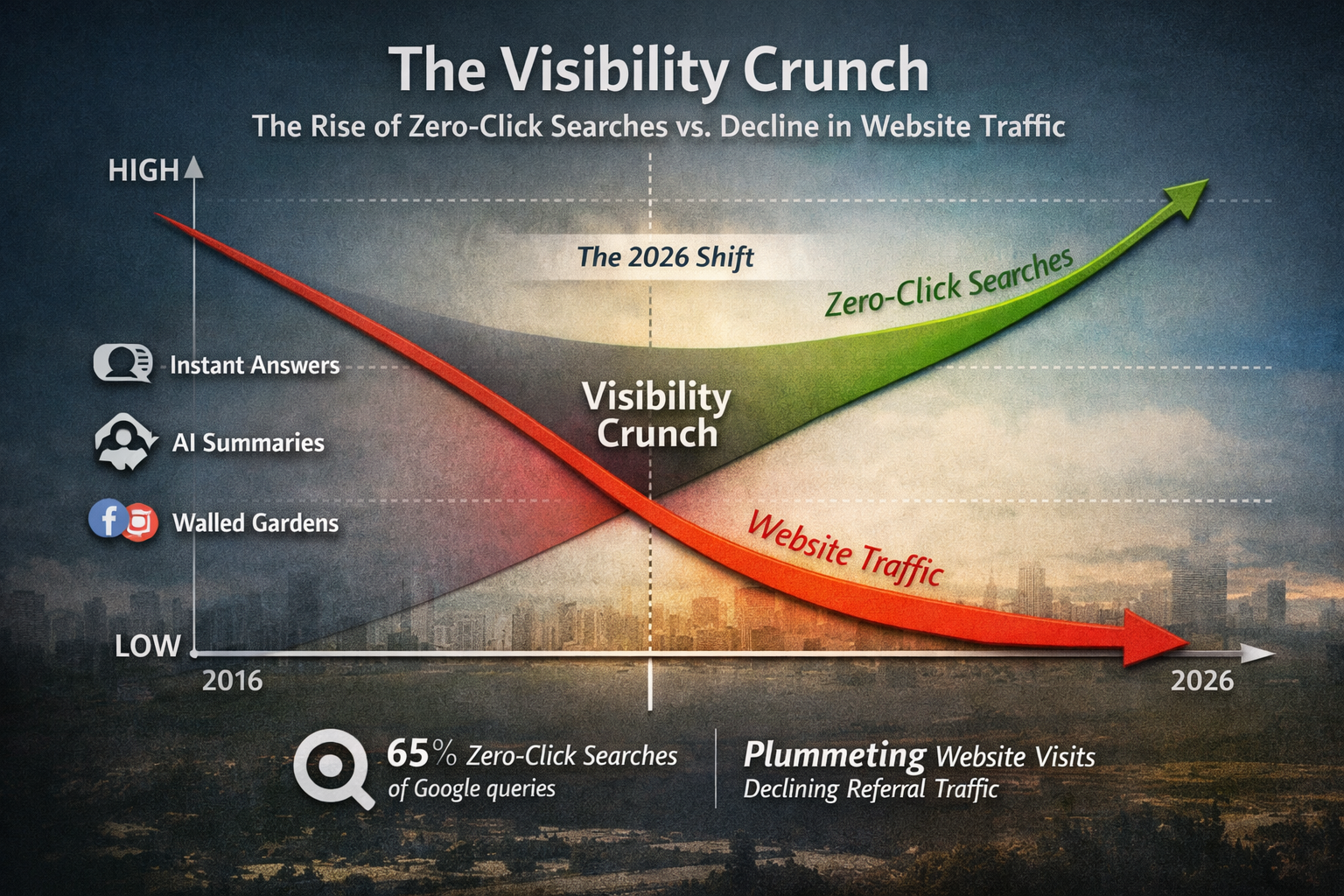
The visibility crunch describes a fundamental shift in how people find information. Instead of clicking through to websites, users increasingly get answers without ever leaving the search page or their AI assistant of choice.
Zero-click searches now account for a significant majority of all Google queries [1]. That means most searches end without anyone clicking a single result. Your perfectly optimized blog post might rank on page one—and still generate almost no traffic.
Meanwhile, AI-powered search experiences are accelerating this trend. Google's AI Overviews, ChatGPT's browsing capabilities, and Perplexity's answer engine all share one thing in common: they synthesize information from multiple sources into direct answers.
The result? Fewer clicks. Less traffic. Diminishing returns on content that used to perform.
Why Siloed SEO Strategies Are Failing
Most businesses still treat SEO as a standalone channel. They publish blog posts optimized for Google, then hope for the best.
That approach worked when Google was the primary gateway to the internet. It doesn't work when your potential customers are:
Asking AI assistants for recommendations
Scrolling social media for product research
Watching YouTube videos instead of reading articles
Getting answers directly in search results without clicking
The problem isn't that SEO is dead. The problem is that siloed strategies ignore how discovery actually happens now.
Your customers don't follow a linear path from Google search to your website to a purchase. They bounce between platforms, consult multiple sources, and often make decisions before they ever reach your site.
If your brand isn't visible across all these touchpoints, you're invisible at the moments that matter most.
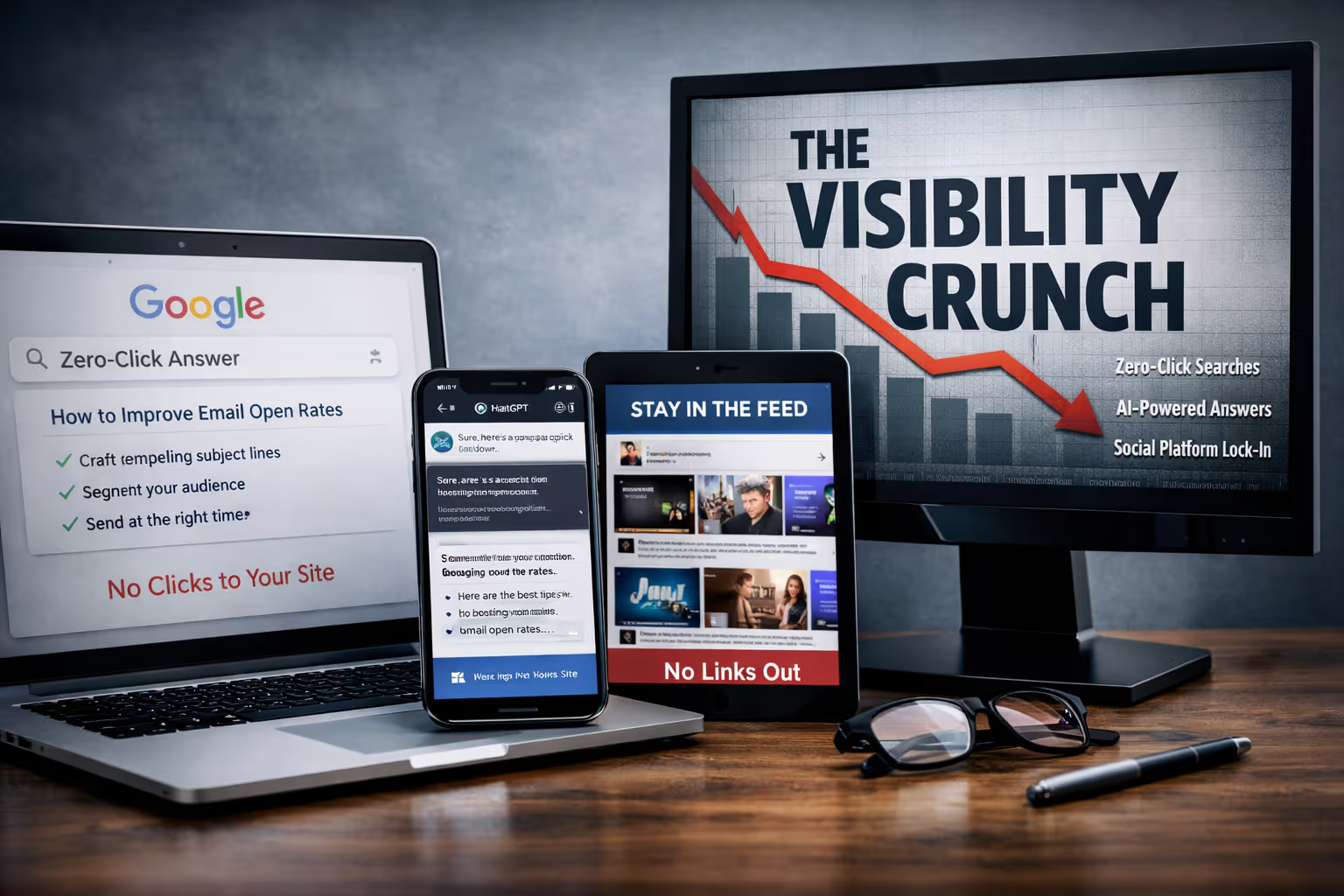
The Zero-Click Reality
Let's talk about zero-click searches specifically, because they represent the core threat to traditional content strategies.
When someone searches "how to improve email open rates," Google increasingly displays:
Featured snippets with step-by-step answers
People Also Ask boxes with expandable responses
AI-generated summaries pulling from multiple sources
Each of these features is designed to keep users on Google. They're working exactly as intended—for Google.
For content creators, this means your content gets used without generating traffic. Your expertise gets cited without earning clicks. Your investment in content produces diminishing returns.
Some marketers respond to this by giving up on search entirely. That's a mistake. The solution isn't abandonment—it's adaptation.
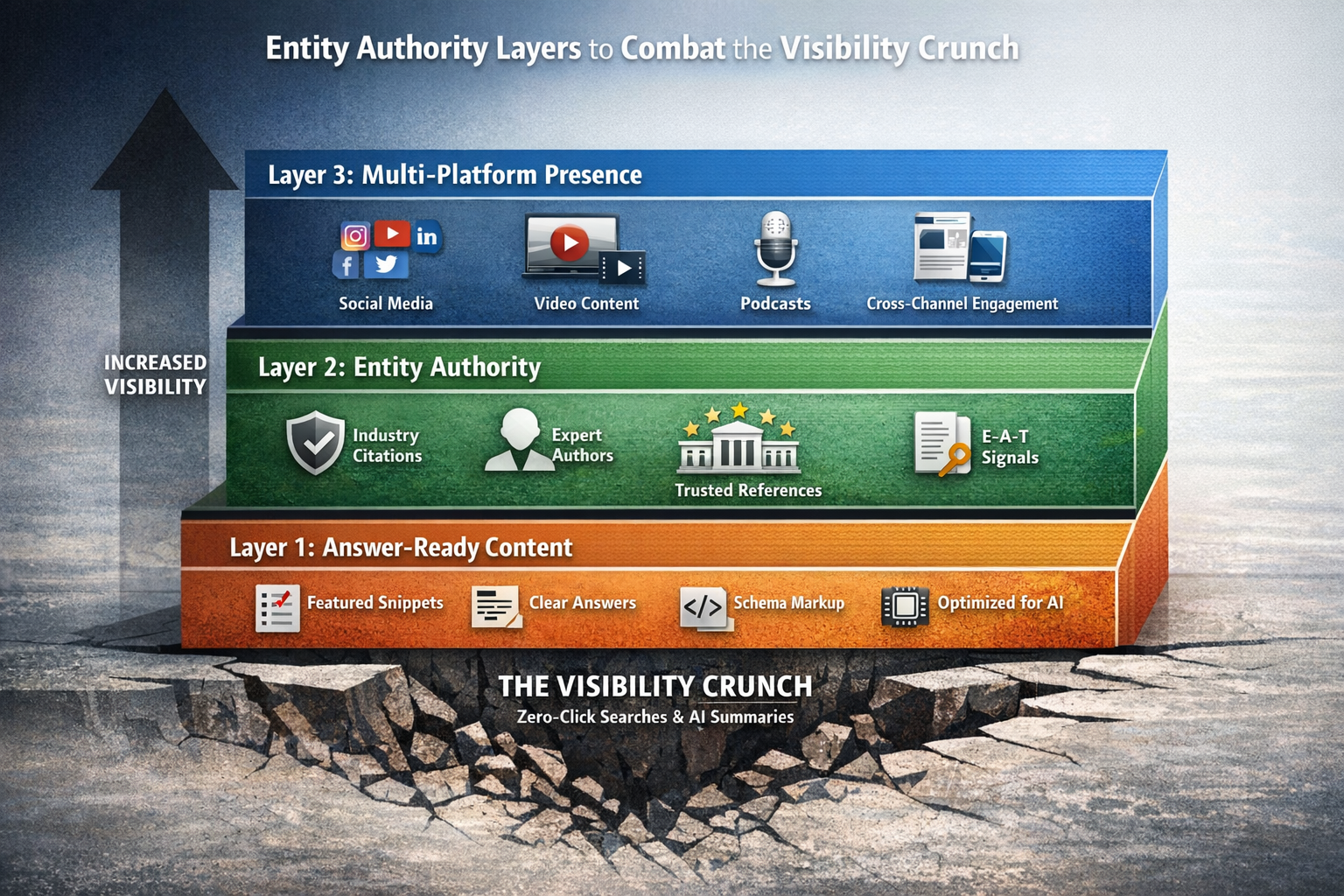
The Channel Collapse Framework
Instead of treating each marketing channel as separate, successful brands are building integrated visibility systems. Here's how to think about it:
Layer 1: Answer-Ready Content
Your content must be structured for extraction. This means:
Clear, direct answers to specific questions in the first paragraph
Properly formatted headers that match search intent
Concise bullet points and numbered lists that AI can easily parse
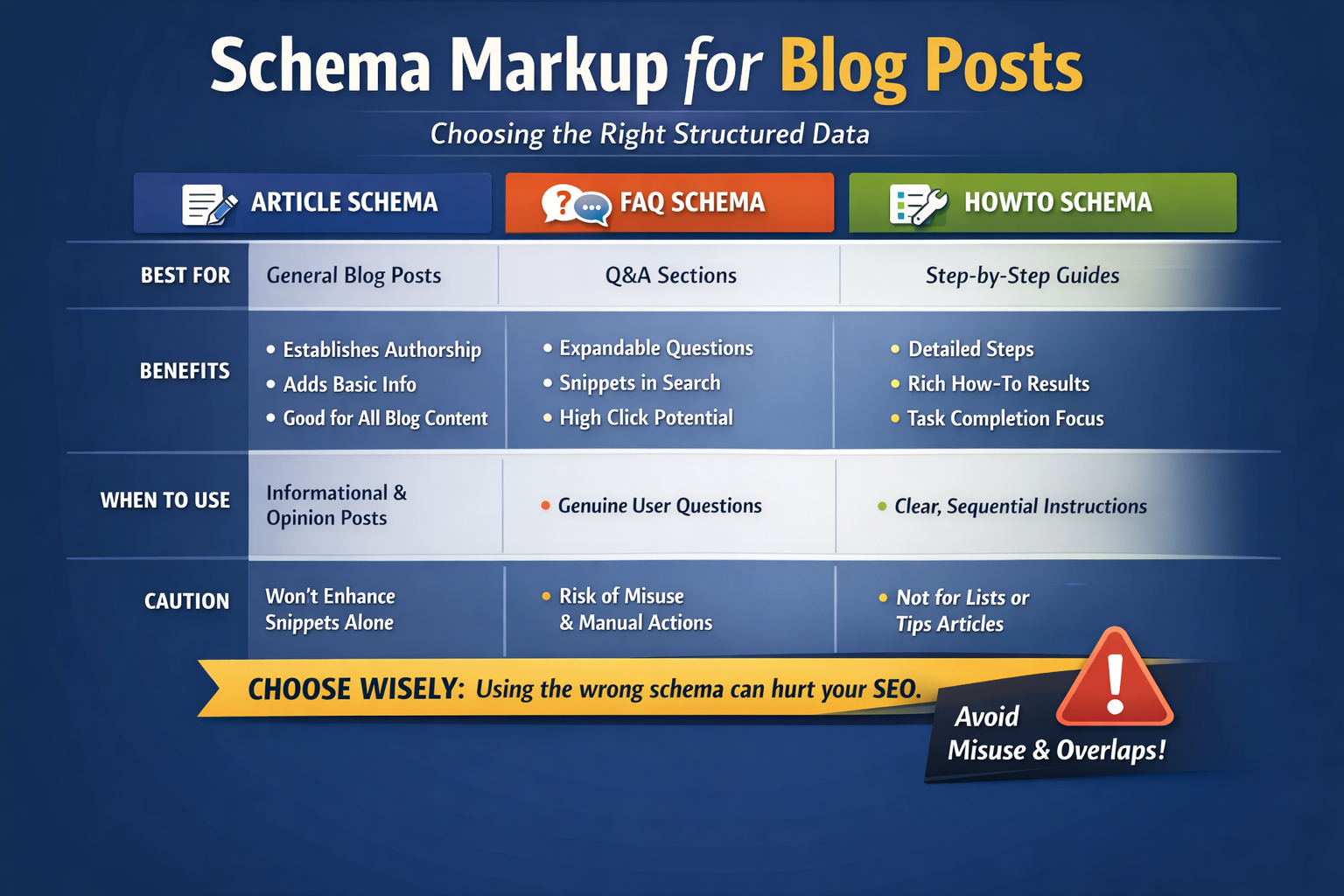
Schema markup that helps search engines understand your content
When AI systems summarize content, they pull from sources that are easy to parse. Structure your content to be that source.
Layer 2: Entity Authority
Search engines increasingly evaluate content based on entities—people, organizations, and concepts—rather than just keywords.
This means your brand needs to be recognized as an authoritative entity in your space. How?
Consistent mentions across multiple trusted sources
Clear topical expertise demonstrated through depth, not just volume
Author credibility signals that establish who created the content
Citations from other authoritative sources
Building entity authority takes time. It also compounds. The brands investing in this now will dominate visibility in the years ahead.
Layer 3: Multi-Platform Presence
Your content strategy should assume that customers will encounter your brand across multiple platforms before making decisions.
This doesn't mean spreading yourself thin across every possible channel. It means:
Repurposing core content into platform-appropriate formats
Maintaining consistent messaging across touchpoints
Building presence where your specific audience spends time
Creating content that references and links to your other content
The goal is omnipresence within your niche—showing up repeatedly until your brand becomes the default answer.
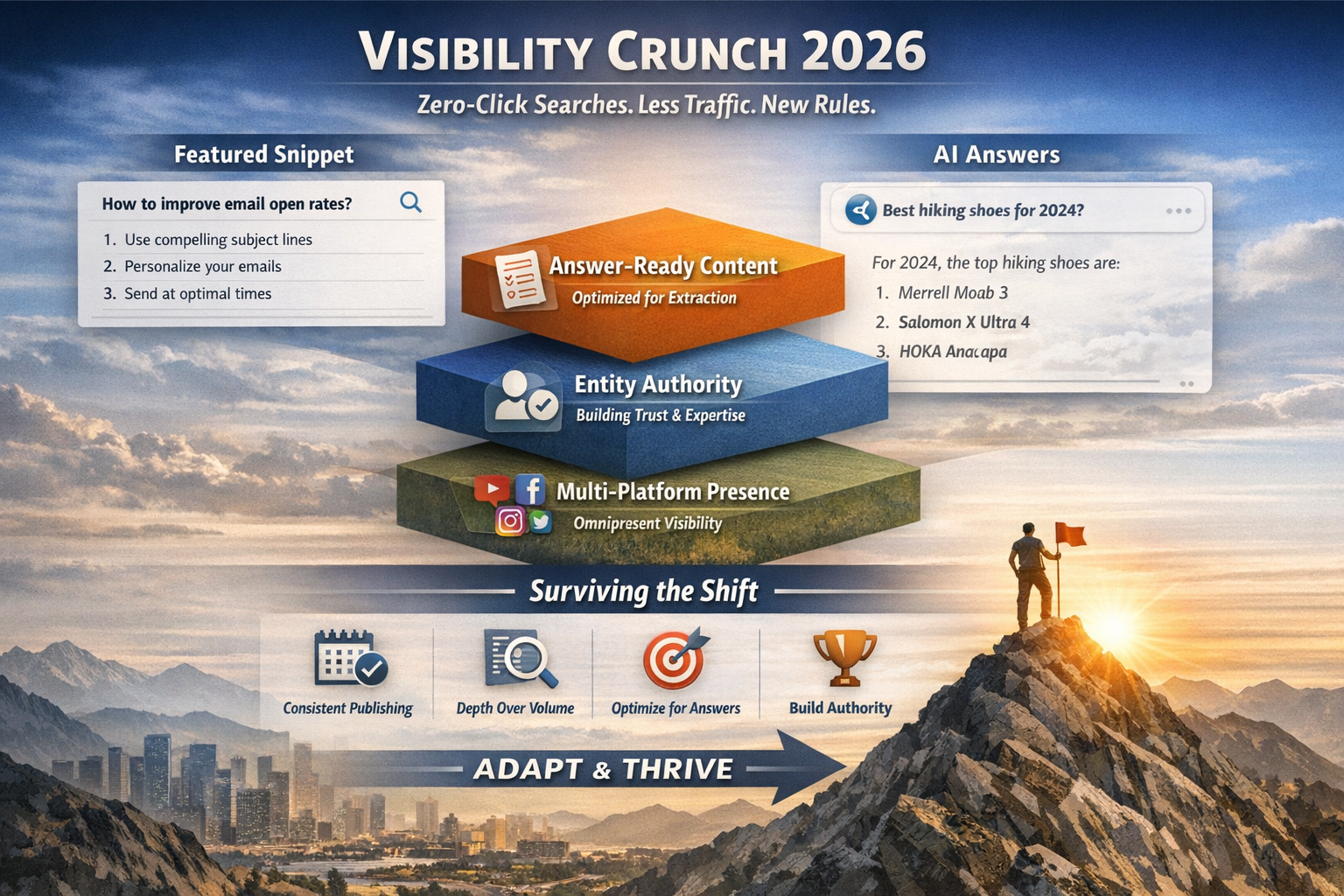
What Surviving Brands Are Doing Differently
Brands that are thriving despite the visibility crunch share common characteristics.
They publish consistently. Not occasionally. Not when they remember. They maintain a predictable publishing cadence that signals relevance to search engines and keeps their audience engaged [2].
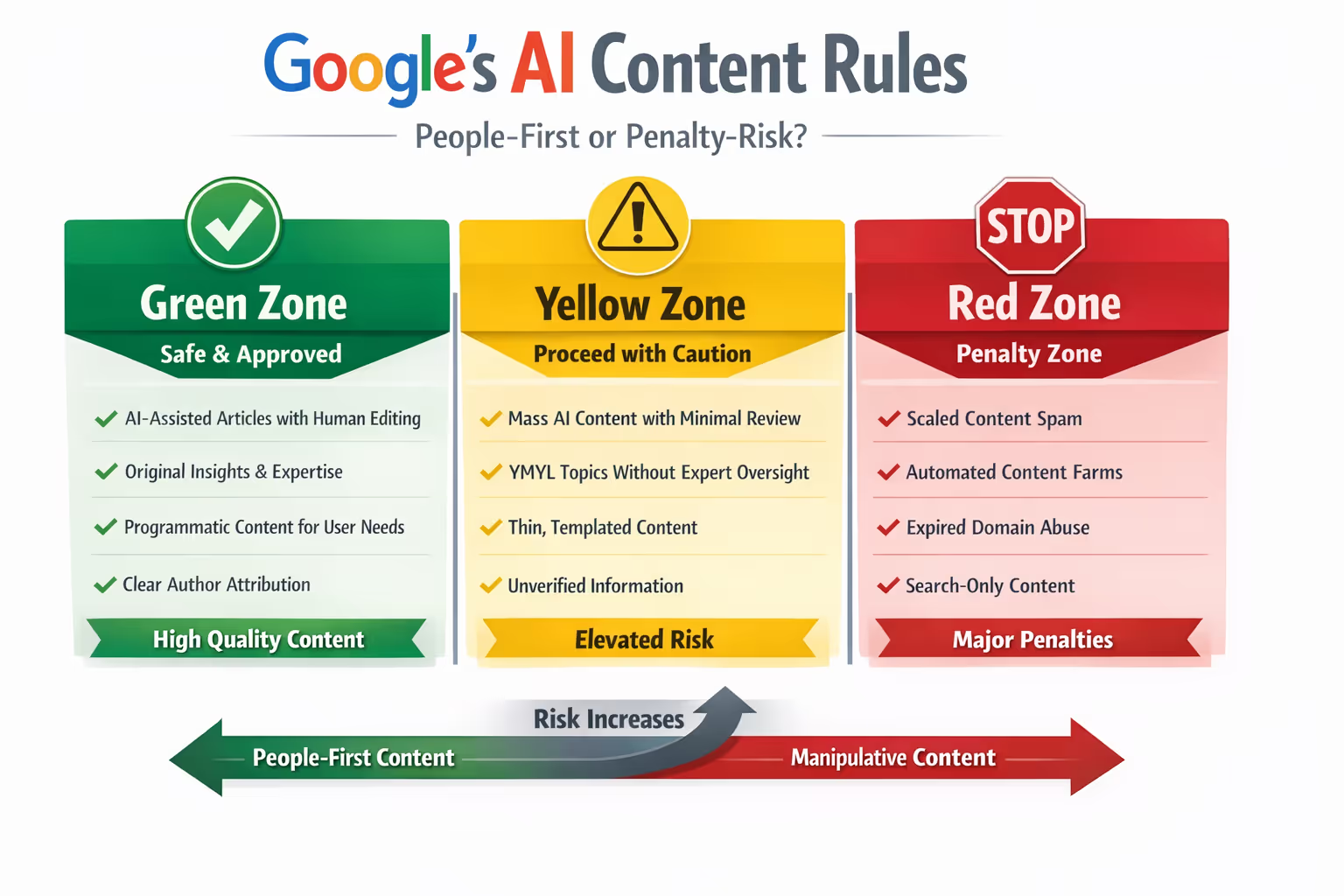
They prioritize depth over volume. Thin content that barely answers questions gets ignored by both humans and algorithms. Comprehensive content that thoroughly addresses topics earns visibility.
They optimize for answers, not just rankings. The goal isn't position one—it's being the source that AI systems cite and featured snippets pull from.
They build systems, not campaigns. Sporadic content efforts produce sporadic results. Sustainable visibility requires sustainable content production.
The Fear-Based Response (And Why It Fails)
When marketers see declining traffic, the instinct is often to panic. Double down on paid ads. Chase algorithmic trends. Publish more content faster.
These responses typically make things worse.
Paid advertising costs continue rising while attention spans shrink. Chasing algorithms means constantly reacting instead of building lasting authority. Publishing more low-quality content damages your brand's perceived expertise.
The visibility crunch rewards patience and consistency. It punishes reactive scrambling.
Building Your Survival Framework
Here's a practical approach to future-proofing your content strategy:
Audit your current visibility. Where does your brand actually appear when customers search for solutions you provide? Check Google, AI assistants, social platforms, and industry publications.
Identify your answer-worthy topics. What questions does your ideal customer ask that you can answer better than anyone else? These become your content pillars.
Structure content for extraction. Reformat existing high-performing content to be more parseable. Create new content with extraction in mind from the start.
Build entity signals. Ensure your brand, authors, and key concepts are consistently represented across the web with proper structured data.
Establish publishing consistency. Determine a sustainable publishing frequency and maintain it. Consistency signals relevance to algorithms and keeps your brand top-of-mind for audiences.
The Compounding Advantage
Here's what most brands miss: visibility compounds.
Each piece of well-structured content builds on the last. Each mention of your brand reinforces entity authority. Each week of consistent publishing strengthens algorithmic signals.
Brands that started building these systems months ago are already seeing the benefits. Brands that start today will see benefits in three to six months. Brands that wait will find themselves further behind.
The visibility crunch isn't a temporary dip. It's a structural shift in how online discovery works. The brands that adapt will thrive. The brands that don't will wonder where their traffic went.
Your competitors are already adapting. The question is whether you'll join them—or keep wondering why your perfectly optimized content isn't driving results anymore.
Ready to future-proof your content strategy? Try The Mighty Quill Blog Engine for free and get two SEO-optimized, answer-ready articles delivered within 48 hours.
Frequently Asked Questions
What exactly is a zero-click search?
A zero-click search occurs when a user gets their answer directly on the search results page without clicking through to any website. This happens through featured snippets, knowledge panels, AI overviews, and People Also Ask boxes. For content creators, this means your content may be used to generate answers while producing no actual website traffic.
How do I know if the visibility crunch is affecting my business?
Check your Google Search Console data for impressions versus clicks over the past year. If impressions remain stable or grow while clicks decline, you're experiencing the visibility crunch. Also monitor whether your brand appears in AI assistant responses and featured snippets—visibility without clicks is the defining pattern.
Can small businesses compete with larger brands in this environment?
Yes, but strategy matters more than budget. Small businesses can win by focusing on specific topics where they can demonstrate deep expertise. Consistent publishing, structured content, and genuine authority in a niche often outperform the scattered efforts of larger competitors trying to cover everything superficially.
How long does it take to see results from adapting to these changes?
Most businesses see measurable improvements within three to six months of implementing consistent, answer-optimized content strategies. However, the compounding nature of authority means results accelerate over time. Early investment in these systems produces increasingly larger returns.
Should I stop investing in traditional SEO entirely?
No. Traditional SEO fundamentals still matter—technical optimization, quality content, and relevant keywords remain important. The shift is in how you structure content and what success looks like. Optimize for being the source AI systems cite, not just for rankings that may not generate clicks.
About The Mighty Quill
The Mighty Quill is an AI-powered blog engine founded by Mario, a digital marketing veteran with over 15 years of experience in SEO and content strategy. We help growth-focused businesses build sustainable organic traffic through consistent, high-quality content publishing. Our system combines AI efficiency with human editorial oversight to produce content that performs in both traditional search and emerging AI-powered discovery platforms.
Cited Works
SparkToro / Datos — "2024 Zero-Click Search Study."
https://sparktoro.com/blog/2024-zero-click-search-study/
The Mighty Quill — "Why Quantity Over Quality Is Dead in AI Search."
https://www.themightyquill.com/why-quantity-over-quality-is-dead-in-ai-search/